
- August 2026 (1)
- July 2026 (1)
- June 2026 (3)
- April 2026 (1)
- March 2026 (1)
- February 2026 (1)
- January 2026 (1)
- July 2025 (2)
- July 2024 (1)
- December 2023 (1)
- July 2023 (7)
- June 2023 (1)
How to Select a Heatsink
Aug 01, 2022Operating temperature and thermal performance are directly related; the lower, the better – and the higher a device’s reliability. Thermal management is more critical than ever for electronic product design as semiconductor devices continue scaling smaller with higher power densities.
Heatsinks and other enhanced cooling solutions are an effective means of reducing power consumption by lowering junction temperature. By increasing the surface area in direct contact with the coolant, heatsinks allow more heat to be dissipated while lowering the device operating temperature.
Though the overall thermal budget is generally the key deciding factor of which heatsink to use, this blog will examine precisely how to choose the ideal heatsink depending on the project and application needs.
Step One: Thermal Resistance
Determining the heatsink thermal resistance is the first step when beginning selection. The maximum case temperature, ambient air temperature ()*and power dissipation () of the component can be used to find the required thermal resistance () of the heat sink:
*Note: typically ranges from 35 to 45°C if the external air is used and from 50 to 60°C if the component is enclosed.
To find the approximate heat sink volume, designers can utilize this equation alongside charts provided by heatsink suppliers. For an example of these charts, please click here. For forced convection applications, these charts and/or performance graphs can be valuable for identifying heatsinks, determining minimum flow velocity, and deciding if liquid-cooled cold plates are necessary.

In Example 1, the power dissipation is 100 watts, and a maximum case temperature of 95°C is used with an ambient temperature of 25°C – resulting in 0.75 °C per watt thermal resistance. In this instance, a heat sink of approximately 105 cubic inches is be required. When forced air is applied, however, 20 cubic inches would suffice.
Step Two: Choosing Heatsink Materials
Heatsinks need to perform with high thermal conductivity. As such, their materials must be carefully considered.
Though copper is the “gold” standard of thermal conductivity, it can be costly. So, aluminum has become an industry standard, balancing cost-effectiveness and thermal conductivity. Depending on its surface area and finish, aluminum’s performance can vary slightly.
Step Three: Determining Required Volume
After materials, designers should determine the required volume of the heatsink. Usually, a chart and/or graph provided by the manufacturer providing ranges of volumetric thermal resistance of a heat sink under different flow conditions make this process quite simple.
At this stage, classifying the heat sink’s airflow is also necessary. Airflow will either be natural, mixed, or high flow forced convection.
- Natural Convection: No externally induced flow. The free flow of air surrounding the heat sink is the sole means of heat transfer.
- Forced Convection: The flow of air is induced by mechanical means, often a fan or blower.
Step Four: Fins
Fins create shapes capable of dissipating large heat loads and are often strategically utilized in highly efficient extruded heatsinks. By “squeezing” or extruding the aluminum, long sections are created and cut to proper part lengths. If needed, mounting holes or other features can then be machined.
Alternately, Forged Pin heat sink geometry can provide increased surface area for heat transfer. This is achieved by manufacturing the piece under low temperature and high pressure. This ensures no impurities or air bubbles get trapped in the heatsink material, yielding very high quality.
Forged Pins are especially useful for forced air convection applications, as they allow for the ability to force air in multiple directions through these pins. Whether for high power density or small size electronic packaging with forced convection cooling, these heatsinks are an ideal fit.
Step Five: The Finish – Anodization and Mounting
The finish is another important consideration. For instance, anodization–a standard finish–offers a range of benefits.
By thickening and increasing the toughness of the naturally occurring protective oxide layer on the surface of a metal part, it improves the electrical isolation, wear, and corrosion resistance of a heatsink. This finish also improves surface emissivity or the effectiveness in emitting energy as thermal radiation.
Clips can also help to accomplish fast assembly of heat dissipaters. However, the clip must be designed specifically for a given heatsink and semiconductor package to provide proper pressure. The clip will also provide lower interface thermal resistance compared to other assembly methods.
Though a heat sink lowers the fluid-side thermal resistance, clips are worth noting as heatsinks also introduce an interface resistance across the contact formed between itself and the package case. Depending on the circumstances, this contact resistance may be significant, impeding heat flow and lowering the heatsink’s overall effectiveness.
Ohmite’s patented clip system eliminates the use of screws and holes for installation. This provides users an easier, more streamlined assembly process. The elimination of mounting hardware enables a maximum surface area per unit design and reduces cost.
Summary
In summary, when choosing the proper heatsink for an application, designers must consider several factors.
To calculate thermal resistance, several parameters are needed, including the maximum case temperature, ambient air temperature, and power dissipation.
Ohmite offers multiple configurations and sizes to accommodate various application needs and designs, focusing on extruded designs and those that maximize surface area by adding or extending fins with clip mounting or other creative designs.
Ohmite’s heat sink series can also accommodate different wattages and mounting options; from surface mount devices to multiple unit extrusions, Ohmite has a heat sink solution for popular TO series packages.
For more information, visit www.ohmite.com.
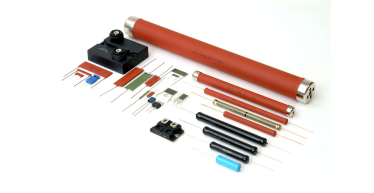
Guide to Power Resistors
Power resistors are used to dissipate energy by converting it to heat. and are designed to maintain stable performance. Call now and request a quote today!
Read More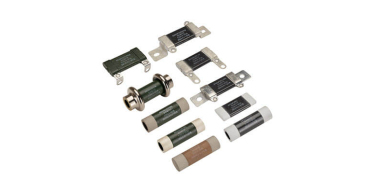
Guide to Ceramic Resistors
Ceramic Composition resistors are composed of a mixture of a finely ground insulator and conductor which is compressed into a cylindrical shape. Call now!
Read More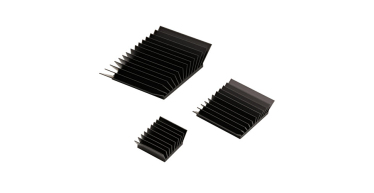
Guide to Heat Sinks
As semiconductor devices scale to smaller sizes and higher power densities, thermal management has become more challenging Call now and request a quote!
Read More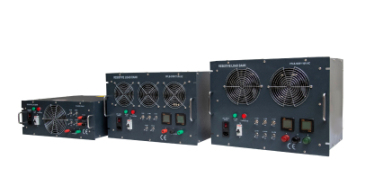
Guide to Load Banks
A load bank is a device that is intended to accurately mimic a load that a power source will see in an actual application. Call now and request a quote today!
Read More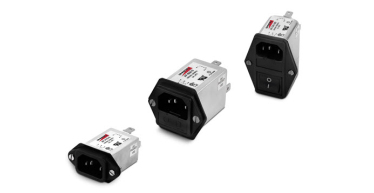
Guide to EMI Filters
To control the effects of EMI, standards are in place internationally, for commercial electronics, aerospace as well as military and space applications. Call now!
Read More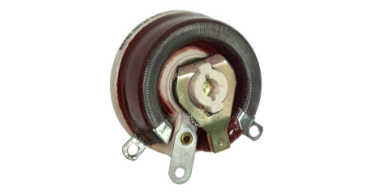
Guide to Rheostats
Rheostats, a fundamental component in electrical engineering, play a crucial role in controlling current flow and adjusting resistance in electrical circuits. Call now!
Read More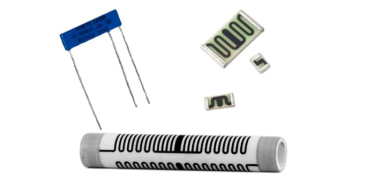
Guide to Thick Film Resistors
Thick film resistors, hailed for their versatility, durability, and wide-ranging applications, are a cornerstone of modern electronics. Call now and request a quote!
Read More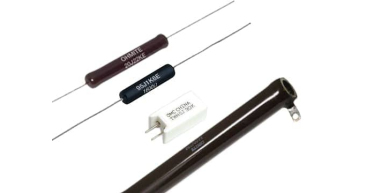
Guide to Wirewound Resistors
Thick film resistors, hailed for their versatility, durability, and wide-ranging applications, are a cornerstone of modern electronics. Call now and request a quote!
Read More
Ohms' Law Calculator
Read More
Ohm's Law 101
Ohm's Law stands as one of the fundamental principles in electrical engineering, providing a cornerstone for understanding and analyzing electrical circuits. Call now!
Read More
Energy Rating Calculator
Read More
Media Library
Read More
Technical Information
Read More
Industrial Resources
As a manufacturer of power resistors, Ohmite often creates products designed for industrial applications.
Read More
Medical Resources
As a manufacturer of power resistors, Ohmite often creates products designed for medical applications.
Read More
Transportation Resources
As a manufacturer of power resistors, Ohmite often creates products designed for transportation applications.
Read More
Military & Aerospace Resources
As a manufacturer of power resistors, Ohmite often creates products designed for military and aerospace applications.
Read More