
- August 2026 (1)
- July 2026 (1)
- June 2026 (3)
- April 2026 (1)
- March 2026 (1)
- February 2026 (1)
- January 2026 (1)
- July 2025 (2)
- July 2024 (1)
- December 2023 (1)
- July 2023 (7)
- June 2023 (1)
Introduction to Different Power Resistor Types
Sep 26, 2022In demanding design parameters, specialized components can be necessary. When the power to dissipate is at least 5 watts, that means power resistors.
All resistors dissipate energy and generate some heat. Power resistors differ in the larger amounts of energy they can burn off as heat, through a challenging application of Ohm’s law. That requires designs that will let the components maintain predictable and stable performance under heavy loads while
Power resistors make regular appearances in such circuits as power supplies, power amplifiers, and power conversion. They’re important in power infrastructure—in transmission and distribution networks—but those aren’t the only applications. They also appear in dummy loads, braking systems for trains using electric motors, automotive applications, snubber resistors to manage current fluctuations, current sensing, bleeders to discharge capacitors, current balancing in semiconductors, and more.
These uses dictate many of the common characteristics of power resistors. They are often larger than other types of resistors to have the physical capacity to handle higher loads, although they are available in many shapes and sizes.
The construction materials not only must provide the necessary resistance but be good at transmitting heat away from the component and to some recipient: forced air, a metal heat sink with or without thermal conductive grease or gel, or an exchanger that can transfer heat to a circulating liquid coolant.
There are seven different types of power resistor construction: composition, ceramic composition, film, foil, wirewound, and element or shunt.
Carbon Composition: Carbon composition construction involves finely ground carbon and an insulating binder. The ratio of the two determines the resistance. The materials are mixed and compressed into a cylinder with terminals on its ends and an applied insulator coating on the outside. These are good for high energy and surge applications that require smaller sized components. The resistors can absorb high levels of energy repeatedly without degradation to the resistive value.
Ceramic composition: Ceramic composition resistors use ceramic materials rather than carbon. They are common in a wide array of applications, including rail charging stations, switchgear, motor controls, defibrillators, accelerators, circuit breakers, and high voltage power supplies. The components are chemically inert, thermally stable, and are non-inductive.
Film: There are two types of film resistors: thick film and thin film. Thick film uses a paste of a glass and conductive material paste on a substrate. The construction allows high resistance values, and they can use a serpentine printing design to eliminate inductance, important in steady frequency applications.
Thin film resistors use vacuum deposition method to deposit the conductive material onto a ceramic base. The thicknesses of these are three orders of magnitude smaller than thick film. Thin film resistors also allow high resistance values but with better thermal stability than thick film. Some common applications are precision test equipment and constant current source circuits.
Foil: Metal foil resistors are constructed with photoetched resistive material on a ceramic base with high heat conductivity. The etching process determines the component’s value with high precision. They have good long-term stability, low noise, low capacitance, and no inductance. A low temperature coefficient of resistance means little change in resistive value as internal and external temperatures vary. A common application is current sense circuitry.
Wirewound: These resistors are formed, as the name suggests, by conductive wire wrapped around an insulating core, typically ceramic for high power applications. Resistance varies with the wire alloy materials and the thickness of the wire. They frequently appear in high current or braking applications. For high power applications they often come in finned aluminum cases that act like heat sinks. Because of their construction, wirewound resistors can present significant parasitic inductance, especially at high frequencies, requiring special internal wiring patterns as well as circuit design to mitigate the effects. They do have high value tolerance, long-term stability, and a low temperature coefficient, so retain their values as temperatures change.
Metal Element and shunt: Called both element and shunt resistors, this type is a solid piece of resistive material that can provide high stability in very low values, a characteristic difficult to achieve in other types of construction. Element/shunt resistors can also handle high current, sometimes up to 1,200 amps. They are commonly used to measure current output of a circuit.
Power resistors are a critical component in circuit design. Choosing the right type will influence cost, performance, size, possible cooling methods, best applications, and other design considerations.
Contact Ohmite and communicate with an expert who can help you specify the best type of power resistor for your application and requirements.
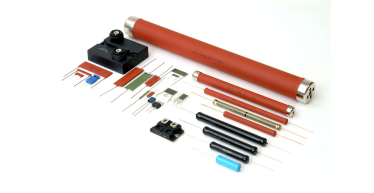
Guide to Power Resistors
Power resistors are used to dissipate energy by converting it to heat. and are designed to maintain stable performance. Call now and request a quote today!
Read More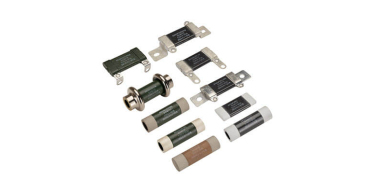
Guide to Ceramic Resistors
Ceramic Composition resistors are composed of a mixture of a finely ground insulator and conductor which is compressed into a cylindrical shape. Call now!
Read More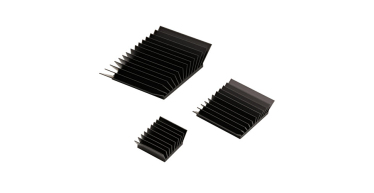
Guide to Heat Sinks
As semiconductor devices scale to smaller sizes and higher power densities, thermal management has become more challenging Call now and request a quote!
Read More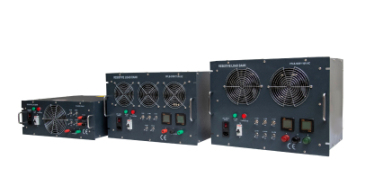
Guide to Load Banks
A load bank is a device that is intended to accurately mimic a load that a power source will see in an actual application. Call now and request a quote today!
Read More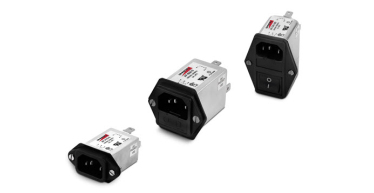
Guide to EMI Filters
To control the effects of EMI, standards are in place internationally, for commercial electronics, aerospace as well as military and space applications. Call now!
Read More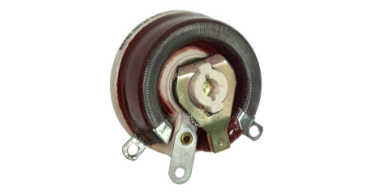
Guide to Rheostats
Rheostats, a fundamental component in electrical engineering, play a crucial role in controlling current flow and adjusting resistance in electrical circuits. Call now!
Read More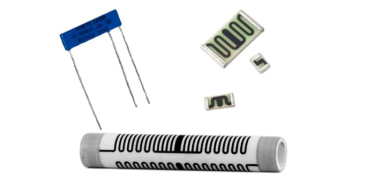
Guide to Thick Film Resistors
Thick film resistors, hailed for their versatility, durability, and wide-ranging applications, are a cornerstone of modern electronics. Call now and request a quote!
Read More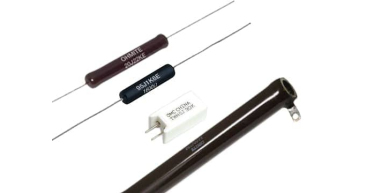
Guide to Wirewound Resistors
Thick film resistors, hailed for their versatility, durability, and wide-ranging applications, are a cornerstone of modern electronics. Call now and request a quote!
Read More
Ohms' Law Calculator
Read More
Ohm's Law 101
Ohm's Law stands as one of the fundamental principles in electrical engineering, providing a cornerstone for understanding and analyzing electrical circuits. Call now!
Read More
Energy Rating Calculator
Read More
Media Library
Read More
Technical Information
Read More
Industrial Resources
As a manufacturer of power resistors, Ohmite often creates products designed for industrial applications.
Read More
Medical Resources
As a manufacturer of power resistors, Ohmite often creates products designed for medical applications.
Read More
Transportation Resources
As a manufacturer of power resistors, Ohmite often creates products designed for transportation applications.
Read More
Military & Aerospace Resources
As a manufacturer of power resistors, Ohmite often creates products designed for military and aerospace applications.
Read More