
- August 2026 (1)
- July 2026 (1)
- June 2026 (3)
- April 2026 (1)
- March 2026 (1)
- February 2026 (1)
- January 2026 (1)
- July 2025 (2)
- July 2024 (1)
- December 2023 (1)
- July 2023 (7)
- June 2023 (1)
Regular Power vs. Ceramic Power Resistors
Sep 26, 2022Having to dissipate more than five watts of power in your circuit topology? You need a power resistor. They are important in many applications: power infrastructure, dummy loads, braking systems for trains using electric motors, automotive applications, snubber resistors to manage current fluctuations, current sensing, bleeders to discharge capacitors, current balancing in semiconductors, and more.
But that’s overly simplistic, like saying you need a vehicle and assuming a passenger sedan, sports car, or SUV are equivalent.
There are two major categories of power resistors. One is the widely used “regular” variety, including both carbon- and metal-based. The other, ceramic, has some additional attractive characteristics for demanding needs.
The first type includes carbon composition, which are made of finely ground carbon and an insulating binder formed into cylinders for smaller components in high-energy and surge applications. Thick or thin metallic film resistors use a conductive paste on a substrate for high resistance values. Foil resistors have photoetched resistive material on a non-conductive substrate for long-term stability, low noise, and low capacitance. In wirewound construction, a conductive wire is wrapped around an insulating core with a natural application in high-current use with a low temperature coefficient for stability in higher temperatures. Element or shunt resistors provide solid blocks of resistive material with high stability at low resistive values.
Although not true for all of the carbon resistors, there is a potential issue with many, particularly wirewound and film. Spiraling a conductor around a base core can also turn the component into an inductor, affecting circuit design with parasitic inductive effects. There may additional be parasitic capacitance effects.
In many circuit designs, such considerations aren’t significant issues. In others, however, what would normally be insignificant characteristics with little effect can wreak subtle havoc and change the performance of a design or incorporate problems that might be hard to diagnose, identify, and isolate after the fact.
When that is, or as important, might be, the case, ceramic power capacitors can provide great answers. Outside of avoiding such design problems, some types of ceramic capacitors add other features that can improve the ability for designs to deliver on performance goals.
For example, ceramic composition resistors are chemically inert, thermally stable, and are non-inductive, as they use a mix of ceramic and binder rather than carbon. Axials are non-inductive bulk resistors that handle high peak power or high-energy pulses in a small size and are intended as replacements for carbon composition resistors. Disk and washer resistors are flat and offer greater surface area for better heat dissipation. Encapsulated ceramic resistors are not only non-inductive but come in ruggedized packages to offer mechanical shock and vibration resistance and sealed protection against contaminants. Machined aluminum case and packaging materials are suitable for harsh industrial and aerospace applications. Metallic load bank resistors are typically used in high power load testing of emergency power systems, including generators, uninterruptible power supplies, turbines, battery systems and dynamic braking power dissipation for generators and large motors. Slab ceramic resistors have non-inductive bulk construction to provide higher power and energy dissipation in more compact form factors. The component design allows energy and power to pass uniformly through the entire resistor body. Bulk tubular resistors are available in a wide range of standard sizes, ceramic materials terminations, and mounting hardware. They allow energy and power to pass uniformly through the entire resistor body and not concentrate through limited pathway constructions like wire or film. Then there are also water-cooled resistors that allow either direct and indirect circulating fluid and conduction to dissipate more heat at a faster rate than air cooling. However, water quality can affect the component lifespan, which typically runs from one to five years.
Electric and physical performance characteristics as well as size, value ranges, and price and availability all become part of the many trade-offs. As with any type of component, certain variations may lend themselves to particular uses. Choosing the right type of resistor will influence cost, performance, size, possible cooling methods, best applications, and other design considerations.
Sometimes the right choice will be obvious. Other times, perhaps not. In those cases, contact Ohmite and communicate with an expert who at no charge can help you specify the best type of resistor for your application and requirements.
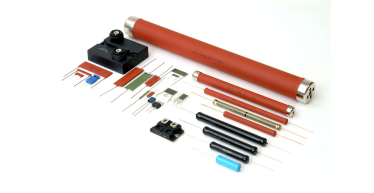
Guide to Power Resistors
Power resistors are used to dissipate energy by converting it to heat. and are designed to maintain stable performance. Call now and request a quote today!
Read More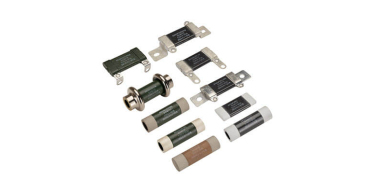
Guide to Ceramic Resistors
Ceramic Composition resistors are composed of a mixture of a finely ground insulator and conductor which is compressed into a cylindrical shape. Call now!
Read More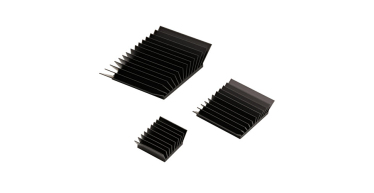
Guide to Heat Sinks
As semiconductor devices scale to smaller sizes and higher power densities, thermal management has become more challenging Call now and request a quote!
Read More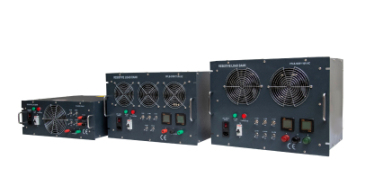
Guide to Load Banks
A load bank is a device that is intended to accurately mimic a load that a power source will see in an actual application. Call now and request a quote today!
Read More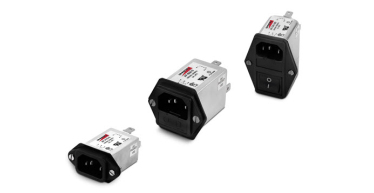
Guide to EMI Filters
To control the effects of EMI, standards are in place internationally, for commercial electronics, aerospace as well as military and space applications. Call now!
Read More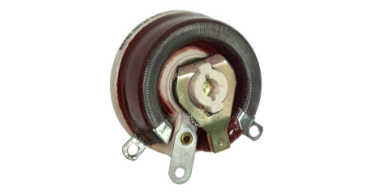
Guide to Rheostats
Rheostats, a fundamental component in electrical engineering, play a crucial role in controlling current flow and adjusting resistance in electrical circuits. Call now!
Read More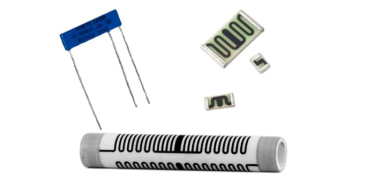
Guide to Thick Film Resistors
Thick film resistors, hailed for their versatility, durability, and wide-ranging applications, are a cornerstone of modern electronics. Call now and request a quote!
Read More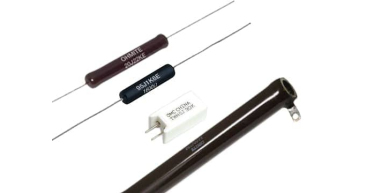
Guide to Wirewound Resistors
Thick film resistors, hailed for their versatility, durability, and wide-ranging applications, are a cornerstone of modern electronics. Call now and request a quote!
Read More
Ohms' Law Calculator
Read More
Ohm's Law 101
Ohm's Law stands as one of the fundamental principles in electrical engineering, providing a cornerstone for understanding and analyzing electrical circuits. Call now!
Read More
Energy Rating Calculator
Read More
Media Library
Read More
Technical Information
Read More
Industrial Resources
As a manufacturer of power resistors, Ohmite often creates products designed for industrial applications.
Read More
Medical Resources
As a manufacturer of power resistors, Ohmite often creates products designed for medical applications.
Read More
Transportation Resources
As a manufacturer of power resistors, Ohmite often creates products designed for transportation applications.
Read More
Military & Aerospace Resources
As a manufacturer of power resistors, Ohmite often creates products designed for military and aerospace applications.
Read More