
- August 2026 (1)
- July 2026 (1)
- June 2026 (3)
- April 2026 (1)
- March 2026 (1)
- February 2026 (1)
- January 2026 (1)
- July 2025 (2)
- July 2024 (1)
- December 2023 (1)
- July 2023 (7)
- June 2023 (1)
Testing Power Sources with Resistive Load Banks
Jan 04, 2023Resistive load banks are assemblies of high-power resistors that convert large amounts of electrical energy into heat. These devices have two main applications: Testing power sources and acting as a “dump” for circuits that needs to discharge energy. In this blog we will look at the testing applications, while a future blog will look at their use as energy absorbers.
As illustrated in Figure 1, a typical load bank is constructed from several resistors assembled onto racks. Because load banks are used to quickly dissipate large amounts of energy, they generally require active cooling, either through forced air or liquid cooling. Therefore, the rack of resistors is typically placed inside a cabinet along with a cooling system.

Figure 1. A load bank is made up of racks of high-power resistors.
Load banks can be permanently installed at a fixed location, but more often they are designed for portability. In the latter case, the load bank may be equipped with wheels for easier transportation.
Let’s take a closer look at some applications for load banks.
Example of testing power sources with resistive load banks
In a testing scenario, a load bank is used to simulate the load that a power source is designed to drive. Examples of these power sources include:
- Uninterruptible power sources (UPS)
- Power distribution units (PDUs)
- Diesel and turbine generators
- Power convertors for renewable energy sources
- Servo amplifiers
- Automotive batteries
Testing is motivated by a several factors, including:
- Verifying performance of a new power source before connecting it to an actual load
- Checking the performance of a backup power source without disconnecting the load from its main power supply (e.g., testing a UPS without shutting a building’s utility power down)
- Performing preventative maintenance, e.g., regularly running a diesel generator to prevent “wet stacking”
- Achieving and maintaining regulatory compliance
These testing scenarios usually involve AC voltages, but some load banks can be used to test DC power sources.
It is important to note that there are multiple types of load banks. These include resistive load banks—the topic of this blog—as well as inductive, capacitive, and resistive/reactive load banks. As the names imply, these loads banks differ in terms of the load they provide:
- Resistive load banks convert all applied power into heat, making them useful for testing power sources such as generators as well as for braking applications where a large amount of power needs to be quickly dissipated
- Inductive load banks create a lagging power factor, and are useful for simulating loads that involve magnetics, such as electric motors
- Capacitive load banks present a leading power factor, and are used both for power factor correction as well as in research facilities where complex load testing is required
- Resistive/reactive load banks provide a combination of loads—both resistive and inductive—and can be used to test equipment like turbines
Resistive load banks are the most common type, in part because they operate with a unity power factor and thus present maximum load to the power source under test. In other words, a resistive load bank can test a power source at its full nameplate power rating.
Another reason for using resistive load banks is cost: compared to other types of load banks, resistive load banks are considerably less expensive.
Choosing the right resistive load banks
The specific design of the load bank depends on the nature of the power source and the tests required. To cite just a few parameters, the resistance value, voltage capability, insulation, and portability must all take these factors into consideration.
To this end, Ohmite offers a variety of options for its load banks. For example, one product uses a unique Oval Edgewound design that can dissipate more wattage in smaller a package—ideal for applications with tight space constraints such as portable designs.
Beyond the resistors themselves, Ohmite offers load bank assemblies built for rugged durability—one such load bank is illustrated in Figure 1. These load banks feature:
- Corrosion-resistant stainless steel insulator supports
- Solid nickel terminals
- Special electroless nickel-plated solid copper terminal supports
While these load banks are available in standard configurations, they can also be customized for application-specific requirements. Whether you are looking for a standard or a customized configuration, it is advisable to contact the manufacturer well ahead of your target date for load testing. The specialized components that go into resistive load banks can have long lead times, and starting talks with the manufacturer early can help you avoid delays or identify alternatives.
To learn more and get started on your load bank, contact Ohmite today.
Guide to Power Resistors
Power resistors are used to dissipate energy by converting it to heat. and are designed to maintain stable performance. Call now and request a quote today!
Read More
Guide to Ceramic Resistors
Ceramic Composition resistors are composed of a mixture of a finely ground insulator and conductor which is compressed into a cylindrical shape. Call now!
Read More
Guide to Heat Sinks
As semiconductor devices scale to smaller sizes and higher power densities, thermal management has become more challenging Call now and request a quote!
Read More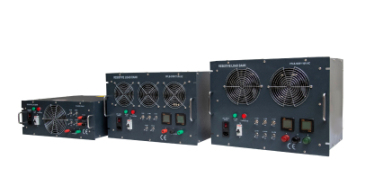
Guide to Load Banks
A load bank is a device that is intended to accurately mimic a load that a power source will see in an actual application. Call now and request a quote today!
Read More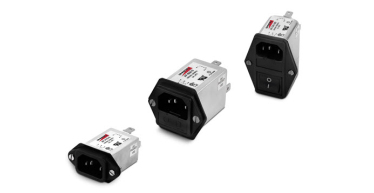
Guide to EMI Filters
To control the effects of EMI, standards are in place internationally, for commercial electronics, aerospace as well as military and space applications. Call now!
Read More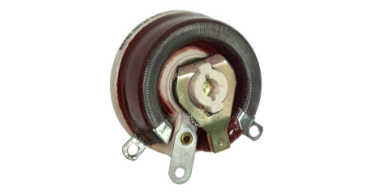
Guide to Rheostats
Rheostats, a fundamental component in electrical engineering, play a crucial role in controlling current flow and adjusting resistance in electrical circuits. Call now!
Read More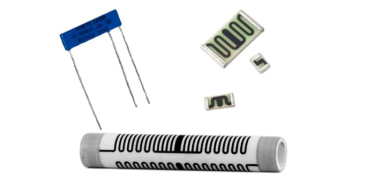
Guide to Thick Film Resistors
Thick film resistors, hailed for their versatility, durability, and wide-ranging applications, are a cornerstone of modern electronics. Call now and request a quote!
Read More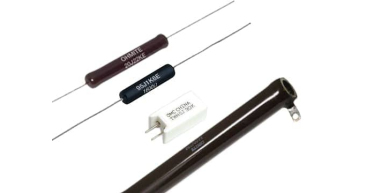
Guide to Wirewound Resistors
Thick film resistors, hailed for their versatility, durability, and wide-ranging applications, are a cornerstone of modern electronics. Call now and request a quote!
Read More
Ohms' Law Calculator
Read More
Ohm's Law 101
Ohm's Law stands as one of the fundamental principles in electrical engineering, providing a cornerstone for understanding and analyzing electrical circuits. Call now!
Read More
Energy Rating Calculator
Read More
Media Library
Read More
Technical Information
Read More
Industrial Resources
As a manufacturer of power resistors, Ohmite often creates products designed for industrial applications.
Read More
Medical Resources
As a manufacturer of power resistors, Ohmite often creates products designed for medical applications.
Read More
Transportation Resources
As a manufacturer of power resistors, Ohmite often creates products designed for transportation applications.
Read More
Military & Aerospace Resources
As a manufacturer of power resistors, Ohmite often creates products designed for military and aerospace applications.
Read More