
- August 2026 (1)
- July 2026 (1)
- June 2026 (3)
- April 2026 (1)
- March 2026 (1)
- February 2026 (1)
- January 2026 (1)
- July 2025 (2)
- July 2024 (1)
- December 2023 (1)
- July 2023 (7)
- June 2023 (1)
Power Resistors Put the Brakes on Medical Motors
Jan 10, 2023Feedback loops are the bread and butter of control systems. To prevent something from spiraling into larger and larger oscillations or spiked values, it’s critical to bring them back into normal ranges.
Not only is that the case for electrical circuitry, but for physical systems. Any moving device under the power of a motor of any sort typically needs a braking system to control speed and bring something to a complete halt.
In the medical field, that is a surprisingly wide set of equipment and devices. Hospital beds have motors, as do CT, MRI, and X-Ray machines. Physical therapy equipment, booms, and even robotic surgical systems are motorized. Medical pumps, lab automation, biosafety cabinets, and ventilators and many more medical applications may require braking systems.
Medical devices that use motors, whether rotor, linear, or any other form, need to control the movement activity. Forego a braking function and the result is disastrous, with malfunctions and errors on the lighter side and injuries and death potential outcomes.
Some form of electrical braking, rather than depending on mechanical friction alone, is generally called for, which means eliminating kinetic energy from the system, typically in the form of heat.
Power resistors, with their ability to handle and dissipate high transient currents are an intrinsic part of dynamic braking systems. The same underlying technologies and component designs that can slow and stop objects as large as trains and elevators can handle the energy loads in medical devices and equipment.
However, not all power resistors, even though frequently used in dynamic breaking, are necessarily a fit. Medical equipment and its uses provide significant constraints. The space available is often restricted. That not only means a need for smaller parts, but less room for air circulation, and so a requirement for especially efficient heat transfer away from other components.
Power resistors for breaking functions in medical equipment should be relatively low profile and encased in metal and often compatible with heatsink mounts for increased and faster power dissipation.
For example, Ohmite’s type 270 have wattage ratings from 12 to 1000 watts with an overload capability of 10 times the rated wattage for five seconds. The 280 is for low resistance values, from 0.1 ohm for a 300-watt unit, with special order units available for up to 1,500 watts and the ability to withstand frequent start-stop cycles.
HS aluminum housed resistors are designed for direct heatsink mounting with thermal compound with power dissipation from 15- to 300-watts. While the use of proprietary heat sinks with lower thermal resistances is acceptable, uprating is not recommended. For maximum heat transfer it is recommended that a heat sink compound be applied between the resistor base and heat sink chassis mounting surface. It is essential that the maximum hot spot temperature of 200°C is not exceeded, therefore, the resistor must be mounted on a heat sink of correct thermal resistance for the power being dissipated.
HS series resistors are manufactured in compliance with MIL 18546 and IEC 115 specifications and are also RoHS compliant. Designed for direct heatsink mounting with thermal compound to achieve maximum performance, the HS series offer high power to physical volume ratios and are wound to maximize high pulse capacity. At high ambient temperature dissipation derates linearly to zero at 200°C.
Models offer values from 5 ohms to 100,000 ohms, depending on wattage. There are also low inductive (NHS) models, indicated by an N before the HS code, for example, NHS50 would be a 50-watt low inductive aluminum housed resistor. Custom design HS series are also available.
The quality of parts is important in medical equipment designs, which are critical applications in service of human health and life, so work with a vendor who can deliver quality. Ohmite, for example, has decades of experience in the needs and requirements of the medical industry and is well-known for its expertise in power resistors of all types, including those used in braking.
While descriptions and specs on Ohmite’s website will be helpful, they aren’t the only resource the company offers. Contact Ohmite and communicate with an expert who at no charge can help you specify the best type of filter for your application and requirements.
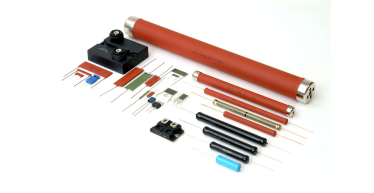
Guide to Power Resistors
Power resistors are used to dissipate energy by converting it to heat. and are designed to maintain stable performance. Call now and request a quote today!
Read More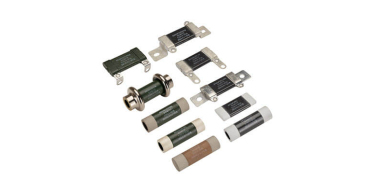
Guide to Ceramic Resistors
Ceramic Composition resistors are composed of a mixture of a finely ground insulator and conductor which is compressed into a cylindrical shape. Call now!
Read More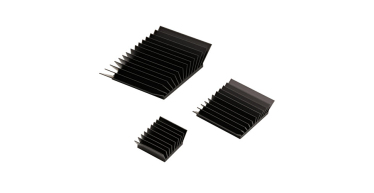
Guide to Heat Sinks
As semiconductor devices scale to smaller sizes and higher power densities, thermal management has become more challenging Call now and request a quote!
Read More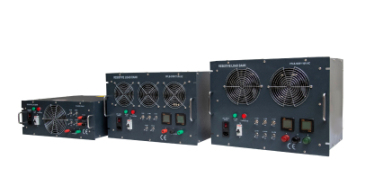
Guide to Load Banks
A load bank is a device that is intended to accurately mimic a load that a power source will see in an actual application. Call now and request a quote today!
Read More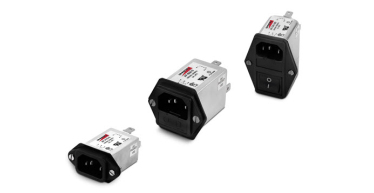
Guide to EMI Filters
To control the effects of EMI, standards are in place internationally, for commercial electronics, aerospace as well as military and space applications. Call now!
Read More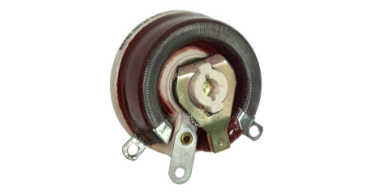
Guide to Rheostats
Rheostats, a fundamental component in electrical engineering, play a crucial role in controlling current flow and adjusting resistance in electrical circuits. Call now!
Read More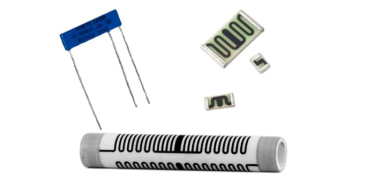
Guide to Thick Film Resistors
Thick film resistors, hailed for their versatility, durability, and wide-ranging applications, are a cornerstone of modern electronics. Call now and request a quote!
Read More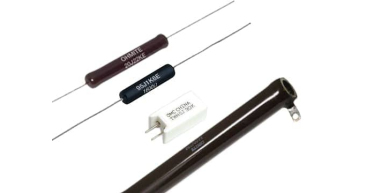
Guide to Wirewound Resistors
Thick film resistors, hailed for their versatility, durability, and wide-ranging applications, are a cornerstone of modern electronics. Call now and request a quote!
Read More
Ohms' Law Calculator
Read More
Ohm's Law 101
Ohm's Law stands as one of the fundamental principles in electrical engineering, providing a cornerstone for understanding and analyzing electrical circuits. Call now!
Read More
Energy Rating Calculator
Read More
Media Library
Read More
Technical Information
Read More
Industrial Resources
As a manufacturer of power resistors, Ohmite often creates products designed for industrial applications.
Read More
Medical Resources
As a manufacturer of power resistors, Ohmite often creates products designed for medical applications.
Read More
Transportation Resources
As a manufacturer of power resistors, Ohmite often creates products designed for transportation applications.
Read More
Military & Aerospace Resources
As a manufacturer of power resistors, Ohmite often creates products designed for military and aerospace applications.
Read More