
- August 2026 (1)
- July 2026 (1)
- June 2026 (3)
- April 2026 (1)
- March 2026 (1)
- February 2026 (1)
- January 2026 (1)
- July 2025 (2)
- July 2024 (1)
- December 2023 (1)
- July 2023 (7)
- June 2023 (1)
The Charge of Powering Up EVs Quickly
Feb 24, 2023It’s hard to miss the biggest coming revolution in transportation: electric vehicles. Sports cars, sedans, pickup trucks, semis, heavy equipment in agriculture and construction—even alternative transportation like electrified miniature cars, bikes, and scooters.
The reason is a bad case of gas. Not indigestion, but greenhouse gas. To keep climate change in check, CO2 emissions need to go down—and transportation accounts for 23% of energy-related CO2 emissions, according to the IPCC. That’s why the executive director of the International Energy Agency said that “electric vehicles have an indispensable role to play in reaching net-zero emissions worldwide.”
Switching to EVs will take some big changes—especially when it comes to charging infrastructure. Until now, EVs have been held back by lack of charging stations. That’s set to change: In late 2022, a whopping $5B in was funding approved for the National Electric Vehicle Infrastructure (NEVI).
But just adding more stations isn’t enough. The charge times also need to go down. Some years back, one company said that it wanted to build an electric truck with an installed energy capacity of 1,000 kilowatt-hours and to recharge it to 80% in 30 minutes. That would require a charging station with a 1.6-MW capacity. Possible? Yes. Easy? No. The example may be extreme—well, for now—but the essence of the problem remains: how to manage the transfer of power and the heat it will generate.
There are two components to the design. There’s an external charger that delivers the power to the vehicle and an internal charger that manages the charging process of the battery.
The fastest charging speeds of a consumer automobile in the U.S. require major inflow of electric. Fast chargers like Tesla’s superchargers can deliver upwards of 250 kW with a 480-volt DC supply and can charge a car in about 20 minutes. Tests have shown that compared to a 150-kW charger, the time savings was two minutes. Other fast charging systems offer power levels between 62.5 and 90 kW, and new systems and variations regularly come out.
The important question for all of them is heat regulation throughout the charging process. The initial power source has to transfer heat from the equipment to either the air or some other form of cooling. The car also must rid itself of heat to avoid, among other things, overheating the large and costly battery. Then there is the question of the power source. Will it be a point-situated renewable like solar or wind to really push the carbon emissions improvement? Strictly grid because the location of the charger in an urban area doesn’t make a sufficiently powerful renewable source possible?
All this means a need for high-power rated resistors that can perform their jobs in power chargers, converters, and battery packs. Size will be an issue, at least in the car interior, where space is at a premium. Transient power, when chargers are turned on or off, will also be a design consideration.
Ohmite has multiple lines of power resistors for high power applications. Parts range from thick film to wirewound. Many can be attached to a heatsink for enhanced power dissipation. Multiple mounting options and constructions offer the options and versatility engineers need. And adjustable power resistors can be a sensible part of an initial design and prototyping process to permit changes as part of lab experimentation.
There are also completely different lines of power resistors that could be applicable to either the in-vehicle part of the design problem or in the external charger portion. For example, HCLB series are resistance load banks of high-current oval edgewound resistors. They are commonly used in dynamic braking in transit applications. Single individual variations can run from 8kW to 24kW.
SGM series stamped grid module resistors, also used in braking, can handle power in single assemblies of up to 50kW.
The demands of EV rapid charging are developing quickly. Knowing in advance what types of resistors might meet the needs of a design is difficult. Ohmite offers many resources and deep expertise in identifying the type of resistor that is best suited for your application. Contact us today.
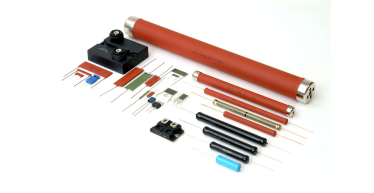
Guide to Power Resistors
Power resistors are used to dissipate energy by converting it to heat. and are designed to maintain stable performance. Call now and request a quote today!
Read More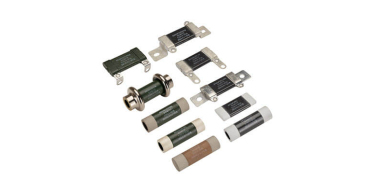
Guide to Ceramic Resistors
Ceramic Composition resistors are composed of a mixture of a finely ground insulator and conductor which is compressed into a cylindrical shape. Call now!
Read More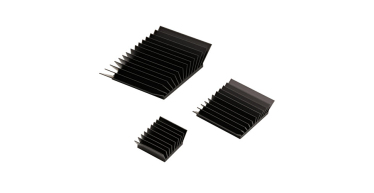
Guide to Heat Sinks
As semiconductor devices scale to smaller sizes and higher power densities, thermal management has become more challenging Call now and request a quote!
Read More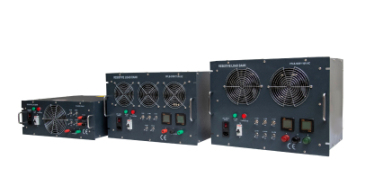
Guide to Load Banks
A load bank is a device that is intended to accurately mimic a load that a power source will see in an actual application. Call now and request a quote today!
Read More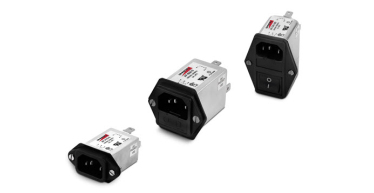
Guide to EMI Filters
To control the effects of EMI, standards are in place internationally, for commercial electronics, aerospace as well as military and space applications. Call now!
Read More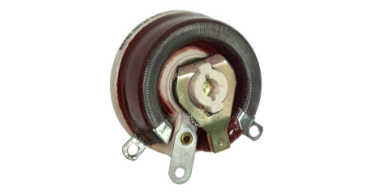
Guide to Rheostats
Rheostats, a fundamental component in electrical engineering, play a crucial role in controlling current flow and adjusting resistance in electrical circuits. Call now!
Read More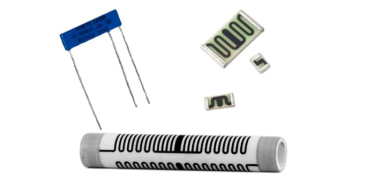
Guide to Thick Film Resistors
Thick film resistors, hailed for their versatility, durability, and wide-ranging applications, are a cornerstone of modern electronics. Call now and request a quote!
Read More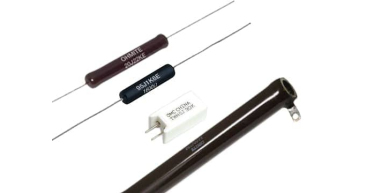
Guide to Wirewound Resistors
Thick film resistors, hailed for their versatility, durability, and wide-ranging applications, are a cornerstone of modern electronics. Call now and request a quote!
Read More
Ohms' Law Calculator
Read More
Ohm's Law 101
Ohm's Law stands as one of the fundamental principles in electrical engineering, providing a cornerstone for understanding and analyzing electrical circuits. Call now!
Read More
Energy Rating Calculator
Read More
Media Library
Read More
Technical Information
Read More
Industrial Resources
As a manufacturer of power resistors, Ohmite often creates products designed for industrial applications.
Read More
Medical Resources
As a manufacturer of power resistors, Ohmite often creates products designed for medical applications.
Read More
Transportation Resources
As a manufacturer of power resistors, Ohmite often creates products designed for transportation applications.
Read More
Military & Aerospace Resources
As a manufacturer of power resistors, Ohmite often creates products designed for military and aerospace applications.
Read More