
- August 2026 (1)
- July 2026 (1)
- June 2026 (3)
- April 2026 (1)
- March 2026 (1)
- February 2026 (1)
- January 2026 (1)
- July 2025 (2)
- July 2024 (1)
- December 2023 (1)
- July 2023 (7)
- June 2023 (1)
Understanding Thick Film Heaters: A Technical Overview
Jan 21, 2026Electronic systems continue to evolve toward higher efficiencies and smaller footprints, so heating technologies are being pushed to adapt. Thick film heaters are among the many solutions that are gaining wider use across industrial, scientific, and commercial environments. Their compact, patterned resistive elements are capable of delivering precise and uniform thermal output.
This refers to conductive, resistive, or dielectric circuit elements that are deposited through screen printing materials onto the substrate. Its performance, durability, and high reliability are essential to a variety of applications.
How Thick Film Heaters Produce Heat
When current flows through, energy is dissipated as heat. This simple mechanism allows thick film heaters to function as efficient, controllable thermal components in applications of varying scales.
The substrate is the key component and the source of the heater’s superior performance. It’s the foundation that provides exceptional thermal stability and ensures even heat distribution to prevent hot spots and maximizing efficiency. The substrate can withstand high temperatures as it actively aids in efficient heat transfer, keeping applications consistently warm.
Understanding the Role of the Substrate
The substrate plays a central role in how heat is managed. There are several characteristics that are key reasons thick film heaters are selected for applications requiring consistency and repeatability. These include:
Thermal Stability: Ceramic and other high-temperature substrates can tolerate elevated operating temperatures without distortion
Heat Distribution: The substrate helps spread thermal energy evenly, reducing the risk of hot spots
Heat Transfer: Good thermal conductivity supports efficient transfer into the surrounding system or medium
Material and Pattern Considerations
Patterning flexibility is one of the defining advantages of thick film heater technology, enabling targeted thermal design not easily replicated by bulkier heating elements. Two variables largely determine heater performance:
Resistive Layer Composition and Thickness: A thicker or higher-resistivity layer produces greater heat output at a given current. Material formations can be adjusted depending on the required temperature profile or operating environment.
Pattern Geometry: The printed resistive pattern shapes the current path. This approach allows engineers to create uniform heat distribution, concentrate heat in specific zones, and manage gradients across a surface.
Advantages of Thick Film Heating Technology
Across industries, thick film heaters are valued for several inherent benefits due to their strong construction and electrical characteristics:
Uniform Heat Distribution
- Heaters shape and regulate heat distribution through patterned resistive traces
- Engineers can design localized heating zones for targeted thermal control
- Thermal gradients available where different sections require different temperatures
- Predictable thermal performance cycle after cycle due to precise, repeatable geometries defined during the printing process
Compact, Lightweight Construction
- Combination of high watt densities and low profile heating element for packing more heat energy into a smaller area
- Suitable for compact devices with limited internal space, portable instruments, and applications requiring minimal added weight
- Conform to flat, curved, or irregular surfaces when designed with the appropriate substrate
Rapid Thermal Response and Efficient Heating
- Thermal response times typically faster since heat is generated at the surface of the resistive layer
- Improved energy efficiency due to minimal thermal mass
- Faster feedback in closed-loop temperature control systems
- Allows for precise temperature adjustments
Long-Term Stability and Reliability
- Built for durability with stability at high temperatures and resistance to warping, cracking, or corrosion
- Exhibits high resistance to thermal cycling
- Displays stable electrical characteristics over time and minimal drift in performance
- Provides operational longevity even in demanding environments
Design and Material Flexibility
- Customized heaters can be adjusted for resistance values, heating density, operational temperature ranges, physical size and shape, and substrate materials
- Tailorable to unique application requirements
- Supports both standard and highly specialized applications
Integration with Sensors and Control Electronics
- Can be co-designed with thermistors, temperature sensors, conductive traces and connection pads, and control circuitry components
- Enables compact, integrated modules that simplify overall system design
- Reduces the need for secondary components
- Can significantly improve accuracy and reduce system complexity for applications requiring closed-loop temperature regulation
Common Applications for Thick Film Heaters
Thick film heaters are commonly used across a wide range of industries thanks to their compact form factor, precise heating capabilities, and customization qualities. Their level of versatility comes from the combination of patterned resistive traces, durable substrates, and stable electrical properties. They can be used for simple everyday applications as well as highly specialized scientific or industrial tasks.
Heated Surfaces and Thermal Management Panels
- Warming plates and heating panels: These are common in laboratory, food service, and industrial workstations where uniform heat distribution is needed on a flat surface
- Anti-condensation or anti-fog system: Heaters can be applied behind display screens, optical components, and instrument enclosures to prevent moisture buildup
- De-icing and frost-prevention layers: They’re often used to keep surfaces free from frost without adding significant weight or bulk in transportation, outdoor electronics, or environmental monitoring systems
Scientific and Laboratory Equipment
- Analytical instruments: Devices like chromatographs, spectroscopy systems, or sample conditioning modules utilize localized heating zones with very predictable behavior
- Temperature-controlled chambers or stages: Systems like microscope stages, environmental test platforms, and cell culture systems benefit for consistent and repeatable thermal conditions
- Sensors and metrology equipment: Heaters help maintain stable temperature in some sensing technologies for optimized performance
Industrial Process Heating
- Gas and fluid heating: Tubes, flow cells, or plates can be heated efficiently due to direct thermal contact with the substrate
- Manufacturing and automation systems: Thick film heaters offer responsiveness and durability for continuous use
- Thermal stabilization in electronics: For systems operating in cold environments, thick film heaters keep critical components within optimized thermal ranges
Medical and Life Science Devices
- Point-of-care diagnostic devices: Onsite diagnostic systems require controlled thermal environments for reagents, cartridges, or microfluidic pathways
- Fluid warming systems: IV warmers or controlled infusion devices benefit from heaters that respond quickly to temperature feedback
Consumer and Commercial Products
- Common everyday applications: Heated seating elements, appliance warming zones, or vending systems can contain thick film heaters
- Commercial products: Systems like anti-moisture features in refrigeration or climate-controlled cabinets benefit from the long operational life and thin form of these heaters
Ohmite’s Custom Thick Film Heaters
Ohmite’s thick film resistors are highly effective heating elements that are expertly engineered to convert electrical energy directly into precise thermal energy. The thickness and composition of the resistive layer are meticulously controlled, directly determining the resistance value and heating capacity.
As the trusted power resistor provider, we are professionals in engineering thick film heaters. We can adjust the geometry of the resistive material to achieve a specific, customized heating profile to meet customers’ exact design requirements.
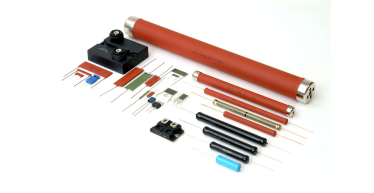
Guide to Power Resistors
Power resistors are used to dissipate energy by converting it to heat. and are designed to maintain stable performance. Call now and request a quote today!
Read More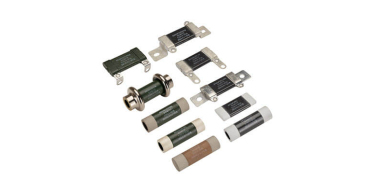
Guide to Ceramic Resistors
Ceramic Composition resistors are composed of a mixture of a finely ground insulator and conductor which is compressed into a cylindrical shape. Call now!
Read More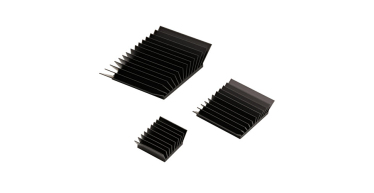
Guide to Heat Sinks
As semiconductor devices scale to smaller sizes and higher power densities, thermal management has become more challenging Call now and request a quote!
Read More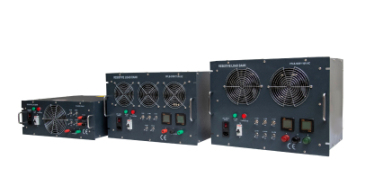
Guide to Load Banks
A load bank is a device that is intended to accurately mimic a load that a power source will see in an actual application. Call now and request a quote today!
Read More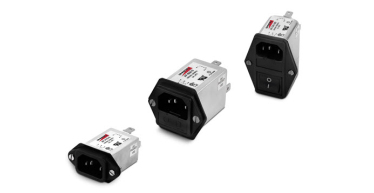
Guide to EMI Filters
To control the effects of EMI, standards are in place internationally, for commercial electronics, aerospace as well as military and space applications. Call now!
Read More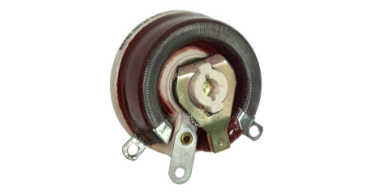
Guide to Rheostats
Rheostats, a fundamental component in electrical engineering, play a crucial role in controlling current flow and adjusting resistance in electrical circuits. Call now!
Read More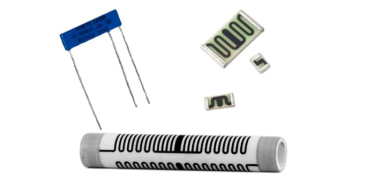
Guide to Thick Film Resistors
Thick film resistors, hailed for their versatility, durability, and wide-ranging applications, are a cornerstone of modern electronics. Call now and request a quote!
Read More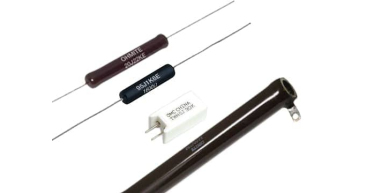
Guide to Wirewound Resistors
Thick film resistors, hailed for their versatility, durability, and wide-ranging applications, are a cornerstone of modern electronics. Call now and request a quote!
Read More
Inventory Search
The Ohmite product inventory is spread across our distribution channel around the world and can be located here. Finding Ohmite stock has never been easier. Call now!
Read More
Ohms' Law Calculator
Read More
Ohm's Law 101
Ohm's Law stands as one of the fundamental principles in electrical engineering, providing a cornerstone for understanding and analyzing electrical circuits. Call now!
Read More
Energy Rating Calculator
Read More
Media Library
Read More
Technical Information
Read More
Industrial Resources
As a manufacturer of power resistors, Ohmite often creates products designed for industrial applications.
Read More
Medical Resources
As a manufacturer of power resistors, Ohmite often creates products designed for medical applications.
Read More
Transportation Resources
As a manufacturer of power resistors, Ohmite often creates products designed for transportation applications.
Read More
Military & Aerospace Resources
As a manufacturer of power resistors, Ohmite often creates products designed for military and aerospace applications.
Read More