
- August 2026 (1)
- July 2026 (1)
- June 2026 (3)
- April 2026 (1)
- March 2026 (1)
- February 2026 (1)
- January 2026 (1)
- July 2025 (2)
- July 2024 (1)
- December 2023 (1)
- July 2023 (7)
- June 2023 (1)
A Practical Guide to Current Sense and Shunt Resistors
Feb 26, 2026Accurate current measurement is a foundational requirement in modern electronic systems. Underestimating the nuances of accurate measurement can lead you into trouble. From power management and motor control to battery monitoring and industrial automation, knowing how much current is flowing through a circuit enables better control, protection, and performance optimization. Current sense resistors and shunt resistors are two common components used for this purpose.
What Are Current Sense and Shunt Resistors?
Current sense and shunt resistors are precision resistive components designed to measure current indirectly by producing a small, known voltage drop. Based on Ohm’s Law (V = I x R), the voltage across the resistor is proportional to the current flowing through it. Measuring that voltage allows a system to calculate current without interrupting circuit operation.
Although the terms are sometimes used interchangeably, they often imply different use cases:
-
Current sense resistors are typically low-resistance components integrated into electronic circuits for monitoring and control. It’s designed with a controlled frequency response and very accurate resistance for use in precision.
-
Shunt resistors are often associated with higher-current measurements and may be used in power distribution, instrumentation, or metering applications. It develops a voltage across the resistor that’s proportional to the current passing through it.
Both rely on the same fundamental principle but differ in scale, construction, and application environment.
How Current Measurement Works
In a typical setup, a low-value resistor is placed in series with the load. As current flows, a small voltage develops across the resistor. This voltage is then measured using an analog-to-digital converter (ADC), operational amplifier, or dedicated current-sense amplifier.
Two common configurations:
-
Low-side sensing, where the resistor is placed between the load and ground
-
High-side sensing, where the resistor is placed between the supply and the load
Each approach has advantages and tradeoffs related to system noise, reference voltages, and fault detection, making placement an important part of the overall design.
Key Characteristics of Current Sense and Shunt Resistors
Low Resistance Values
To minimize power loss and system disruption, current sense and shunt resistors typically have resistance values in the milliohm or micro-ohm range. Lower resistance reduces voltage drop and heat generation, but it also results in smaller signals that must be measured accurately.
High Accuracy and Tight Tolerance
Because current is calculated directly from resistance value, tight tolerance is essential. Small deviations in resistance can introduce significant measurement error, especially in precision or feedback-driven systems.
Temperature Stability
As resistors heat up, their resistance can change. The temperature coefficient of resistance (TCR) describes how much the resistance shifts with temperature. Low TCR is critical in applications where temperature varies or where sustained current flow causes self-heating.
Power Dissipation Capability
Even at low resistance values, high current can result in significant power dissipation. Proper power rating ensures the resistor can operate safely without drifting, degrading, or failing.
Materials and Construction Methods
The performance of current sense and shunt resistors is closely tied to how they are constructed.
Metal Element and Alloy-Based Designs
Many shunt resistors use metal alloys chosen for their stability and predictable electrical behavior. These materials provide low resistance, consistent TCR, and mechanical durability in high-current environments.
Thick Film Technology
Thick film current sense resistors use printed resistive material on ceramic substrates. This approach allows for precise resistance trimming, compact form factors, and good thermal performance, making thick film suitable for surface-mount applications and integrated electronics.
Four-Terminal (Kelvin) Connections
For high-accuracy measurement, many current sense resistors use four-terminal designs. Two terminals carry current, while two separate terminals measure voltage. This configuration minimizes error caused by lead and trace resistance.
Design Considerations for Engineers
Selecting the right current sense or shunt resistor involves balancing electrical, thermal, and mechanical factors.
Accuracy vs. Signal Level
Lower resistance minimizes power loss but reduces voltage signal strength. Designers must ensure the resulting signal is still measurable within the system’s noise floor and ADC resolution.
Thermal Management
Power dissipation causes heat, which can affect resistance stability and nearby components. Proper PCB layout, copper area, and airflow help manage temperature rise.
Environmental Conditions
Industrial, automotive, and outdoor applications may require components that tolerate vibration, humidity, or wide temperature ranges. Construction method and packaging play a role in long-term reliability.
Safety and Fault Detection
In protection circuits, current sense resistors may be used to detect overcurrent conditions. In these cases, reliability and predictable failure modes are especially important.
Common Applications
Current sense and shunt resistors are found across many industries and system types, including:
-
Power supplies and converters for load monitoring and efficiency optimization
-
Motor drives and controls to manage torque, speed, and protection
-
Battery management systems to monitor charge and discharge currents
-
Industrial automation equipment for feedback and diagnostics
-
Energy metering and power distribution systems requiring high-current measurement
As systems become more efficient and electronically controlled, the demand for accurate current measurement continues to grow.
The Role of Current Sensing in Modern Systems
Beyond simple measurements, current sensing enables higher-level system intelligence. Real-time current data supports:
-
Predictive maintenance
-
Energy optimization
-
Fault detection and system protection
-
Closed-loop control systems
In many applications, current sense and shunt resistors serve as the foundation for these advanced capabilities. They’re critical for enabling performance, safety, and control in a variety of sectors.
Automotive: Battery Management Systems
In electric and hybrid vehicles, accurate current measurement is central to battery performance and safety. Shunt resistors are used to monitor charge and discharge currents in battery packs, providing data for SOC estimation, SOH monitoring, overcurrent protection, and thermal management control.
Low TCR, high stability, and robust construction are primarily important since these systems operate across wide temperature ranges and dynamic load conditions.
Industrial: Power Tools and Motor Control
Modern tools and systems rely on current monitoring for efficiency and protection. They help control motor torque and speed, detect stall or overload conditions, improve energy efficiency, and protect power electronics.
Compact, surface-mount current sense resistors are commonly used in situations where space is limited, but reliability under vibration and thermal cycling is critical.
Medical: Diagnostic and Sensor Equipment
In medical electronics, precision and stability are paramount. These resistors are often used in diagnostic imaging systems, patient monitoring equipment, laboratory analyzers, and precision sensor circuits.
Accurate current feedback ensures controlled power delivery to sensitive components and supports compliance with strict performance standards. Low noise characteristics and predictable thermal behavior are especially important in this field.
Ohmite’s Role in Current Resisting
Within Ohmite’s immense portfolio of resistors, our LVK Series and PCS Series illustrate how design is tailored to specific sensing requirements.
LVK Series
The LVK Series is designed for low-resistance, high-power current sensing applications. With its four-terminal Kelvin configuration, this resistor enables highly accurate current measurements by isolating voltage and current terminals. Ohmite’s proprietary technology and durable metal alloy construction ensure reliable performance and excellent TCR even at low resistance values, suited for harsh environments.
PCS Series
The PCS Series low-resistance chip resistors provide compact solutions for precision current sensing in space-constrained designs. It provides users with high precision current sensing and voltage division while offering low TCR to ±50ppm, excellent long-term stability, and RoHS compliance.
Better Manage Power with Current Sense and Shunt Resistors
Current sense and shunt resistors are essential components in modern electronic design, providing a reliable and cost-effective way to measure current across a wide range of applications. Understanding their operating principles, construction methods, and key performance characteristics helps engineers make informed design decisions.
As electronic systems continue to demand greater efficiency, accuracy, and reliability, thoughtful current sensing design will remain a critical part of power and control architectures. That’s an area where companies like Ohmite continue to contribute deep technical expertise.
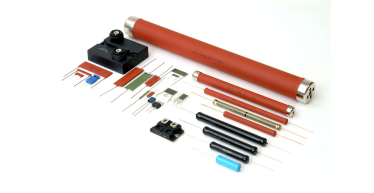
Guide to Power Resistors
Power resistors are used to dissipate energy by converting it to heat. and are designed to maintain stable performance. Call now and request a quote today!
Read More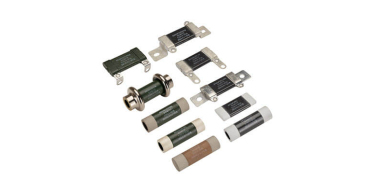
Guide to Ceramic Resistors
Ceramic Composition resistors are composed of a mixture of a finely ground insulator and conductor which is compressed into a cylindrical shape. Call now!
Read More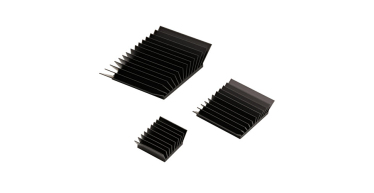
Guide to Heat Sinks
As semiconductor devices scale to smaller sizes and higher power densities, thermal management has become more challenging Call now and request a quote!
Read More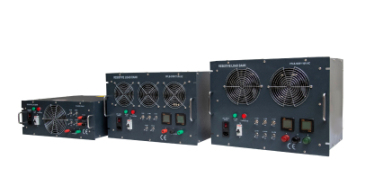
Guide to Load Banks
A load bank is a device that is intended to accurately mimic a load that a power source will see in an actual application. Call now and request a quote today!
Read More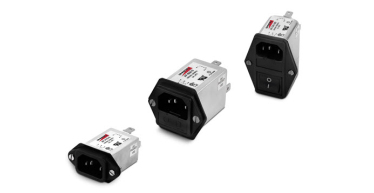
Guide to EMI Filters
To control the effects of EMI, standards are in place internationally, for commercial electronics, aerospace as well as military and space applications. Call now!
Read More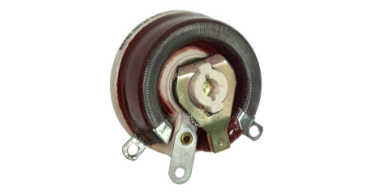
Guide to Rheostats
Rheostats, a fundamental component in electrical engineering, play a crucial role in controlling current flow and adjusting resistance in electrical circuits. Call now!
Read More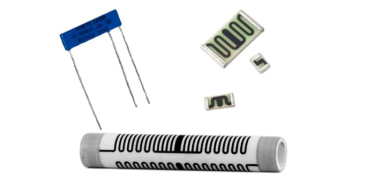
Guide to Thick Film Resistors
Thick film resistors, hailed for their versatility, durability, and wide-ranging applications, are a cornerstone of modern electronics. Call now and request a quote!
Read More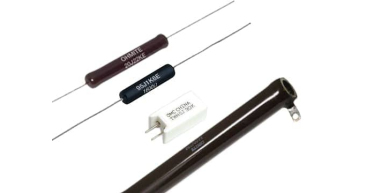
Guide to Wirewound Resistors
Thick film resistors, hailed for their versatility, durability, and wide-ranging applications, are a cornerstone of modern electronics. Call now and request a quote!
Read More
Inventory Search
The Ohmite product inventory is spread across our distribution channel around the world and can be located here. Finding Ohmite stock has never been easier. Call now!
Read More
Ohms' Law Calculator
Read More
Ohm's Law 101
Ohm's Law stands as one of the fundamental principles in electrical engineering, providing a cornerstone for understanding and analyzing electrical circuits. Call now!
Read More
Energy Rating Calculator
Read More
Media Library
Read More
Technical Information
Read More
Industrial Resources
As a manufacturer of power resistors, Ohmite often creates products designed for industrial applications.
Read More
Medical Resources
As a manufacturer of power resistors, Ohmite often creates products designed for medical applications.
Read More
Transportation Resources
As a manufacturer of power resistors, Ohmite often creates products designed for transportation applications.
Read More
Military & Aerospace Resources
As a manufacturer of power resistors, Ohmite often creates products designed for military and aerospace applications.
Read More