
- August 2026 (1)
- July 2026 (1)
- June 2026 (3)
- April 2026 (1)
- March 2026 (1)
- February 2026 (1)
- January 2026 (1)
- July 2025 (2)
- July 2024 (1)
- December 2023 (1)
- July 2023 (7)
- June 2023 (1)
Demand for High-Power Resistors in Renewable Energy Systems
Apr 22, 2026The transition to renewable energy is changing more than how electricity is generated. It’s reshaping the components required to keep modern power systems stable, efficient, and reliable. As wind farms, solar installations, battery storage systems, and electric vehicle charging networks continue to grow, so does the demand for components capable of managing increasingly large amounts of power.
Among those components, high-power resistors play a critical role. Although they’re rarely visible within a renewable energy system, they’re essential for safely dissipating energy, protecting sensitive equipment, enabling system testing, and maintaining stable operation in environments where power levels and conditions can change rapidly.
As renewable energy penetration rises, the need for robust, high-power resistor technologies is increasing across the entire energy ecosystem.
Why Renewable Energy Systems Need High-Power Resistors
Unlike conventional power generation, renewable energy sources such as solar and wind are inherently variable. Solar panels produce electricity only when sunlight is available, while wind turbines generate power according to changing wind conditions. These fluctuations create challenges for grid operators and equipment designers.
Renewable systems must continuously regulate voltage, current, and power flow to protect components and ensure safe operation. High-power resistors are used throughout these systems to absorb excess energy, manage transients, and support safe braking and load control.
In many cases, resistors perform several functions at once. They limit inrush current during startup and support voltage balancing and load sharing. They also protect circuits during fault conditions and provide accurate current measurement and monitoring.
Without these functions, renewable energy systems would be more vulnerable to instability, overheating, and equipment damage.
Wind Energy: Braking Resistors and Turbine Protection
Wind turbines are one of the clearest examples of why high-power resistors are necessary in renewable energy systems. During periods of high wind, a turbine can generate more energy than the system can to immediately use or transfer to the grid. If that excess energy isn’t controlled, the turbine may overspeed, placing significant stress on mechanical and electrical components.
Braking resistors solve this problem by converting excess electrical energy into heat. They’re connected to the turbine’s drive system and DC bus, where they dissipate energy during rapid deceleration, emergency stops, or high-wind conditions. This helps slow the turbine safely and prevents damage to generators, power electronics, and drivetrain components.
Dynamic braking resistors are also used during maintenance and shutdown procedures, where rapid but controlled stopping is required. Their resistance values and power ratings must be carefully selected to match the turbine’s power output and braking profile.
In large wind farms, braking resistors are often paired with load banks, which stimulate real electrical loads during testing and commissioning. Load banks allow operators to verify that turbines, converters, and protection systems are functioning properly before they’re connected to the grid.
Solar Energy: Supporting Inverters and Grid Stability
Solar photovoltaic systems also depend heavily on high-power resistors, particularly within inverters and grid interface equipment. Solar panels generate direct current, which must be converted into alternating current before it can be used by homes, businesses, or the electric grid.
High-power inverters are central to this process. They must maintain stable voltage, match grid frequency, and respond quickly to changing solar conditions. High-power resistors are used inside these systems for several purposes. Those include DC-link discharge and precharge circuits, current sensing and monitoring, snubber circuits for protecting switching devices, and surge and fault protection.
In utility-scale solar installations, central inverters may handle hundreds of megawatts of power. As these systems become larger and more sophisticated, the thermal and electrical demands placed on their resistor networks continue to increase.
Resistors also support grid resilience by helping inverters manage transient conditions and power fluctuations. As more renewable generation is connected to the grid, maintaining stable voltage and frequency becomes increasingly important. Advanced inverter systems rely on carefully designed resistor networks to improve response time and reduce the risk of equipment failure.
Battery Energy Storage Systems Drive Additional Demand
Battery energy storage systems are becoming an essential part of renewable energy infrastructure. They help smooth fluctuations in wind and solar output by storing excess electricity when generation exceeds demand and releasing it later when needed.
These systems require extensive use of high-power resistors in areas like battery charging and discharging circuits, current measurement and balancing, and thermal management and safety systems.
As battery systems increase in size, from residential storage units to grid-scale installations capable of storing hundreds of megawatt-hours, the resistor technologies supporting them must also scale in power and durability.
Energy storage has become one of the fastest-growing areas of the renewable energy market, and demand for resistor technologies capable of handling large transient loads and sustained high power is growing alongside it. Since 2018, energy shifting through battery storage has become the primary use of new storage capacity additions worldwide.
Thermal Management is Becoming More Important
As renewable systems operate at higher voltages and power levels, thermal management becomes a major design challenge. High-power resistors dissipate large amounts of energy as heat, and if that heat isn’t managed effectively, it can reduce efficiency and shorten component life.
This has increased demand for resistor technologies designed to operate reliably under high thermal stress. Engineers increasingly seek components that offer high energy dissipation capability, stable resistance across temperature ranges, and long operational life in harsh environments.
Resistors used in renewable energy applications are often exposed to wide temperature swings, vibration, humidity, and outdoor environments. Technologies such as wirewound, edgewound, ceramic, and thick film resistors are commonly selected because they provide the durability and thermal stability required for these demanding conditions.
In addition, many renewable systems now combine electrical and thermal management into a single design strategy. High-power resistors are increasingly paired with heatsinks, forced-air cooling, and other thermal solutions to improve efficiency and reliability.
Emerging Trends in Renewable Power Systems
The demand for high-power resistors is likely to continue increasing as renewable energy systems become more complex. Several trends are driving this growth:
-
Larger wind and solar installations
-
More widespread battery storage adoption
-
Expansion of EV charging infrastructure
-
Greater use of grid-forming inverters
-
Increased need for system testing and load simulation
Modern power systems are becoming more dependent on power electronics, particularly inverter-based technologies. These systems often require fast, accurate control of current and voltage, which in turn increases reliance on high-performance resistor networks.
At the same time, renewable energy integration is creating new requirements for grid stability and resilience. As traditional synchronous generators are replaced by inverter-based renewable sources, additional electrical components are needed to help regulate frequency, absorb excess energy, and stabilize the grid. High-power resistors are increasingly part of those solutions.
Ohmite Resistors: Maximizing Reliability in Renewable Energy Systems
The growth of renewable energy is creating new demands throughout the electrical supply chain, and high-power resistors are becoming increasingly important to meeting those needs. Whether used in wind turbine braking systems, solar inverters, battery storage, or grid support equipment, these components help ensure that renewable energy systems operate safely, efficiently, and reliably.
Ohmite's resistors deliver reliable performance across wind and solar energy systems, including power conversion, grid integration, monitoring, and control. Designed with advanced technology and high-quality standards, they offer the stability, accuracy, and durability necessary to enhance energy output and boost ROI.
TGH Series: These non-inductive designed resistors are suited for high-frequency and pulse-load applications. They’re available in 120- or 200-watt sizes.
TAP600 Series: These resistors deliver 600 watts of reliable power to a variety of power conditioning, transmission, and control applications. Their resistive elements are designed for low inductance and capacitance.
TCH35 Series: These resistors provide 35 watts of steady-state power and are built under propriety processes that deliver more power handling capability.
Ohmite is committed to defining the new standard of excellence in renewable energy. Contact our specialists to maximize your energy projects with our advanced resistor solutions.
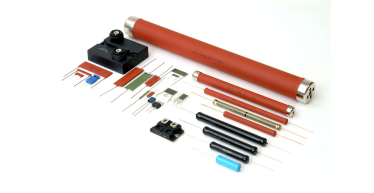
Guide to Power Resistors
Power resistors are used to dissipate energy by converting it to heat. and are designed to maintain stable performance. Call now and request a quote today!
Read More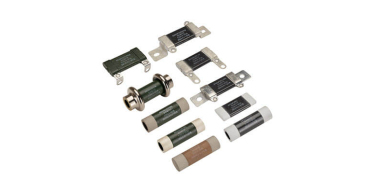
Guide to Ceramic Resistors
Ceramic Composition resistors are composed of a mixture of a finely ground insulator and conductor which is compressed into a cylindrical shape. Call now!
Read More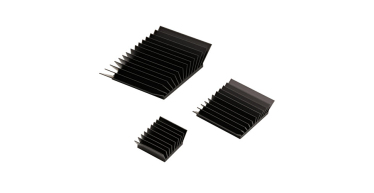
Guide to Heat Sinks
As semiconductor devices scale to smaller sizes and higher power densities, thermal management has become more challenging Call now and request a quote!
Read More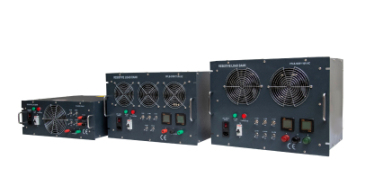
Guide to Load Banks
A load bank is a device that is intended to accurately mimic a load that a power source will see in an actual application. Call now and request a quote today!
Read More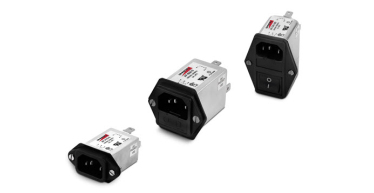
Guide to EMI Filters
To control the effects of EMI, standards are in place internationally, for commercial electronics, aerospace as well as military and space applications. Call now!
Read More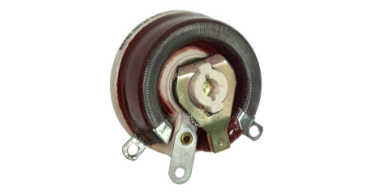
Guide to Rheostats
Rheostats, a fundamental component in electrical engineering, play a crucial role in controlling current flow and adjusting resistance in electrical circuits. Call now!
Read More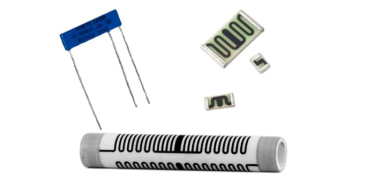
Guide to Thick Film Resistors
Thick film resistors, hailed for their versatility, durability, and wide-ranging applications, are a cornerstone of modern electronics. Call now and request a quote!
Read More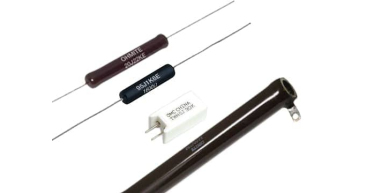
Guide to Wirewound Resistors
Thick film resistors, hailed for their versatility, durability, and wide-ranging applications, are a cornerstone of modern electronics. Call now and request a quote!
Read More
Inventory Search
The Ohmite product inventory is spread across our distribution channel around the world and can be located here. Finding Ohmite stock has never been easier. Call now!
Read More
Ohms' Law Calculator
Read More
Ohm's Law 101
Ohm's Law stands as one of the fundamental principles in electrical engineering, providing a cornerstone for understanding and analyzing electrical circuits. Call now!
Read More
Energy Rating Calculator
Read More
Media Library
Read More
Technical Information
Read More
Industrial Resources
As a manufacturer of power resistors, Ohmite often creates products designed for industrial applications.
Read More
Medical Resources
As a manufacturer of power resistors, Ohmite often creates products designed for medical applications.
Read More
Transportation Resources
As a manufacturer of power resistors, Ohmite often creates products designed for transportation applications.
Read More
Military & Aerospace Resources
As a manufacturer of power resistors, Ohmite often creates products designed for military and aerospace applications.
Read More