
- August 2026 (1)
- July 2026 (1)
- June 2026 (3)
- April 2026 (1)
- March 2026 (1)
- February 2026 (1)
- January 2026 (1)
- July 2025 (2)
- July 2024 (1)
- December 2023 (1)
- July 2023 (7)
- June 2023 (1)
How To Choose The Right Power Resistor for High-Wattage Applications
Jun 16, 2026Selecting the right power resistor for a high wattage application is one of the most consequential decisions an engineer makes during circuit design. Choose incorrectly, and the component becomes a liability — prone to overheating, premature failure, or inaccurate performance under load. Choose correctly, and the resistor quietly does its job for the life of the system.
Power resistors are used across a wide range of industrial applications, from motor drives and test equipment to power supplies, braking systems, and grid infrastructure. As system power levels increase, the demands on resistors grow accordingly. Engineers must evaluate more than just a resistance value — they must consider thermal behavior, mounting constraints, environmental exposure, and long-term stability before specifying a component.
This guide walks through the key parameters engineers should assess when selecting power resistors for high wattage industrial applications, and explains how each factor impacts system performance and reliability.
Why Wattage Rating Is Only the Starting Point
The wattage rating of a power resistor reflects the maximum power the component can continuously dissipate under ideal conditions — typically in free air at a specific ambient temperature. In practice, real-world operating conditions rarely match the test conditions used to establish that rating.
Resistors operating inside an enclosure, mounted in tight assemblies, or used at elevated ambient temperatures must be derated accordingly. Derating means reducing the maximum allowable power dissipation to account for reduced cooling efficiency and increased thermal stress. Most manufacturers publish derating curves that show the allowable power load as a function of ambient temperature. Engineers should consult these curves and design to a comfortable margin rather than the theoretical maximum.
Additionally, wattage requirements should be calculated for peak load conditions, not just steady-state operation. If a resistor will see intermittent high-current pulses, the energy absorbed during those events must be within the component's short-term overload tolerance. Undersizing for peak events is one of the most common causes of resistor failure in industrial systems.
Thermal Management and Heat Dissipation
Heat is the primary driver of resistor degradation. As power resistors dissipate energy, they generate heat that must be transferred away from the resistive element to prevent thermal runaway and long-term resistance drift. The effectiveness of this heat transfer depends on the resistor's construction, its thermal interface with the mounting surface, and the thermal design of the surrounding assembly.
High-power wirewound resistors are well-suited for demanding thermal environments because the resistive wire is wound on a ceramic or metal core that conducts heat efficiently. Resistors mounted to heatsinks or metal chassis can dramatically increase their effective wattage capacity, since forced conduction removes heat far more effectively than natural convection alone. Thermal interface materials — such as thermally conductive pads or compounds — should be used between the resistor and the mounting surface to minimize thermal resistance at the interface.
Engineers designing for high-temperature environments should also consider the temperature coefficient of resistance (TCR). All resistors change resistance value as temperature changes, but the magnitude of that change varies significantly by construction type and material. Applications requiring precise, stable resistance at elevated temperatures demand components with low TCR ratings and construction designed for thermal stability.
Mounting Style and Mechanical Considerations
The physical mounting configuration of a power resistor affects both its thermal performance and its mechanical durability. Resistors are available in a variety of mounting styles — chassis mount, through-hole PCB mount, surface mount, and tab mount — each suited to different installation environments and power levels.
Chassis-mount and heatsink-mount resistors are the most common choice for high wattage applications because they allow heat to be transferred directly into the mechanical structure of the system. This approach is especially effective when the chassis or heatsink has significant thermal mass or is actively cooled. These resistors typically feature mounting flanges or bolt patterns that allow them to be secured firmly to a metal surface, ensuring consistent contact and vibration resistance.
In applications subject to mechanical shock or vibration — such as industrial motor controls, transportation systems, or outdoor equipment — the mechanical robustness of the resistor housing is equally important. Engineers should verify that the resistor is rated for the g-force levels and vibration frequencies present in the application, and that lead connections or solder joints are designed to withstand mechanical stress without fatigue failure over time.
Operating Environment and Environmental Ratings
Industrial systems operate in environments that would quickly degrade a component not designed for the conditions. Temperature extremes, humidity, chemical exposure, dust ingress, and UV radiation are all factors that affect resistor reliability and service life in field-deployed equipment.
Power resistors intended for outdoor or harsh indoor environments should be evaluated for environmental ratings, including protection against moisture and particulate ingress (IP ratings), resistance to corrosion, and suitability for wide operating temperature ranges. Resistors with sealed or conformal-coated constructions provide additional protection in humid or contaminated environments, preventing moisture from penetrating the resistive element or compromising insulation.
Resistors used in chemically aggressive environments — such as industrial process control, oil and gas equipment, or coastal installations — should be specified with materials compatible with the chemicals present. Standard resistor housings may be susceptible to degradation from solvents, acids, or salt spray, while specialized constructions use materials selected for resistance to those specific exposures. Matching the resistor's environmental capabilities to the actual deployment conditions is essential for achieving the expected service life.
Resistance Tolerance and Long-Term Stability
In most high-power applications, the exact resistance value must remain stable over time to ensure accurate circuit behavior. Resistance drift — a gradual change in resistance value caused by aging, thermal cycling, or electrical stress — can shift operating points, reduce efficiency, or trigger fault conditions in systems that rely on precise current limiting or voltage division.
Wirewound resistors generally offer excellent long-term stability because the resistance value is determined by the physical properties of the resistive wire rather than a film or composition that can degrade. However, even wirewound designs vary in their stability characteristics depending on wire alloy, winding tension, and termination quality. Engineers specifying resistors for precision or safety-critical applications should review the manufacturer's stability specifications and compare stability across candidate part numbers.
Tolerance also matters at the time of installation. High-power resistors are available in standard tolerances ranging from ±1% to ±10%, and tighter tolerances are available for applications that require it. When multiple resistors are used in parallel or series combinations to achieve a target value or share power dissipation, tighter individual tolerances help ensure balanced loading across the assembly.
Wirewound Resistors for High Wattage Industrial Applications
Wirewound resistors are the dominant choice for high-power applications because their construction is inherently well-suited to dissipating large amounts of energy reliably and stably. The resistive element — a precision alloy wire wound on a core — can be scaled to handle wattage levels from a few watts to several kilowatts, making wirewound technology versatile across the full range of industrial power levels.
The ceramic or metal core provides structural rigidity and thermal mass, while the wire winding can be designed to specific resistance values and TCR characteristics by selecting the appropriate alloy and wire gauge. Wirewound resistors are also available in a wide range of enclosure styles, from bare vitreous-enamel finishes to fully sealed aluminum-housed designs, allowing engineers to match the physical form factor to their thermal and environmental requirements.
For applications requiring inductance-free performance — such as high-frequency pulse testing, RF power dissipation, or precision measurement — non-inductive wirewound constructions are available in which the winding configuration cancels the inherent inductance of the wire, providing purely resistive behavior across a broad frequency range.
Ohmite's Solutions for High-Power Resistor Applications
Ohmite has been engineering and manufacturing resistors for demanding industrial, commercial, and military applications for nearly a century. Our power resistor portfolio spans a wide range of wattages, resistance values, mounting styles, and environmental ratings — providing engineers with the options needed to specify the right component for virtually any high-power application.
-
TA1K/TA2K: The TAP series delivers 1000W or 2000W of continuous power when properly mounted to a liquid cooled heat sink (based on 85°C mounting plate temperature). The TAP1K and TAP2K offer a low inductance design with high power density. Applications include power conditioning, power distribution, power conversion, and power control.
-
HS400-600: An extension of the popular HS Series, these aluminum housed resistors are designed to be mounted to a heatsink to achieve maximum wattage. Wound to maximize high pulse capacity, this series extension offers ohm values of 3.6-1200 and can carry a max voltage of up to 2800. These resistors are most suitable for power applications such as braking resistors for frequency converters.
Ohmite's applications engineers are available to assist with resistor selection, derating guidance, and custom configurations for unique requirements. Whether you're designing a new system or upgrading an existing one, our team can help identify the optimal resistor solution for your power level, thermal environment, and mechanical constraints.
Compare power resistor options in our product catalog, or contact an Ohmite applications engineer today to discuss your specific high-wattage application.
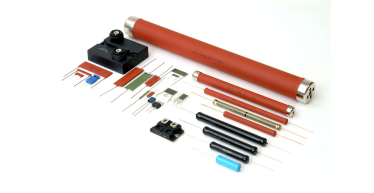
Guide to Power Resistors
Power resistors are used to dissipate energy by converting it to heat. and are designed to maintain stable performance. Call now and request a quote today!
Read More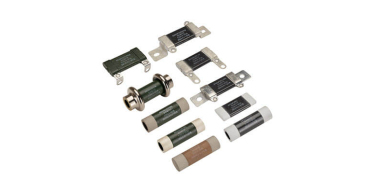
Guide to Ceramic Resistors
Ceramic Composition resistors are composed of a mixture of a finely ground insulator and conductor which is compressed into a cylindrical shape. Call now!
Read More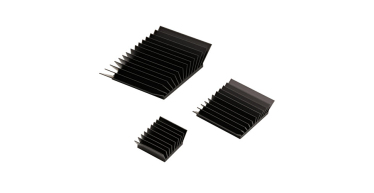
Guide to Heat Sinks
As semiconductor devices scale to smaller sizes and higher power densities, thermal management has become more challenging Call now and request a quote!
Read More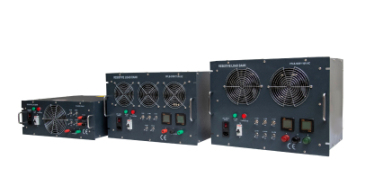
Guide to Load Banks
A load bank is a device that is intended to accurately mimic a load that a power source will see in an actual application. Call now and request a quote today!
Read More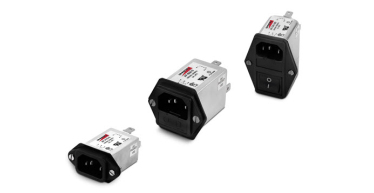
Guide to EMI Filters
To control the effects of EMI, standards are in place internationally, for commercial electronics, aerospace as well as military and space applications. Call now!
Read More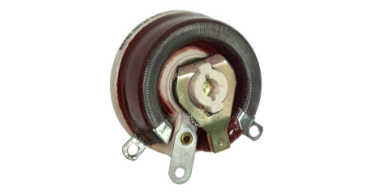
Guide to Rheostats
Rheostats, a fundamental component in electrical engineering, play a crucial role in controlling current flow and adjusting resistance in electrical circuits. Call now!
Read More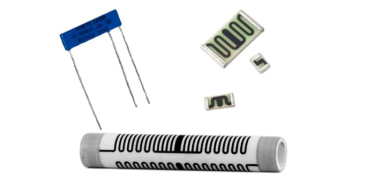
Guide to Thick Film Resistors
Thick film resistors, hailed for their versatility, durability, and wide-ranging applications, are a cornerstone of modern electronics. Call now and request a quote!
Read More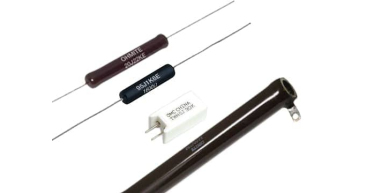
Guide to Wirewound Resistors
Thick film resistors, hailed for their versatility, durability, and wide-ranging applications, are a cornerstone of modern electronics. Call now and request a quote!
Read More
Inventory Search
The Ohmite product inventory is spread across our distribution channel around the world and can be located here. Finding Ohmite stock has never been easier. Call now!
Read More
Ohms' Law Calculator
Read More
Ohm's Law 101
Ohm's Law stands as one of the fundamental principles in electrical engineering, providing a cornerstone for understanding and analyzing electrical circuits. Call now!
Read More
Energy Rating Calculator
Read More
Media Library
Read More
Technical Information
Read More
Industrial Resources
As a manufacturer of power resistors, Ohmite often creates products designed for industrial applications.
Read More
Medical Resources
As a manufacturer of power resistors, Ohmite often creates products designed for medical applications.
Read More
Transportation Resources
As a manufacturer of power resistors, Ohmite often creates products designed for transportation applications.
Read More
Military & Aerospace Resources
As a manufacturer of power resistors, Ohmite often creates products designed for military and aerospace applications.
Read More