
- August 2026 (1)
- July 2026 (1)
- June 2026 (3)
- April 2026 (1)
- March 2026 (1)
- February 2026 (1)
- January 2026 (1)
- July 2025 (2)
- July 2024 (1)
- December 2023 (1)
- July 2023 (7)
- June 2023 (1)
What Is a Wirewound Resistor and When Should You Use One?
Jun 18, 2026Not all resistors are built the same. While film and composition resistors serve a wide range of general-purpose needs, wirewound resistors occupy a distinct position in the engineer's toolkit — offering a combination of high power handling, precise resistance values, and long-term stability that other technologies simply cannot match at the same scale.
Understanding what a wirewound resistor is, how it works, and where it performs best helps engineers make faster, more confident component selections. It also helps avoid the misapplication of wirewound components in circuits where their characteristics create more problems than they solve.
This guide provides a practical breakdown of wirewound resistor construction, the key benefits the technology offers, its known limitations, and the industrial applications where wirewound resistors consistently outperform alternatives.
How a Wirewound Resistor Is Constructed
A wirewound resistor is built by winding a length of resistive metal alloy wire around a core, typically made of ceramic, fiberglass, or alumina. The resistance value of the finished component is determined by the resistivity of the alloy, the diameter of the wire, and the total length wound onto the core. Terminations are attached at each end, and the assembly is typically coated or housed to provide protection and facilitate mounting.
The choice of wire alloy is critical to the resistor's performance characteristics. Common alloys include nichrome (nickel-chromium), Kanthal, and manganin, each offering different resistivity levels, temperature coefficients, and high-temperature performance. Nichrome is widely used for general-purpose and high-temperature applications, while manganin is preferred where extremely low temperature coefficient of resistance (TCR) is required for precision measurement applications.
The core material affects both the mechanical robustness of the assembly and its thermal performance. Ceramic cores provide high-temperature stability and electrical insulation, while metal-core constructions enable direct heat transfer to a heatsink or chassis. The outer coating — vitreous enamel, silicone, or an aluminum housing — determines the component's environmental protection level and influences its cooling behavior.
Key Benefits of Wirewound Resistors
The primary advantage of wirewound resistors is their ability to handle high power levels reliably and continuously. Because the resistive element is a metal wire with high thermal conductivity and significant physical mass, wirewound resistors absorb and dissipate energy far more effectively than thin-film or carbon composition resistors at equivalent resistance values. This makes them the default choice when wattage requirements exceed what other technologies can sustain.
Wirewound resistors also offer excellent stability over time. Film resistors can experience resistance drift due to environmental exposure, mechanical stress, or electrostatic discharge events. The resistive wire in a wirewound component, by contrast, is highly stable — its resistance is set by the physical properties of the alloy and is not susceptible to the same degradation mechanisms. For applications where resistance accuracy must be maintained over years of operation, wirewound construction provides inherent long-term reliability.
Precision is another key strength. Wirewound resistors can be manufactured to tight tolerances — commonly ±1% and as tight as ±0.1% or better for precision wirewound types — because the resistance value is controlled by the physical winding process, which can be precisely measured and adjusted during manufacturing. This combination of precision and stability makes wirewound resistors the preferred choice for reference-grade and measurement-critical applications.
Known Limitations of Wirewound Resistors
The most significant limitation of wirewound resistors in high-frequency applications is their inherent inductance. Because the resistive wire is wound in a coil configuration, the component behaves partly as an inductor at higher frequencies. This means the impedance of a standard wirewound resistor increases with frequency, making it unsuitable for RF circuits, high-frequency filter networks, or any application where purely resistive behavior is required above a few kilohertz.
Non-inductive wirewound resistors are available to address this limitation. These use bifilar winding techniques — where the wire is wound in opposing directions so that the magnetic fields cancel — or other configurations that minimize the inductive component. Non-inductive wirewound resistors extend the frequency range where the component behaves resistively, though at some cost in maximum achievable power density.
Wirewound resistors are also generally larger and heavier than comparable film resistors, which can be a constraint in compact designs or weight-sensitive applications. Their manufacturing complexity means they tend to carry a higher unit cost than film alternatives. For low-power, high-volume, or space-constrained designs where stability and power handling are not critical requirements, film resistors often represent the better engineering choice.
Motor Control and Drive Applications
Motor control is one of the most demanding applications for resistors, and wirewound technology is the overwhelming choice in this space. In variable frequency drives, soft starters, and servo amplifiers, resistors perform energy dissipation, current limiting, and braking functions under conditions that would rapidly degrade lower-power component types.
Dynamic braking resistors are one of the most visible wirewound applications in motor control systems. When a motor is commanded to decelerate quickly, the drive regenerates electrical energy from the spinning motor. This energy must be dissipated quickly and safely, and the braking resistor absorbs it as heat. The resistor must handle high peak power events repeatedly without resistance drift or mechanical failure — requirements that wirewound construction is specifically suited to meet.
Starting resistors used in reduced-voltage motor starting circuits also rely on wirewound technology. By inserting resistance into the motor circuit during startup, these components limit inrush current and reduce mechanical stress on the driven load. Once the motor reaches operating speed, the resistors are bypassed. The resistors must withstand repeated high-energy events across thousands of start cycles, placing significant demands on both the resistive element and the thermal design of the assembly.
Braking Systems in Industrial and Transportation Equipment
Beyond motor drives, wirewound resistors play a critical role in braking systems across a range of industrial and transportation applications. Cranes, hoists, elevators, and rail vehicles all use dynamic or rheostatic braking systems that rely on resistors to convert kinetic energy into heat in a controlled manner.
In these systems, the braking resistor must absorb large amounts of energy over short time intervals, typically ranging from a few seconds to tens of seconds, and then cool sufficiently before the next braking event. The design of the resistor — including its thermal mass, surface area, and mounting arrangement — must be matched to the energy profile of the specific application. Resistors with insufficient thermal mass or cooling will overheat and fail; those with excessive mass may be unnecessarily large and costly.
For transportation applications, wirewound braking resistors must also tolerate mechanical shock and vibration from vehicle operation. Robust construction, secure mounting hardware, and vibration-resistant lead connections are essential to reliability in these environments. Ohmite's wirewound resistors are designed and tested to meet the demands of these continuous-duty, high-energy applications.
Power Supplies and Test Equipment
Wirewound resistors are also widely used in power supply design and test equipment, where their precision and stability directly influence system accuracy. In precision voltage references, current sources, and divider networks, the stability of the resistor's value over temperature and time determines how well the circuit maintains its output. Wirewound resistors with low TCR and high stability ratings are the preferred choice for these functions.
In electronic load banks and test equipment, wirewound resistors perform the bulk of the energy dissipation during testing. A load bank may absorb power from generators, UPS systems, or power supplies for extended periods to verify output capacity and stability. The resistors in these systems must be highly accurate, stable across temperature, and capable of handling rated power continuously without degradation.
High-voltage test equipment represents another important application area. Resistors used in impulse test equipment, high-potential testers, and voltage dividers must combine precise resistance values with the ability to withstand voltage transients far exceeding their normal operating levels. Wirewound constructions with appropriate insulation systems and voltage ratings are available for these demanding specifications.
Ohmite Wirewound Resistors for Industrial Applications
Ohmite's wirewound resistor portfolio covers a broad range of power levels, resistance values, form factors, and environmental ratings, providing engineers with the flexibility to find the right solution for virtually any industrial application.
-
TOK Series: These inductive-designed resistors target high-frequency and pulse load applications. Available in 50Ω to 200Ω values, TOK Series resistors provide reliable power conversion, conditioning, and control for demanding industrial systems.
-
TCROB Series: Built for robust process-controlled applications, TCROB Series resistors deliver 35 watts of reliable power in a compact form factor designed for applications requiring higher power handling capability in a space-efficient package.
Whether you're designing a motor drive, a braking system, a precision power supply, or industrial test equipment, Ohmite's applications engineers can help you identify the wirewound resistor configuration that meets your power, precision, and environmental requirements.
Explore Ohmite's full range of wirewound resistor products, or contact our team to discuss your specific application needs.
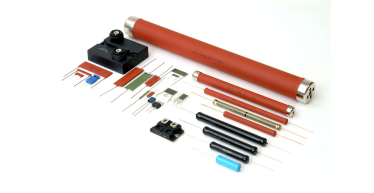
Guide to Power Resistors
Power resistors are used to dissipate energy by converting it to heat. and are designed to maintain stable performance. Call now and request a quote today!
Read More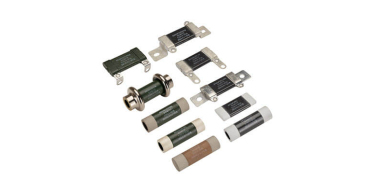
Guide to Ceramic Resistors
Ceramic Composition resistors are composed of a mixture of a finely ground insulator and conductor which is compressed into a cylindrical shape. Call now!
Read More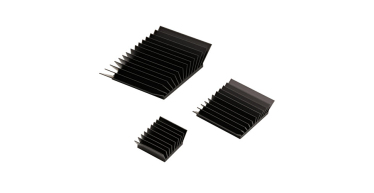
Guide to Heat Sinks
As semiconductor devices scale to smaller sizes and higher power densities, thermal management has become more challenging Call now and request a quote!
Read More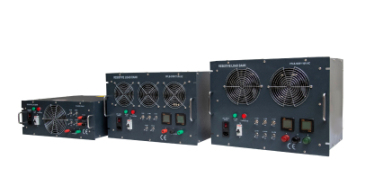
Guide to Load Banks
A load bank is a device that is intended to accurately mimic a load that a power source will see in an actual application. Call now and request a quote today!
Read More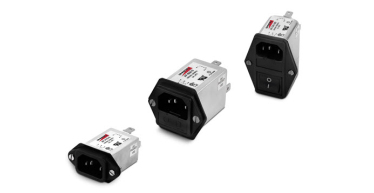
Guide to EMI Filters
To control the effects of EMI, standards are in place internationally, for commercial electronics, aerospace as well as military and space applications. Call now!
Read More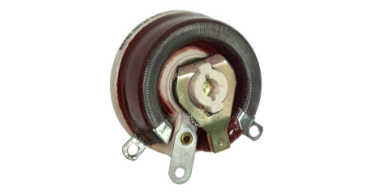
Guide to Rheostats
Rheostats, a fundamental component in electrical engineering, play a crucial role in controlling current flow and adjusting resistance in electrical circuits. Call now!
Read More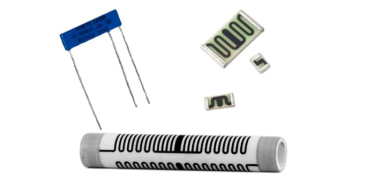
Guide to Thick Film Resistors
Thick film resistors, hailed for their versatility, durability, and wide-ranging applications, are a cornerstone of modern electronics. Call now and request a quote!
Read More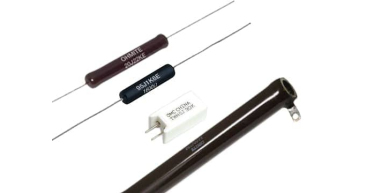
Guide to Wirewound Resistors
Thick film resistors, hailed for their versatility, durability, and wide-ranging applications, are a cornerstone of modern electronics. Call now and request a quote!
Read More
Inventory Search
The Ohmite product inventory is spread across our distribution channel around the world and can be located here. Finding Ohmite stock has never been easier. Call now!
Read More
Ohms' Law Calculator
Read More
Ohm's Law 101
Ohm's Law stands as one of the fundamental principles in electrical engineering, providing a cornerstone for understanding and analyzing electrical circuits. Call now!
Read More
Energy Rating Calculator
Read More
Media Library
Read More
Technical Information
Read More
Industrial Resources
As a manufacturer of power resistors, Ohmite often creates products designed for industrial applications.
Read More
Medical Resources
As a manufacturer of power resistors, Ohmite often creates products designed for medical applications.
Read More
Transportation Resources
As a manufacturer of power resistors, Ohmite often creates products designed for transportation applications.
Read More
Military & Aerospace Resources
As a manufacturer of power resistors, Ohmite often creates products designed for military and aerospace applications.
Read More