
- August 2026 (1)
- July 2026 (1)
- June 2026 (3)
- April 2026 (1)
- March 2026 (1)
- February 2026 (1)
- January 2026 (1)
- July 2025 (2)
- July 2024 (1)
- December 2023 (1)
- July 2023 (7)
- June 2023 (1)
Wirewound vs. Thick Film Resistors: Which Is Right for Your Design?
Jun 22, 2026When engineers begin narrowing down resistor options for a new design, the choice between wirewound and thick film technology comes up frequently — and for good reason. Both are mature, widely available technologies with strong track records across industrial and commercial applications. But they differ meaningfully in how they handle power, behave across frequency, generate noise, and scale in cost.
Making the right choice early in the design process saves time and avoids costly respins later. Specifying a thick film resistor in an application that demands wirewound performance leads to premature failure or accuracy problems. Specifying a wirewound resistor where a thick film would do the job adequately adds unnecessary cost and bulk to a design.
This guide provides a direct, side-by-side comparison of wirewound and thick film resistors across the parameters that matter most — power handling, noise, frequency response, stability, and cost — to help engineers make faster, better-informed design decisions.
How Each Technology Is Built
Understanding the performance differences between wirewound and thick film resistors starts with understanding how each is constructed. The manufacturing method determines nearly every key performance characteristic.
A wirewound resistor is made by winding a precision metal alloy wire — typically nichrome, manganin, or a similar resistive alloy — around a ceramic, fiberglass, or metal core. The resistance value is set by the alloy's resistivity, the wire diameter, and the total length of wire wound. The assembly is then coated or housed for protection. This process produces a component whose resistance is determined by highly controllable physical parameters, which is why wirewound resistors can be manufactured to extremely tight tolerances.
A thick film resistor is made by screen-printing a resistive paste — composed of a metal oxide or ruthenium-based compound combined with a glass frit — onto a ceramic substrate, then firing it in a kiln to fuse the materials together. Laser trimming is used to adjust the resistance value after firing. Thick film technology is inherently well-suited to high-volume, miniaturized production and is the dominant technology for surface-mount chip resistors used in PCB assembly.
Side-by-Side Comparison
|
Parameter |
Wirewound |
Thick Film |
|
Power Handling |
High — commonly 1W to several kW |
Low to moderate — typically up to a few watts |
|
Resistance Tolerance |
±0.1% to ±1% standard; tighter available |
±1% to ±5% standard; ±0.1% available with laser trim |
|
Temperature Coefficient (TCR) |
Very low — as low as ±5 ppm/°C |
Moderate — typically ±50 to ±200 ppm/°C |
|
Long-Term Stability |
Excellent — minimal drift over time |
Good — can drift under sustained high-load or harsh conditions |
|
Noise |
Very low — no shot noise or flicker noise from resistive element |
Low to moderate — resistive paste can exhibit higher current noise |
|
Frequency Response |
Limited by inductance — standard types perform best below ~1 kHz; non-inductive types extend range |
Excellent — minimal inductance, suitable for RF and high-frequency circuits |
|
Physical Size |
Larger — determined by power and thermal requirements |
Very small — available in 0402, 0603, 0805 and other SMT packages |
|
Cost |
Higher — more complex manufacturing |
Lower — high-volume screen-print process |
|
Operating Temperature |
Wide — typically up to 350°C with appropriate alloys |
Moderate — typically limited to 155°C or 175°C max |
|
Typical Applications |
Motor drives, braking, power supplies, precision measurement |
PCB-level signal conditioning, voltage dividers, pull-up/pull-down networks |
Power Handling: Where Wirewound Has a Clear Advantage
Power handling is the single parameter where wirewound resistors most decisively outperform thick film. The metal wire and ceramic core of a wirewound resistor can absorb, conduct, and radiate significantly more energy than the thin printed film of a thick film resistor. Wirewound power resistors routinely handle 5W, 25W, 50W, and upward, with specialized designs reaching into the kilowatt range for load banks and braking systems.
Thick film resistors in standard SMT packages typically max out at 0.1W to 0.25W for chip resistors, and purpose-built thick film power resistors can reach a few watts, but they cannot approach the power density of wirewound construction. Attempting to operate a thick film resistor above its rated power results in irreversible resistance change, physical damage to the film, or catastrophic failure.
For any application where significant energy dissipation is required — motor control, braking, power supply bleeder circuits, load testing, or high-current measurement shunts — wirewound resistors are the engineering-appropriate choice. Thick film resistors belong in the signal path, not the power path.
Noise Performance: An Important Signal-Path Consideration
Resistor noise is a consideration that matters primarily in precision analog circuits, low-level sensor interfaces, and audio applications. All resistors generate thermal (Johnson-Nyquist) noise, which is determined solely by resistance value and temperature and cannot be avoided. Beyond thermal noise, some resistor types also generate excess current noise — additional noise produced when current flows through the resistive material.
Wirewound resistors produce essentially no excess current noise. The metal wire carries current uniformly through a homogeneous conductor, and there are no grain boundaries, material discontinuities, or compositional variations to generate noise beyond the thermal baseline. This makes wirewound resistors the preferred choice in precision instrumentation, audio measurement equipment, and low-noise amplifier designs where every fraction of a nanoVolt matters.
Thick film resistors can exhibit measurable excess current noise, particularly at low resistance values or when operated near their power limits. The magnitude of this noise varies by manufacturer and product line and is typically quantified as a noise index in dB. For most digital and general-purpose analog circuits, thick film noise levels are entirely acceptable. But in applications where signal chain noise is a critical specification, wirewound resistors provide a meaningful advantage.
Frequency Response: Where Thick Film Pulls Ahead
In high-frequency circuits, thick film resistors have a significant performance advantage over standard wirewound types. Because the resistive element is a thin planar film rather than a coil of wire, thick film resistors exhibit very low parasitic inductance. This means their impedance remains close to the nominal DC resistance value across a broad frequency range, often extending into the hundreds of megahertz or gigahertz range depending on the package and construction.
Standard wirewound resistors, by contrast, behave as an inductor-resistor series combination at frequencies above a few kilohertz. The inductive reactance adds to the effective impedance, altering circuit behavior in ways that can cause filtering, ringing, or other unintended effects. For RF circuits, high-frequency filter networks, impedance matching networks, and high-speed digital terminations, standard wirewound resistors are generally not suitable.
Non-inductive wirewound resistors using bifilar winding techniques extend the flat frequency response of wirewound construction into higher frequency ranges, making them appropriate for a broader set of applications. However, for true RF performance in compact packages, thick film SMT resistors remain the dominant choice. Engineers should evaluate the frequency content of signals passing through a resistor-containing circuit and select technology accordingly.
Stability, Tolerance, and Long-Term Drift
For applications where resistance value must remain accurate over time, wirewound resistors offer a fundamental stability advantage. The alloy wire used in wirewound construction is highly chemically stable and does not oxidize, absorb moisture, or undergo phase changes under normal operating conditions. This means a wirewound resistor's value today is very close to what it will be after ten years of operation.
Thick film resistors can experience resistance drift under sustained elevated temperature, humidity exposure, or prolonged high-load conditions. The resistive paste, while stable under normal conditions, contains glass frit and metal oxide particles that can gradually migrate or change at the grain level over long operating life. For most applications, this drift is small enough to be inconsequential. But for precision references, calibration equipment, or any circuit where long-term accuracy is specified and verified, wirewound resistors provide a more defensible design choice.
Tolerance capabilities are comparable between the two technologies at the ±1% level and tighter. Wirewound resistors achieve tight tolerances through the precision winding process; thick film resistors achieve them through laser trimming after firing. Both approaches can deliver ±0.1% and better, though precision wirewound types have a longer track record in the most demanding measurement and calibration applications.
Choosing the Right Technology for Your Application
The decision between wirewound and thick film resistors ultimately comes down to matching technology capabilities to application requirements. A useful starting point is to ask three questions: How much power must the resistor handle? What is the signal frequency? And how critical is long-term stability?
If the answers point toward high power, low frequency, and high stability — as they do in motor drives, industrial controls, precision instruments, and power electronics — wirewound resistors are the right choice. If the answers point toward low power, high frequency, and compact PCB integration — as they do in consumer electronics, RF systems, and digital circuitry — thick film resistors are the appropriate technology.
Many designs require both. A motor drive board may use thick film SMT resistors throughout the control and logic circuitry while relying on wirewound power resistors for the high-current portions of the signal path. Selecting the right technology for each function within a system — rather than standardizing on one type for all resistors — is the approach that optimizes both performance and cost.
Ohmite Solutions Across Both Technologies
Ohmite's product portfolio spans both wirewound and thick film resistor technologies, giving engineers a single source for components across the full range of power levels, performance grades, and form factors.
-
TOK Series: These wirewound resistors are designed for high-frequency and pulse load applications, offering reliable performance for power conversion, conditioning, and control in demanding industrial systems. Available in 50Ω to 200Ω values.
-
TCROB Series: Delivering 35 watts of reliable power in a compact form factor, these wirewound resistors are optimized for process-controlled applications requiring robust, high-power performance in space-constrained designs.
Our applications engineers can help you evaluate the tradeoffs between wirewound and thick film options for your specific circuit requirements, recommend appropriate product series, and support sampling and qualification.
Compare wirewound and thick film resistor product specifications on our website, or request a sample to evaluate performance in your application.
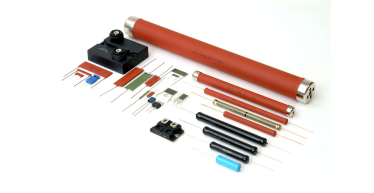
Guide to Power Resistors
Power resistors are used to dissipate energy by converting it to heat. and are designed to maintain stable performance. Call now and request a quote today!
Read More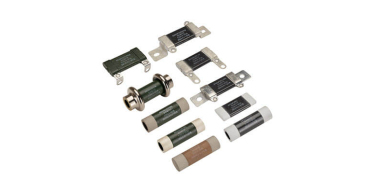
Guide to Ceramic Resistors
Ceramic Composition resistors are composed of a mixture of a finely ground insulator and conductor which is compressed into a cylindrical shape. Call now!
Read More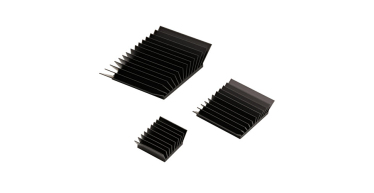
Guide to Heat Sinks
As semiconductor devices scale to smaller sizes and higher power densities, thermal management has become more challenging Call now and request a quote!
Read More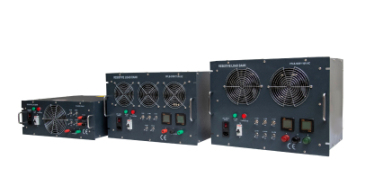
Guide to Load Banks
A load bank is a device that is intended to accurately mimic a load that a power source will see in an actual application. Call now and request a quote today!
Read More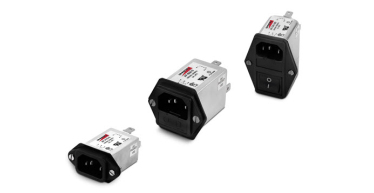
Guide to EMI Filters
To control the effects of EMI, standards are in place internationally, for commercial electronics, aerospace as well as military and space applications. Call now!
Read More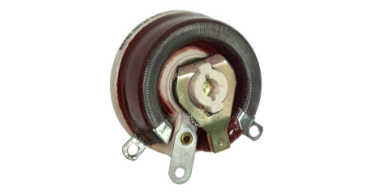
Guide to Rheostats
Rheostats, a fundamental component in electrical engineering, play a crucial role in controlling current flow and adjusting resistance in electrical circuits. Call now!
Read More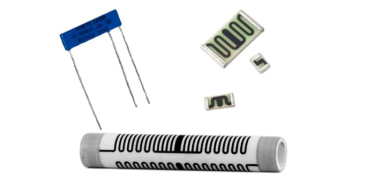
Guide to Thick Film Resistors
Thick film resistors, hailed for their versatility, durability, and wide-ranging applications, are a cornerstone of modern electronics. Call now and request a quote!
Read More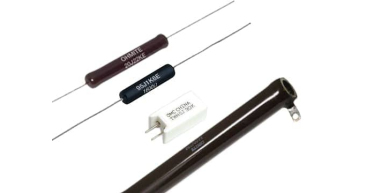
Guide to Wirewound Resistors
Thick film resistors, hailed for their versatility, durability, and wide-ranging applications, are a cornerstone of modern electronics. Call now and request a quote!
Read More
Inventory Search
The Ohmite product inventory is spread across our distribution channel around the world and can be located here. Finding Ohmite stock has never been easier. Call now!
Read More
Ohms' Law Calculator
Read More
Ohm's Law 101
Ohm's Law stands as one of the fundamental principles in electrical engineering, providing a cornerstone for understanding and analyzing electrical circuits. Call now!
Read More
Energy Rating Calculator
Read More
Media Library
Read More
Technical Information
Read More
Industrial Resources
As a manufacturer of power resistors, Ohmite often creates products designed for industrial applications.
Read More
Medical Resources
As a manufacturer of power resistors, Ohmite often creates products designed for medical applications.
Read More
Transportation Resources
As a manufacturer of power resistors, Ohmite often creates products designed for transportation applications.
Read More
Military & Aerospace Resources
As a manufacturer of power resistors, Ohmite often creates products designed for military and aerospace applications.
Read More