
- August 2026 (1)
- July 2026 (1)
- June 2026 (3)
- April 2026 (1)
- March 2026 (1)
- February 2026 (1)
- January 2026 (1)
- July 2025 (2)
- July 2024 (1)
- December 2023 (1)
- July 2023 (7)
- June 2023 (1)
How to Choose the Right Resistor for High Power Applications
Jul 23, 2026Selecting the right resistor for a high power application is one of the most consequential decisions an engineer makes during circuit design. Choose incorrectly, and the consequences range from degraded accuracy and premature drift to outright thermal failure — sometimes under conditions that only appear in the field, not on the bench.
The challenge is that resistor selection for high power applications involves far more than matching a wattage number to a datasheet. Engineers must account for voltage and current ratings, the difference between continuous and pulsed loads, thermal derating under real operating temperatures, and meaningful trade-offs between resistor technologies. Each of these parameters shapes whether a component performs reliably for years or becomes the weakest link in an otherwise robust design.
This guide walks through each of those parameters in sequence — giving engineers a practical framework for high power resistor selection before they ever open a product catalog.
Start by Defining Your Application's Full Electrical Profile
Before evaluating any component, fully characterize the load the resistor will see. This means documenting more than just the nominal resistance value and estimated power dissipation. A complete electrical profile includes:
-
Continuous current draw at normal operating conditions
-
Peak current and voltage during startup, transient events, or fault conditions
-
Required resistance value and acceptable tolerance
-
Duty cycle, if the load is intermittent rather than continuous
-
Worst-case ambient temperature inside the enclosure, not just at the system level
-
Expected service life and whether resistance drift is a performance or safety concern
Skipping this step leads to one of two failure modes: over-specification (paying for more resistor than the circuit needs) or under-specification (a resistor that passes bench testing and fails in deployment). Both are preventable. Establishing a complete baseline before reviewing datasheets is the single most effective way to narrow a field of hundreds of potential components down to a short list of candidates.
Continuous Power vs. Pulse Power — Understanding the Difference
The wattage rating printed on a resistor datasheet describes its continuous power handling — the amount of power the resistor can dissipate indefinitely under specified thermal conditions. For many high power applications, however, the load is not continuous. Motor braking, energy discharge circuits, surge suppression, and power converter snubbers all apply high-energy bursts over very short durations, not steady-state current.
This distinction matters enormously. A resistor subjected to a transient pulse can absorb substantially more energy than its continuous watt rating suggests — but only within specific time limits and under the right thermal conditions. Pulse capability is typically expressed in joules and governed by the resistor's thermal mass and construction. Exceed the pulse energy limit, even briefly, and the resistive element degrades or fails.
When evaluating a resistor for pulse-heavy applications, the key parameters to review are:
-
Pulse energy rating (joules): the maximum energy a single pulse can deliver without damage
-
Duty cycle limits: how frequently the pulse can repeat before heat accumulates
-
Thermal time constant: how quickly the resistor returns to ambient temperature between pulses
Do not assume that a resistor rated for high continuous wattage automatically handles high-energy pulses. These are separate ratings, and a resistor optimized for continuous dissipation may have poor pulse energy absorption compared to a ceramic composition or metal oxide type rated at lower continuous wattage. Always verify both when the application involves transient events.
Voltage Rating and Current Carrying Capacity
Voltage and current ratings are frequently overlooked in resistor selection, particularly by engineers who focus primarily on power and resistance. Both can independently cause component failure, even when the wattage budget appears adequate.
Voltage rating defines the maximum voltage that can be continuously applied across a resistor without risk of dielectric breakdown or arcing. This becomes especially relevant in high-resistance, high-voltage circuits — where Ohm's Law alone does not flag the risk. A resistor dissipating a modest amount of power at a very high voltage may still be operating beyond its rated voltage. Applications involving 400 V and above DC bus voltages, such as motor drives, inverters, and EV charging infrastructure, require careful attention to both the working voltage and the maximum rated voltage specifications.
Current carrying capacity is the limiting factor in low-resistance, high-current applications. Wirewound resistors used in current sensing, load balancing, or motor control must be evaluated for resistive heating across the entire conductor cross-section, not just terminal-to-terminal power dissipation. Termination design, lead material, and conductor gauge all contribute to a resistor's ability to carry high current without localized overheating.
In both cases, the design rule is the same: verify the rating explicitly. Do not derive it from the power and resistance values alone.
Thermal Derating and How to Apply It to Your Design
A resistor's rated power applies only at or below a specific maximum ambient temperature — commonly 25°C or 70°C depending on the manufacturer and product family. Above that threshold, the usable power budget must be reduced in proportion to the operating temperature. This reduction is called thermal derating.
Every power resistor datasheet includes a derating curve that maps the allowable power dissipation against ambient temperature. The relationship is typically linear above the rated threshold, dropping to zero at the component's maximum temperature rating. An engineer who ignores this curve and installs a resistor at its full rated power inside a warm enclosure is effectively overloading the component — even if the math looks correct at room temperature.
To apply derating correctly:
-
Identify the worst-case ambient temperature the resistor will experience inside the enclosure, accounting for adjacent heat sources, airflow, and seasonal variation.
-
Locate that temperature on the resistor's derating curve.
-
Read the allowable power dissipation at that temperature — this is your actual usable power budget.
-
Confirm the resistor's maximum dissipation under your load conditions falls within that derated budget, with margin.
A 10–20% additional design margin on top of the derated value is standard practice for components in industrial and high-reliability applications.
One related consideration is temperature coefficient of resistance (TCR) — the rate at which a resistor's value changes with temperature, expressed in parts per million per degree Celsius (ppm/°C). In precision applications such as test equipment, measurement circuits, and voltage references, resistance drift at elevated temperature can introduce errors that dwarf the effect of the initial tolerance. Select a low-TCR resistor type when stability across temperature is a performance requirement, not just a thermal survival requirement.
Choosing the Right Resistor Technology for High Power Applications
Once the electrical profile is defined and the derating analysis is complete, the next decision is resistor technology. For high power applications, three primary technologies compete for most use cases — and each has a range where it substantially outperforms the others.
Wirewound Resistors
Wirewound resistors deliver the highest continuous power handling of any resistor construction. Built by winding a resistive alloy wire around a ceramic or fiberglass core, they transfer heat efficiently to their mounting surface and can be designed to handle thousands of watts in chassis-mount configurations. Wirewound construction also provides excellent long-term stability, low temperature coefficient, and the ability to achieve tight resistance tolerances.
The primary limitation is inductance. Standard wirewound resistors behave as series RL circuits at higher frequencies, which can affect performance in AC or switching applications. Non-inductive winding configurations — where opposing winding halves cancel their magnetic fields — are available for applications where this matters.
For continuous high-current loads, motor braking, load banks, power conditioning, and industrial process control, wirewound resistors remain the dominant choice. They are the natural complement to the applications discussed in our guide to wirewound resistors and when to use them.
Thick Film Power Resistors
Thick film power resistors are made by printing a resistive paste onto a ceramic substrate and firing it at high temperature. The result is a compact, non-inductive component that handles moderate power in a small footprint. Low parasitic inductance makes thick film power resistors well-suited for switching power supplies, high-frequency power circuits, snubber networks, and applications where board space is constrained.
The trade-off versus wirewound is pulse energy handling. Thick film resistors have lower thermal mass relative to their power rating and typically absorb less total energy during a transient event. For applications with high-energy pulse requirements, wirewound or ceramic types are generally the more appropriate choice. For a detailed side-by-side comparison of both technologies, see our wirewound vs. thick film resistors guide.
Ceramic Composition and Metal Oxide Resistors
Ceramic composition and metal oxide resistors offer superior surge and pulse energy absorption relative to their continuous power rating. Their construction allows them to absorb high-energy transients without catastrophic failure, making them well-suited for lightning protection circuits, crowbar and overvoltage protection, and energy discharge applications where a very large amount of energy must be absorbed in a very short period.
The trade-off is tolerance and long-term stability. Ceramic composition resistors exhibit wider initial tolerance and greater resistance drift over time compared to wirewound or precision thick film types. For applications where accuracy and stability are secondary to energy absorption and survivability, this trade-off is acceptable — and often preferable.
Matching Your Resistor to the High Power Application
Technology selection does not happen in the abstract. The best way to narrow the field further is to match resistor characteristics to the specific demands of the application type.
Motor Drives and Dynamic Braking
Dynamic braking resistors absorb kinetic energy returned from a motor during deceleration, converting it to heat. The load profile is inherently pulsed — short, high-energy bursts at intervals determined by the braking cycle — but the cumulative thermal demand on the resistor can be substantial. Wirewound chassis-mount resistors, chosen for high wattage ratings and robust thermal design, dominate this application. Voltage ratings must account for the full regenerative bus voltage, which can spike well above nominal levels during aggressive braking.
For more detail on wirewound performance in motor and braking applications, see our post on how to choose the right power resistor for high-wattage applications.
Power Supplies and DC-DC Converters
Resistors in switching power supplies serve several roles: bleeder resistors maintain minimum load conditions, snubber resistors damp switching transients, and current sense resistors provide feedback to the control loop. Each role has distinct requirements. Bleeders need stable resistance at elevated temperature. Snubbers need low inductance and good pulse handling. Current sense resistors need very low TCR and minimal resistance drift to preserve measurement accuracy. Matching the resistor type to the specific function — rather than specifying a single type for all roles — significantly improves performance and reliability.
Industrial Process Control and Test Equipment
Load banks, calibration references, and precision measurement circuits demand high stability and low TCR above all other parameters. In these applications, a resistor that drifts 0.1% over its service life may introduce errors that invalidate measurements or require costly recalibration. Wirewound precision types with tight tolerance specifications and low TCR values are standard in this category. The power handling requirement is often secondary to the accuracy requirement.
Renewable Energy and EV Charging Infrastructure
High-voltage DC environments in solar inverters, battery management systems, and EV charging stations combine demanding voltage ratings (400 V to 1,000 V and above), transient energy events, and long service life requirements in outdoor or harsh enclosure conditions. Voltage rating, pulse energy absorption, moisture resistance, and encapsulation quality all become primary selection criteria alongside continuous power rating.
Ohmite's Solutions for High Power Resistor Applications
Ohmite has been engineering and manufacturing resistors for demanding industrial, commercial, and military applications for more than a century. Our product portfolio covers the full range of technologies discussed in this guide — wirewound, thick film, and ceramic — with configurations spanning from surface-mount components to chassis-mount assemblies rated for kilowatt-level dissipation.
Our TAH/TAK series wirewound resistors are among the most widely specified choices for motor drives, power conditioning, and dynamic braking in industrial environments. The TCH/TCK series delivers high-capacity chassis-mount performance for applications where the full wattage of a wirewound element must be transferred directly to a heat sink or enclosure panel.
Ohmite applications engineers are available to assist with resistor selection, derating guidance, and custom configurations for designs where standard catalog parts do not fully meet the application's requirements. Compare power resistor options in our product catalog, or contact an Ohmite applications engineer to discuss your specific high power application.
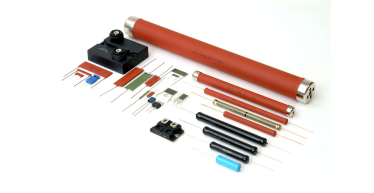
Guide to Power Resistors
Power resistors are used to dissipate energy by converting it to heat. and are designed to maintain stable performance. Call now and request a quote today!
Read More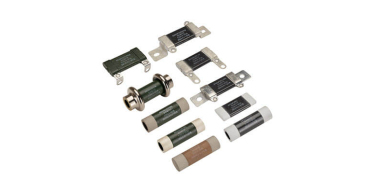
Guide to Ceramic Resistors
Ceramic Composition resistors are composed of a mixture of a finely ground insulator and conductor which is compressed into a cylindrical shape. Call now!
Read More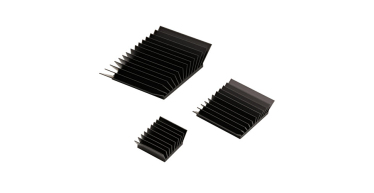
Guide to Heat Sinks
As semiconductor devices scale to smaller sizes and higher power densities, thermal management has become more challenging Call now and request a quote!
Read More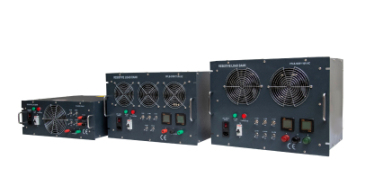
Guide to Load Banks
A load bank is a device that is intended to accurately mimic a load that a power source will see in an actual application. Call now and request a quote today!
Read More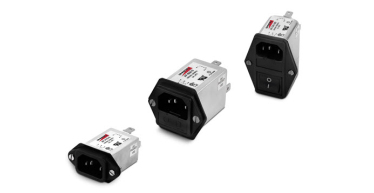
Guide to EMI Filters
To control the effects of EMI, standards are in place internationally, for commercial electronics, aerospace as well as military and space applications. Call now!
Read More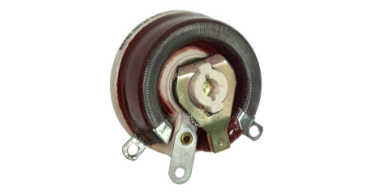
Guide to Rheostats
Rheostats, a fundamental component in electrical engineering, play a crucial role in controlling current flow and adjusting resistance in electrical circuits. Call now!
Read More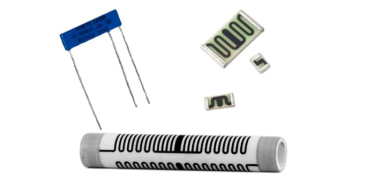
Guide to Thick Film Resistors
Thick film resistors, hailed for their versatility, durability, and wide-ranging applications, are a cornerstone of modern electronics. Call now and request a quote!
Read More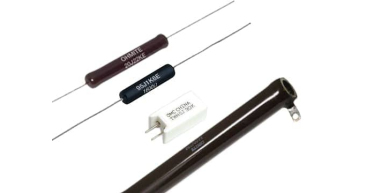
Guide to Wirewound Resistors
Thick film resistors, hailed for their versatility, durability, and wide-ranging applications, are a cornerstone of modern electronics. Call now and request a quote!
Read More
Inventory Search
The Ohmite product inventory is spread across our distribution channel around the world and can be located here. Finding Ohmite stock has never been easier. Call now!
Read More
Ohms' Law Calculator
Read More
Ohm's Law 101
Ohm's Law stands as one of the fundamental principles in electrical engineering, providing a cornerstone for understanding and analyzing electrical circuits. Call now!
Read More
Energy Rating Calculator
Read More
Media Library
Read More
Technical Information
Read More
Industrial Resources
As a manufacturer of power resistors, Ohmite often creates products designed for industrial applications.
Read More
Medical Resources
As a manufacturer of power resistors, Ohmite often creates products designed for medical applications.
Read More
Transportation Resources
As a manufacturer of power resistors, Ohmite often creates products designed for transportation applications.
Read More
Military & Aerospace Resources
As a manufacturer of power resistors, Ohmite often creates products designed for military and aerospace applications.
Read More