
- August 2026 (1)
- July 2026 (1)
- June 2026 (3)
- April 2026 (1)
- March 2026 (1)
- February 2026 (1)
- January 2026 (1)
- July 2025 (2)
- July 2024 (1)
- December 2023 (1)
- July 2023 (7)
- June 2023 (1)
Common Causes of Resistor Failure and How to Prevent Them
Aug 24, 2026Resistors are some of the simplest components in any circuit, but they're rarely the ones engineers worry about most — until one fails. A single failed resistor can take down an entire assembly, trigger unplanned downtime, or introduce a safety risk in high-reliability applications like aerospace, medical, or industrial equipment. Because resistors are so ubiquitous, it's easy to treat them as an afterthought in the design process. That assumption is exactly what leads to premature failures in the field.
The good news is that most resistor failures trace back to a small, predictable set of root causes — and nearly all of them are preventable with the right design choices, technology selection, and sourcing decisions. This guide walks through the most common causes of resistor failure and the practical steps engineers can take to prevent each one before it becomes a field issue.
Thermal Overload and Overheating
Heat is the single most common driver of resistor failure. Every resistor dissipates energy as heat, and when a resistor operates at or above its rated power for a sustained period — or when ambient temperatures run higher than the design accounted for — that heat has nowhere productive to go. The result is resistive drift, cracking of the resistive element, discoloration, or in severe cases, a complete open-circuit failure.
Overheating is often the product of two design gaps working together: undersized power ratings and inadequate heat dissipation. A resistor selected for the "typical" operating condition, without margin for worst-case ambient temperature or airflow restriction, is a common setup for early failure.
How to prevent it:
-
Select a power rating with margin above the application's actual dissipation requirement, not the bare minimum
-
Ensure adequate airflow or heat sinking, especially in enclosed or high-density assemblies
-
Account for worst-case ambient temperature, not just typical operating conditions
For a deeper look at managing resistor heat through proper thermal design, see our related post, Heat Sinks 101.
Improper Derating and Undersizing
Closely related to overheating, improper derating is a design-stage failure mode rather than an operational one. Every resistor's power rating is typically specified at a reference temperature (commonly 25°C to 70°C). As ambient temperature rises above that reference point, the resistor's safe power-handling capacity drops — often significantly. A resistor that looks perfectly sized on paper at room temperature can be dangerously undersized once it's installed inside a warm enclosure next to other heat-generating components.
Designers sometimes select a resistor rated exactly at the application's calculated power or voltage level, leaving no margin for tolerance stacking, pulse loading, or long-term drift. Over time, that lack of margin catches up with the part.
How to prevent it:
-
Apply the manufacturer's published derating curve for your actual operating temperature, not the reference temperature
-
Build in margin to absorb tolerance stacking, transient loads, and gradual drift over the resistor's service life
-
Recalculate derating any time an enclosure, layout, or duty cycle changes — derating isn't a one-time calculation
Voltage Transients and Surge Damage
Resistors are rated for continuous voltage, but many real-world circuits expose components to short-duration transients — switching spikes, electrostatic discharge (ESD), or line surges — that can exceed the rated voltage by a wide margin, even if only for microseconds. Depending on the resistor's construction, this can cause instantaneous dielectric breakdown, flashover across the element, or localized hot-spotting that leads to failure well before the component's expected end-of-life.
Thick film and small-footprint SMD resistors tend to be more vulnerable to transient voltage events than wirewound or ceramic composition designs, simply due to their construction and surface geometry.
How to prevent it:
-
Account for transient and surge voltage exposure, not just steady-state voltage, when selecting a resistor
-
Choose a resistor technology with inherent surge tolerance for circuits prone to switching transients or ESD exposure
-
Incorporate protective circuit design (snubbers, TVS diodes, etc.) upstream of sensitive resistive elements where transients are unavoidable
Mechanical Stress, Vibration, and Thermal Cycling
Not every failure is electrical in origin. Resistors installed in motors, transportation equipment, or outdoor industrial systems are routinely subjected to vibration, mechanical shock, and repeated thermal cycling — the expansion and contraction that occurs every time a circuit powers on and off. Over hundreds or thousands of cycles, this repeated stress fatigues leads, terminations, and solder joints, eventually leading to intermittent connections or complete openings.
This failure mode is particularly common in applications with frequent duty cycling, such as dynamic braking, motor drives, and mobile or transportation equipment, where the resistor is rarely at a stable, unchanging temperature.
How to prevent it:
-
Select mounting and termination methods rated for the vibration and shock profile of the application
-
Choose a resistor technology and package suited to repeated thermal cycling, not just peak power handling
-
Where possible, isolate resistors from direct mechanical shock sources within the assembly
Moisture, Corrosion, and Environmental Contamination
Humidity, chemical exposure, and airborne contaminants are slower-acting but no less damaging causes of resistor failure. Moisture ingress can corrode leads and terminations, degrade the resistive element, or create leakage paths that alter resistance over time. This is especially common in outdoor installations, industrial process environments, and applications exposed to washdown, chemicals, or salt air.
Unlike thermal or electrical failures, environmental failures often show up as gradual resistance drift or intermittent behavior long before a hard failure occurs — making them harder to catch during routine inspection.
How to prevent it:
-
Specify sealed, coated, or encapsulated construction for outdoor or high-humidity environments
-
Match housing and enclosure ratings to the actual environmental exposure, not just the electrical requirements
-
Consider ceramic or fully encapsulated resistor technologies in chemically aggressive or washdown-prone environments
Manufacturing Defects and Material Quality
While less common than the operational causes above, inconsistent materials, poor termination welds, or inadequate quality control during manufacturing can introduce latent defects that surface as early-life failures — sometimes well within the expected service life of the component. These failures are difficult to design around after the fact, which makes supplier quality one of the most important (and most overlooked) failure-prevention decisions an engineering team makes.
How to prevent it:
-
Source resistors from manufacturers with documented, certified quality systems and rigorous testing protocols
-
Request test data or certifications for high-reliability or mission-critical applications
-
Treat resistor sourcing as a reliability decision, not just a cost or availability decision
Best Practices for Extending Resistor Life
Every failure mode above shares a common thread: most resistor failures are preventable with the right combination of design margin, technology selection, and sourcing decisions made early in the process. As a quick-reference checklist:
-
Select a power rating with real margin, not the bare minimum for the application
-
Apply proper thermal derating based on actual ambient conditions, not reference-temperature ratings
-
Match resistor technology — wirewound, thick film, or ceramic composition — to the application's thermal, mechanical, and environmental stress profile
-
Account for voltage transients and surge exposure in addition to steady-state voltage ratings
-
Source from manufacturers with proven, certified quality systems and traceable testing
Getting these decisions right at the design stage is far less costly than troubleshooting field failures after the fact.
Need Help Selecting a Failure-Resistant Resistor?
Ohmite's engineering team can help you specify the right resistor technology, power rating, and packaging to prevent failure in your specific application — from prototype through full production. Contact our team to discuss your application, or submit an RFQ to get started.
Frequently Asked Questions About Resistor Failure
Thermal overload is the most common cause of resistor failure. When a resistor operates at or above its rated power — or in higher ambient temperatures than it was designed for — heat builds up faster than it can dissipate, leading to resistive drift, cracking, or a complete open-circuit failure. Selecting a resistor with adequate power margin and ensuring proper heat dissipation are the most effective ways to prevent this.
Common signs of resistor failure include visible discoloration or charring, cracking of the resistive element or housing, a reading of infinite resistance (open circuit) on a multimeter, or a measured resistance value that has drifted well outside the component's rated tolerance. In some cases, failure shows up as intermittent circuit behavior before a hard failure occurs, particularly with environmental or mechanical causes.
Resistor derating is the practice of reducing a resistor's allowable power dissipation as ambient temperature rises above its reference rating temperature. Because a resistor's true power-handling capacity drops as it gets hotter, applying the manufacturer's derating curve ensures the part is never asked to dissipate more power than it can safely handle in real-world operating conditions — building in the margin needed to prevent premature failure.
Yes. Wirewound, thick film, and ceramic composition resistors each have different strengths and vulnerabilities. Wirewound resistors generally offer strong surge and pulse tolerance, thick film resistors offer compact size and precision but can be more sensitive to voltage transients, and ceramic composition resistors tend to perform well in high-temperature and environmentally demanding applications. Choosing the right technology for the application's specific stress profile is one of the most effective ways to reduce failure rates.
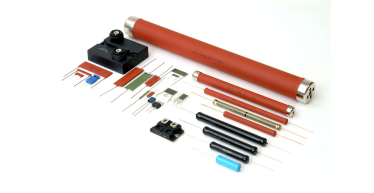
Guide to Power Resistors
Power resistors are used to dissipate energy by converting it to heat. and are designed to maintain stable performance. Call now and request a quote today!
Read More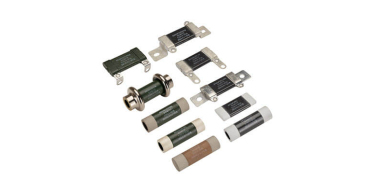
Guide to Ceramic Resistors
Ceramic Composition resistors are composed of a mixture of a finely ground insulator and conductor which is compressed into a cylindrical shape. Call now!
Read More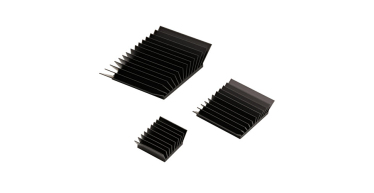
Guide to Heat Sinks
As semiconductor devices scale to smaller sizes and higher power densities, thermal management has become more challenging Call now and request a quote!
Read More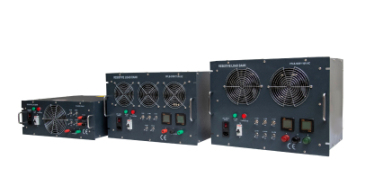
Guide to Load Banks
A load bank is a device that is intended to accurately mimic a load that a power source will see in an actual application. Call now and request a quote today!
Read More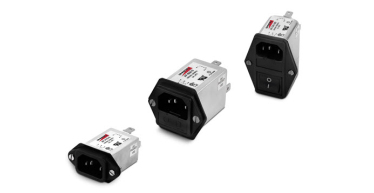
Guide to EMI Filters
To control the effects of EMI, standards are in place internationally, for commercial electronics, aerospace as well as military and space applications. Call now!
Read More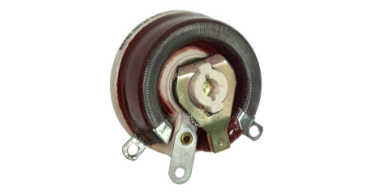
Guide to Rheostats
Rheostats, a fundamental component in electrical engineering, play a crucial role in controlling current flow and adjusting resistance in electrical circuits. Call now!
Read More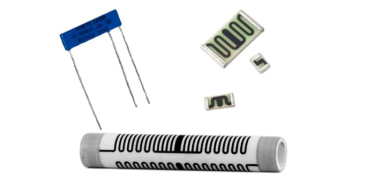
Guide to Thick Film Resistors
Thick film resistors, hailed for their versatility, durability, and wide-ranging applications, are a cornerstone of modern electronics. Call now and request a quote!
Read More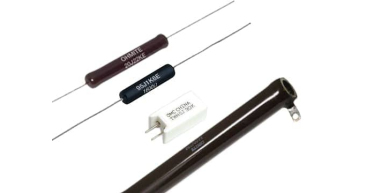
Guide to Wirewound Resistors
Thick film resistors, hailed for their versatility, durability, and wide-ranging applications, are a cornerstone of modern electronics. Call now and request a quote!
Read More
Inventory Search
The Ohmite product inventory is spread across our distribution channel around the world and can be located here. Finding Ohmite stock has never been easier. Call now!
Read More
Ohms' Law Calculator
Read More
Ohm's Law 101
Ohm's Law stands as one of the fundamental principles in electrical engineering, providing a cornerstone for understanding and analyzing electrical circuits. Call now!
Read More
Energy Rating Calculator
Read More
Media Library
Read More
Technical Information
Read More
Industrial Resources
As a manufacturer of power resistors, Ohmite often creates products designed for industrial applications.
Read More
Medical Resources
As a manufacturer of power resistors, Ohmite often creates products designed for medical applications.
Read More
Transportation Resources
As a manufacturer of power resistors, Ohmite often creates products designed for transportation applications.
Read More
Military & Aerospace Resources
As a manufacturer of power resistors, Ohmite often creates products designed for military and aerospace applications.
Read More