
- October 2026 (1)
- August 2026 (1)
- July 2026 (1)
- June 2026 (3)
- April 2026 (1)
- March 2026 (1)
- February 2026 (1)
- January 2026 (1)
- July 2025 (2)
- July 2024 (1)
- December 2023 (1)
- July 2023 (7)
Variable Resistors Explained: Types, Applications & How to Choose
Oct 30, 2026A variable resistor is any resistive component whose resistance can be adjusted, either manually or electronically, rather than being fixed at a single value. They show up everywhere from audio equipment to industrial motor drives to decades-old test equipment still running on the factory floor. If you're trying to understand the category, select the right type for a new design, or track down a replacement for a part that's no longer made, this guide walks through the fundamentals, the main types, and the specifications that matter most — including what to do when the part you need has been discontinued or doesn't exist off the shelf.

What Is a Variable Resistor?
A variable resistor is a resistive device designed to have its resistance changed within a defined range, as opposed to a fixed resistor, which holds a single resistance value for the life of the component. The term covers several related device types — potentiometers, rheostats, and trimmers — that differ mainly in how many terminals they use and how the resistance is adjusted.
You'll also see variable resistors referred to as adjustable resistors or, less precisely, "variable resistance" components. In circuit diagrams, a variable resistor is typically drawn as a standard resistor symbol with a diagonal arrow through it, indicating that the resistance can move along the element.
How Does a Variable Resistor Work?
Inside a variable resistor, a resistive element — commonly wirewound, carbon composition, or ceramic — is paired with a movable contact called a wiper. As the wiper slides or rotates along the resistive element, it changes the effective length of resistive material the current must pass through, which changes the resistance measured at the terminals.
The same basic mechanism is shared across potentiometers, rheostats, and trimmers; what differs is terminal configuration, control type (knob, slide, screwdriver-adjust), and the power or precision the device is built to handle.
Types of Variable Resistors
Potentiometers
A potentiometer uses three terminals: two connected across the full resistive element and one connected to the wiper. This configuration allows a potentiometer to function as a voltage divider, making it the standard choice for applications like volume controls, calibration adjustments, and position sensing. Ohmite's industrial potentiometer line covers rotary, slide, and panel-mount configurations built for continuous use in industrial and OEM equipment, not just low-power electronics.
Rheostats
A rheostat uses only two terminals — one end of the resistive element and the wiper — and is wired in series with a circuit to limit current directly. Rheostats are a mature, well-established technology, and while they've been displaced by electronic controls in many consumer applications, they remain widely specified in industrial power control, motor control, laboratory equipment, and defense and OEM systems where a simple, durable mechanical control is preferred. Because rheostats have been in continuous production for so long, many standard models — including a number of legacy Ohmite part numbers — have been discontinued or superseded over the years. See our guide to rheostats for a deeper look at construction, power ratings, and selection criteria.
Trimmers / Trimpots
Trimmers, or trimpots, are small potentiometers designed for infrequent adjustment, typically with a screwdriver rather than a knob. They're used to fine-tune a circuit during calibration or assembly and then left untouched during normal operation. Ohmite's surface-mount potentiometer options are a common choice where board space is limited and the adjustment only needs to happen once or occasionally.
Digital Potentiometers and Rheostats
Digital variants replace the mechanical wiper with an electronically controlled switch network, allowing resistance to be set via a microcontroller rather than a physical adjustment. These are increasingly common in designs where remote or programmatic control of resistance is required, though mechanical potentiometers and rheostats remain the standard in applications demanding high power handling, direct operator control, or long-term field reliability.
Potentiometer vs. Rheostat: What's the Difference?
The core difference comes down to terminal count and function.
|
Potentiometer |
Rheostat |
|
|
Terminals |
3 |
2 |
|
Primary function |
Voltage divider |
Current limiter |
|
Typical wiring |
Across the circuit |
In series with the circuit |
|
Common use cases |
Volume control, calibration, position sensing |
Motor speed control, lighting control, industrial power control |
A potentiometer can be wired as a rheostat by connecting only one end terminal and the wiper and leaving the other end terminal unused — this is a common workaround when a true rheostat isn't readily available, though it isn't always a direct substitute in high-power applications, since rheostats are typically built to dissipate more heat.
Common Industrial Applications of Variable Resistors
Motor Starting & Speed Control
Rheostats have long been used to manage inrush current during motor starting and to provide manual speed control in applications where a simple, robust mechanical solution is preferred over a fully electronic drive.
VFD Braking & Dynamic Braking Resistors
In systems using variable frequency drives (VFDs), braking resistors dissipate energy generated when a motor decelerates faster than the load allows. While these are typically fixed-value power resistors rather than user-adjustable variable resistors, the broader resistor selection and power-handling principles covered in this guide apply directly to specifying the right braking resistor for a given drive.
Industrial & Power Control
Rheostats and high-power potentiometers are used throughout industrial equipment to adjust heater output, lighting intensity, and process control parameters where an operator needs direct, reliable manual control.
Legacy Equipment & Defense/OEM Systems
A significant share of variable resistor demand doesn't come from new designs — it comes from maintaining equipment that's already in the field. Defense systems, laboratory instruments, test equipment, and vintage industrial or audio equipment often specify a particular rheostat or potentiometer that may no longer be in production. In these cases, the goal isn't choosing a new part from scratch, it's finding a replacement that matches the original's form, fit, and function.
How to Choose — or Replace — a Variable Resistor
Resistance Range & Taper
Confirm the resistance range your application requires, and for potentiometers, whether a linear or logarithmic (audio) taper is needed. Audio and perceptual applications typically call for a logarithmic taper, while most industrial control applications use linear.
Power Rating
Variable resistors, especially rheostats used for current limiting, must be rated to dissipate the heat generated at their operating point. Undersizing the power rating is one of the most common causes of premature failure — always select a rating with margin above the worst-case continuous load.
Mounting & Form Factor
Panel-mount, PCB-mount, and surface-mount configurations all serve different design constraints. Panel-mount rheostats are common where an operator needs direct physical access to a control knob or dial; surface-mount potentiometers suit space-constrained PCB designs.
Matching an Obsolete or Legacy Part
If you're working from an old part number — particularly a rheostat or potentiometer that's no longer listed in a current catalog — it's often still possible to source a form, fit, and function replacement. This is especially common with older Ohmite part numbers used in defense, laboratory, and legacy industrial equipment. Rather than guessing at a cross-reference, contact Ohmite's engineering team directly with the original part number, and they can confirm whether it's still produced or identify the closest current equivalent.
Custom Specifications
Standard catalog resistance and wattage combinations don't cover every application. When an off-the-shelf part doesn't fit — whether it's an unusual ohm value, a nonstandard power rating, or a specific mounting configuration — Ohmite's engineering team can work from your application requirements to build a variable resistor to a custom specification.
Need a Custom or Replacement Variable Resistor?
Can't find your part number in the current catalog? Need a rheostat or potentiometer built to a nonstandard ohm or watt rating? Ohmite's engineering team works directly with customers on custom specifications and legacy part cross-references — from a single prototype through full production. Contact our team to discuss your application, or submit an RFQ to get started.
Frequently Asked Questions About Variable Resistors
What is another name for a variable resistor?
Variable resistors are also referred to as adjustable resistors. Depending on the specific type, they may be called potentiometers, rheostats, or trimmers (trimpots).
What's the difference between a variable resistor and a potentiometer?
"Variable resistor" is the broader category; a potentiometer is one specific type within that category, identified by its three-terminal configuration used for voltage division. A rheostat, by contrast, uses two terminals and functions as a current limiter.
Can I get a replacement for an obsolete or discontinued rheostat or potentiometer?
In many cases, yes. Rheostats in particular are a long-standing product category, and a number of older part numbers have been discontinued over time even though the equipment they were designed for is still in service. Ohmite's engineering team can review an original part number and advise whether it's still available or identify a form, fit, and function replacement.
Can Ohmite build a variable resistor to a custom specification?
Yes. When a standard catalog resistance, wattage, or mounting configuration doesn't meet your application's requirements, Ohmite's engineering team can work from your specifications to develop a custom rheostat or potentiometer, from prototype through full production.
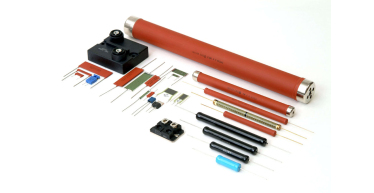
Guide to Power Resistors
Power resistors are used to dissipate energy by converting it to heat. and are designed to maintain stable performance. Call now and request a quote today!
Read More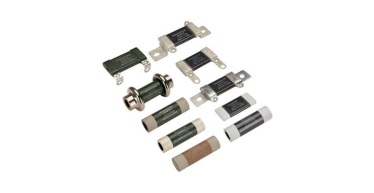
Guide to Ceramic Resistors
Ceramic Composition resistors are composed of a mixture of a finely ground insulator and conductor which is compressed into a cylindrical shape. Call now!
Read More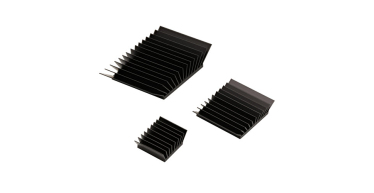
Guide to Heat Sinks
As semiconductor devices scale to smaller sizes and higher power densities, thermal management has become more challenging Call now and request a quote!
Read More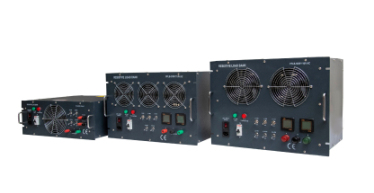
Guide to Load Banks
A load bank is a device that is intended to accurately mimic a load that a power source will see in an actual application. Call now and request a quote today!
Read More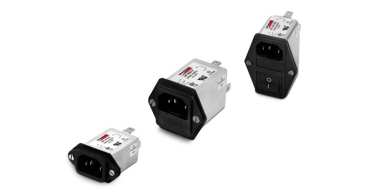
Guide to EMI Filters
To control the effects of EMI, standards are in place internationally, for commercial electronics, aerospace as well as military and space applications. Call now!
Read More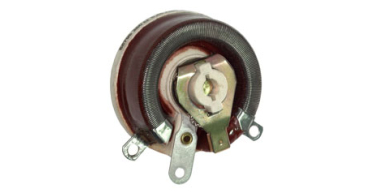
Guide to Rheostats
Rheostats, a fundamental component in electrical engineering, play a crucial role in controlling current flow and adjusting resistance in electrical circuits. Call now!
Read More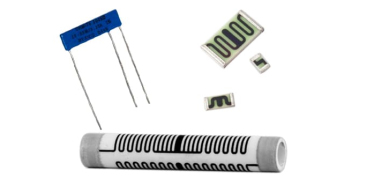
Guide to Thick Film Resistors
Thick film resistors, hailed for their versatility, durability, and wide-ranging applications, are a cornerstone of modern electronics. Call now and request a quote!
Read More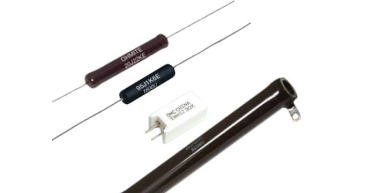
Guide to Wirewound Resistors
Thick film resistors, hailed for their versatility, durability, and wide-ranging applications, are a cornerstone of modern electronics. Call now and request a quote!
Read More
Inventory Search
The Ohmite product inventory is spread across our distribution channel around the world and can be located here. Finding Ohmite stock has never been easier. Call now!
Read More
Ohms' Law Calculator
Read More
Ohm's Law 101
Ohm's Law stands as one of the fundamental principles in electrical engineering, providing a cornerstone for understanding and analyzing electrical circuits. Call now!
Read More
Energy Rating Calculator
Read More
Media Library
Read More
Technical Information
Read More
Industrial Resources
As a manufacturer of power resistors, Ohmite often creates products designed for industrial applications.
Read More
Medical Resources
As a manufacturer of power resistors, Ohmite often creates products designed for medical applications.
Read More
Transportation Resources
As a manufacturer of power resistors, Ohmite often creates products designed for transportation applications.
Read More
Military & Aerospace Resources
As a manufacturer of power resistors, Ohmite often creates products designed for military and aerospace applications.
Read More