
A Complete Guide to Ceramic Resistors
What is a ceramic composition resistor?
Ceramic Composition resistors are composed of a mixture of a finely ground insulator and conductor which is compressed into a cylindrical shape. Terminals are attached and an insulation coating is applied to the outer body of the resistor. The resistance is controlled based upon the ratio of the insulator to conductor mix.
Ceramic is an excellent electrical insulator as well as a superb heat conductor. This property of Ceramic allows the cores of these resistors to endure low to moderate power electrical current flowing through them without overheating and becoming damaged. By their nature, ceramic resistors are also very chemically inert.
Ceramic’s usage is not limited only to the internal components of resistors. Ceramic insulation and thermal properties will externally insulate and maintain greater thermal endurance as compared to many other kinds of resistors.
The construction of a true ceramic resistor, known as a carbon composite resistor, is different from most other kinds of resistors, even though they may also use ceramics. Ceramic resistors are composed of a combination of finely powdered carbon and ceramic material. These two powders are combined in specific ratios to determine the final value of the resistor.
(Ceramic Composition Resistors are classic type known their bulk construction. Instead of a film or wire, their core is a solid, cylindrical slug made by mixing and compressing finely ground carbon (the conductor) with a ceramic powder (the insulator). The final resistance value is determined by the specific ratio of this carbon-to-ceramic mixture, to which terminals and an outer insulating coating are then added.
The cermaic material is key to their performance. Ceramic is both excellent electrical insulator and an effective heat conductor. This unique combination allows the entire body of the resistor to safely absorb and dissipate heat when current flows through it, providing great durability for low to moderate power applications. Furthermore, because these resistors are chemically inert, they offer excellent stability and reliability. )

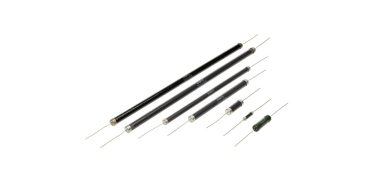
Types of Ceramic Resistors
Ceramic resistors, known for their robustness, stability, and wide range of applications, are essential components in electronic circuits across industries. Call now!
Read More
Common Resistor Terminology - Power Resistor Glossary
In this blog post, we'll unravel the mystery by exploring common resistor terminology and explaining what each term means.Call now and request a quote!
Read More
Selecting a Ceramic Resistor
Ceramic resistors stand out in the realm of electronic components for their versatility, reliability, and wide-ranging applications. Call now and request a quote!
Read MoreCeramic Resistor Construction
Sintering is the process of densification resulting in the formation of a solid mass of material via heat or pressure while remaining below the liquefaction melting point. This is a key step in the manufacturing process used with ceramics.
Ceramic resistors are manufactured using a sintered body of ceramic material, with conductive particles, uniformly distributed throughout the body substance mix, to produce a resistor matrix that is 100% active and non-inductive. Ceramic resistors are also chemically inert.
When carbon is present in a higher ratio to the ceramic, the resistive value will be lower. However, a higher ratio of ceramic material to carbon leads to a higher resistive value for the resistor. When the desired ratios are established, the mixture is compressed to create the resistor body shape and then kiln fired to sinter the ceramic. These types of resistors will commonly have an external shell of ceramic material that will serve as an insulator.
(The creation of a ceramic resistor begins with a precise recipe: a finely ground blend of conductive carbon and insulating ceramic. The exact ratio of these two powders is what sets the final resistive value-more carbon means lower resistance, while a higher concentration of ceramic results in higher resistance. This carefully measured mixture is then compressed into its desired shape.
Then comes the critical transformation: sintering. The shaped form is fired in a kiln at extreme temperatures, a process that fuses the particles into a single, dense mass without ever melting them. This creates a resistor where the entire body is the active element, a design that is inherently non-inductive. A final insulating shell is added to complete a component known for its consistent performance and ability to withstand demanding conditions. )
A Basic Ceramic Composition Resistor Overview
Ceramic resistors are commonly used in various kinds of electronic circuits and devices. One very positive nature of Ceramic resistors is high operation temperatures. A drawback of these resistors is that they can create significant amounts of electrical noise. For this reason, a ceramic resistor will seldom be chosen for sensitive radio receivers or other devices which are susceptible to interference.
Some types of ceramic resistors are listed below:
(Cermaice resistors excel in high heat environments, but this performance comes with a key trade-off: they generate significant electrical noise. This makes them unsuitable for sensitive electronics like radio receivers, where signal clarity is essential. Understanding this balance between heat tolerance and noise is the key to selecting the right type of ceramic resistor for your application.
Some types of ceramic resistors are listed below:)
Axial
Axial ceramic resistors can perform where high peak power or high-energy pulses need to be handled in a small size. These non-inductive resistors can also be used as alternatives to hard-to-find carbon composition resistors.
(Axial ceramic resistors are engineered to handle significant high energy pulse and peak power, all within a compact size. Their inherently non-inductive design makes them ideal for modern circuits where performance under stress is critical. Additionallym they serve as excellent, readily available alternatives to older, often hard to find cermaic composition resistors.)
Tubular
The Ohmite Tubular Bulk Ceramic Resistors provide excellent performance for high peak power or high-energy pulses. Bulk construction advantageously produces an inherently non-inductive resistor, and it allows energy and power to be uniformly distributed through the entire ceramic resistor body – there is no film or wire to fail.
Some varieties of ceramic resistors can withstand high energy and high voltages and up to 230o C operating temperature.
Another type of ceramic resistor is a material composition that is formulated to withstand high operating temperatures resulting in high power dissipation. The maximum continuous operating temperature can achieve 350°C. This type is suitable for use in oil without an oil-resistant coating.
Some ceramic resistors can withstand high operating temperatures with high power dissipation. For use in oil without an oil-resistant coating. Higher resistance values and 230°C operating temperatures are also available
(Ohmite's Tubular Bulk Ceramic Resistors are engineered to handle intense high energy pulses and peak power events. Their strength comes from a unique bulk construction, where the entire ceramic body is the resistive element. This design distributes energy uniformly and means there is no fragile film or wire to fail under stress, making these resistors inherently tough and naturally non-inductive.
This design allows for exceptional performance in extreme conditions. Different formulations are available to meet specific needs, with some varieties handling high operating temperatures of up to 230°C. For even more demanding environments, other types are engineered to perform continuously at an impressive 350°C and are suitable for direct use in oil without requiring a protective coating.)
Slab Ceramic Resistors
High energy and non-inductive, this class of ceramic resistors have a unique geometry, providing slim profile to reduce resistor package size. This enables tighter grouping and provides more efficient cooling in forced air applications.
Other types of ceramic material resistors can operate in high energy and high voltage applications. Maximum continuous operating temperature can reach 230°C. The standard dielectric coating is recommended for use in air, and the oil-resistant coating is recommended for use in oil.
Another type of ceramic resistor can withstand high energy and high voltage applications where the necessary resistance value is higher than most other ceramic resistors. Maximum continuous operating temperature is specified at 230°C here as well.
(This class of non-inductive ceramic resistors features a unique, slim profile geometry. This design reduces the overall package size, allowing for denser component layouts and enabling more efficient cooling, especially in forced-air systems.
For applications demanding high energy and high voltage performance, specialized ceramic formulations are available that operate continuously at up to 230°C. One variation focuses on environmental adaptability, offering distinct coating options like a standard dielectric for use in air and a specialized oil-resistant version for immersion. Another formulation is engineered to provide these same high-performance characteristics but at much higher resistance values than are typically achievable with standard ceramic resistors.)
Ceramic Resistor Applications
Motor drive discharge
Medium voltage motor drive systems can be discharged via ceramic resistors as a requirement for safe operation. This kind of assembly may be sized based upon the DC bus capacitance coupled with the shutdown time of the specified motor drive. The current capability of the shutdown relay, coupled with a safe discharge through the ceramic resistor, are two critical functions in this assembly design.
(Ceramic resistors are essential for ensuring the safe discharge of stored energy in medium voltage motor drives, a vital step for maintenance and personal safety. A discharge resistor assembly is sized based on key parameters like the drive's DC bus capcitance and specifited shutdown time. Properly matching the resistor to the shutdown relay ensures a controlled energy dissipation, protecting both personnel and equipment.)
High load testing systems
Load bank ceramic resistors can be used to safely simulate load applications in power designs, such as testing required of EV batteries and charging station output.
(For testing power systems, load bank ceramic resistors act as a safe and controllable artificial load. They are critical for verifying the performance and output of modern designs, including EV batteries and high-power charging stations.)
Engine braking and crowbar
High power ceramic resistors are typically employed in train locomotives and trams. These resistors will safely convert high kinetic energy, of such vehicles, to heat. Ceramic resistors, in this application, will not exhibit a voltage spike across load terminations.
(In heavy transportation systems like trains and trams, high-power ceramic resistors are crucial for dynamic braking. They safely convert the immense kinetic energy of the moving vehicle into heat, allowing for smooth and controlled deceleration. A key advantage in this application is their non-inductive design, which prevents damaging voltage spikes during the braking process.)
Neutral grounding resistors
Ceramic resistors are used in this design for the power grounding of Y-connected generators.
(Ceramic resistors provide a reliable method for power grounding in systems with Y-connected generators, helping to safely manage fault currents.)
Linear accelerator slab
When scientists are examining particle physics in a controlled, contained environment, a huge amount of energy must be effectively and safely contained. Many times, a slab assembly can be submerged in oil. This method will enable a safer means of dissipating the heat generated when powering a linear accelerator.
(Safely managing the massive energy loads of a linear accelerator is a key challenge in particle physics. One common solution involves immersing large slab resistor assemblies in oil, which acts as a powerful coolant. This enables superior heat dissipation and allows the enormous amount of energy to be controlled safely and reliably.)
Electrostatic precipitators
Parallel Ceramic tubular resistor assemblies are an effective solution as a replacement for wire-wound resistors, which have not safely functioned properly in electrostatic precipitator applications. These types of systems may exhibit peak voltages higher than 300kV, while dissipating more than 2 kW of power.
(For electrostatic precipitator system, parallel ceramic resistor assemblies are a superior alternative to wirewounds. They are engineered to reliably the application's extreme demands, including voltage above 300kV and power dissipation greater than 2kW.
Encapsulated ceramic resistors
When standard slab resistors are not robust enough to handle the application, designers will seek a more robust thermal and mechanical solution. The use of an encapsulated assembly will help to eliminate the risk of shock or vibration-induced disconnections and contaminants.
The use of a machined aluminum shell design will enable containment of multiple axial or slab resistors in series or in parallel. After being encapsulated, the assembly will be mounted to a heatsink which is liquid-cooled to allow for continuous power, (2-3x normal rating) safely powered through the completed assembly.
(For applications with extreme shock, vibration, and environmental hazards, designers often turn to encapsulated resistor assemblies. These units contain multiple resistors within a sealed, machined aluminum housing, protecting them from disconnections and contamination. When paired with a liquid cooled heatsink, this design offers exceptional thermal performance, enabling the assembly to manage 2-3 times its standard continuous power rating safely and effectively.)
Resistor hardware and heat sinking
Every mounting style will have their unique and optimum advantages depending upon the application.
Ceramic resistors range from ½ watt to 1,000 watts in a single component. As power levels increase, the type of mounting requirements will change. Low level wattage resistors, under 3W, typically will be in a surface mount format.
As the resistor power level rating increases from 3W to 10W, axial thru-hole will be the mounting style of choice.
Tubular-shaped power resistor substrates have a large surface area on which the ceramic resistor material can be applied. Mounting hardware is necessary which will help raise the tubular resistor off the PC board.
(A resistor's required mounting style is directly tied to its power rating, as larger components are needed to manage increasing amounts of heat. For low power applications, typically under 3W, compact surface mount (SMD) resistors are standard. As power levels increase into the 3W to 10W range, larger Axial Thru-Hole components are necessary. For even higher power requirements, Tubular resistors are used; their large surface area provides excellent heat dissipation, and they are installed with special mounting hardware to elevate them off the circuit board and protect other components from intense heat.)
Selecting Ceramic Composition Resistors
Designers need to pay attention to power rating. Resistors are self-heating components, so they must be able to handle the power dissipation while meeting all key specifications. Heat sinks may be required as well.
When mounting resistors, high dissipation may lead to a larger physical resistor size. Designers need to decide whether a resistor needs additional mounting support
When selecting a resistor, do not over-specify which will add cost and take up more board space. Pay close attention to derating curves in the data sheet. When looking at a resistor temperature curve, does it specify ambient air or heat sink temperature?
Resistors may need to be cooled via normal passive convection or even using forced air. Beware of large components that may block airflow from the fan to the resistor.
Beware of pulsed load applications. Power bursts can greatly exceed ratings. Thick film and wire wound resistors are best suited here.
Self-inductance: A resistor inductance will not be a factor in a DC design. However, at high frequency, the self-inductance may be a problem. Designers may want to look for a resistor with low self-inductance in this case.
In high voltage applications, designers will need to select the right voltage resistor rating and adequate lead spacing to prevent arcing in high voltage designs.
The temperature coefficient of resistance (TCR) of a resistor may change the accuracy of the reading, especially when the resistor is measuring current flow by the voltage drop. Self-heating may cause the resistor ohmic value to change.
(Selecting the right resistor involves looking beyond the basic specs to consider how it will perform in a real world system. Here are the critical design considerations to keep in mind. A resistor's power rating is paramount, as every resistor generates heat. You must ensure the component can safely handle its thermal load. For high-power applications, this may require a larger resistor, a dedicated heatsink, or even forced air cooling. When using fans, be sure other components don't block airflow to the resistor.
Always consult the datasheet's derating curves, which show how much power a resistor can handle at different temperatures. Pay close attention to whether the curve is based on ambient air or a required heatsink temperature to ensure you a meeting the cooling requirements.
Electrical Characteristics for Specific Applications
- Pulsed Loads: For applications with power bursts or surges, select a resistor designed for high pulse energy, such as a thick film or wirewound type, as standard power ratings can be misleading.
- High Frequency: While not a factor in DC circuits, a resistor's self-inductance can be a problem at high frequencies. For these designs, look for specific non-inductive components.
- High Voltage: In high-voltage applications, you must choose a resistor with the proper voltage rating and ensure adequate lead spacing on the board to prevent dangerous arcing.
- Temperature Coefficient (TCR): For precision tasks like current sensing, TCR is critical. A resistor's own self heating can cause its resistance value to drift, affecting the accuracy of your measurement.
Beyond electrical performance, practical considerations are key. Avoid over-specifying a resistor; choosing a component that is excessively large or highly rated adds unnecessary cost and consumes valuable board space. However, be mindful that larger resistors used for high power dissipation may require additional mechanical support to ensure they remain secure.)
Safety Tips
Resistor soldering must be performed within the specified temperature of the resistor, the maximum rated time of exposure to soldering, as well as the number of times that a resistor is re-soldered, or the device may be damaged.
When resistors are stored, they need to have a safe temperature, and humidity, with no exposure to sunlight, or corrosive gases/chemicals.
Power resistors may be extremely hot to the touch.
Resistor insertion and mounting must be carefully performed, especially with automated assembly mounting.
Before installing resistors on a PCB, ensure that the board is clean and free of ionic substances. These substances can accumulate during the manufacturing process. For example, the copper etching process can leave chemicals behind. Ionic substances become conductive when exposed to moisture, leading to changes in circuit performance.
(How a resistor performs in the real world goes far beyond the numbers on a spec sheet. The care taken with a component from the moment it arrives to its final place on the board is what separates a flawless design from one plagued by unexpected failures. To give your circuit true staying power, follow these crucial guidelines for handling and assembly:
- Board Preparation: Before mounting, ensure the PCB is clean and free of ionic substances left over from manufacturing, as they can become conductive with moisture and affect circuit performance.
- Careful Handling: Perform resistor insertion carefully to avoid physical damage, especially during high speed automated assembly.
- Soldering Limits: Always adhere to the component's specified limits for soldering temperature, time, and the number of re-solder cycles to prevent permanent damage.
- Proper Storage: Keep resistors in a controlled environment with safe temperature and humidity levels, away from direct sunlight and corrosive gases.
- Operational Safety: Be aware that power resistors can become extremely hot to the touch during operation, requiring careful placement to protect users and adjacent components from heat damage.)
Ceramic Composition Resistor Applications
High Current and Braking
Ceramic resistors have a property that will dissipate heat. This resistor capability can be used to slow down a mechanical system. The process is known as dynamic braking and the resistor used in this design is called a dynamic braking resistor. When decelerating an electric motor, kinetic energy is transformed back into electrical energy. Brake resistors in trains and variable frequency motor drives are good examples.
Braking resistors are usually rated at high power with low ohmic values. Cooling can be via cooling fins, fans, or in much higher power cases, water cooling.
(Dynamic braking is a process that uses a power resistor to safely slow down large mechanical systems, such as trains or equipment with variable frequency drives. When a large electric motor decelerates, it effectively acts like a generator, converting its kinetic energy into a surge of electrical energy. The dynamic braking resistor's critical job is to instantly dissipate this energy as heat, providing a smooth and controlled braking force. These resistors typically feature high power ratings and low ohmic values and may require cooling systems like fins, fans, or even water cooling to manage the intense heat.)

Transportation and Automotive-Grade Power Resistors
Some ceramic power resistors, in 500 watts and up, are supplied in silicon ceramic with a tubular ceramic core for these applications. These resistors have wattage ratings from 12 watts to 1kW. Lug terminals are provided for soldering or sturdy bolt connections. These resistors can tolerate an overload of 10x the rated wattage for 5 seconds.
(This family of tubular ceramic resistors, available with power ratings from 12 watts up to 1kW, is built with a durable silicon ceramic coating. They're designed for a secure installation, featuring versatile lug terminals that support either soldering or sturdy bolt on connections. Their standout characteristic is an exceptional overload capacity, allowing them to withstand 10 times their rated wattage for 5 seconds)

Electric Vehicles
High power resistors may be used in Electric Vehicle (EV) charging systems, power control, power distribution, motor control, and battery modules.
The energy which is dissipated during dynamic braking into a power resistor may be used to heat the vehicle cabin, reducing the requirement for electrical heating, which would place an extra load on the battery. See “High current and braking” and “Transportation and automotive-grade power resistors” sections above.
(High-power resistors are fundamental to nearly every core system in an Electric Vehicle (EV), from power distribution networks and motor control units to high-speed charging systems and the main battery modules.
Beyond these essential roles, they're also used in clever, energy-saving applications. For instance, the heat generated by a resistor during dynamic braking can be repurposed to heat the cabin. This recycles the energy from slowing down, reducing the direct load on the main battery and improving the vehicle's overall efficiency.)

Build with the Experts in Resistance
Electronics designers need to have a full understanding of their resistor options and proper application in a design. Resistors are often overlooked as important or key elements in a design. Make no mistake, a deep understanding of resistors, as shown in this pillar page, will add an exclamation point to your design. Contact us today!
(A deep understanding of resistors is key to a successful design. Now that you've explored the options, let's apply that knowledge to your specific project. Our team has 100 years of experience solving the toughest power resistor challenges.
Have a project in mind? Contact us today to discuss your application and build with a component you can trust.)

Blog
Read More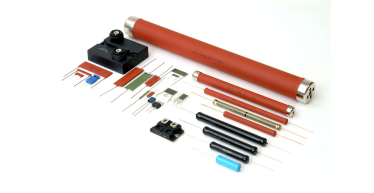
Guide to Power Resistors
Power resistors are used to dissipate energy by converting it to heat. and are designed to maintain stable performance. Call now and request a quote today!
Read More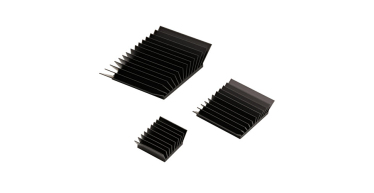
Guide to Heat Sinks
As semiconductor devices scale to smaller sizes and higher power densities, thermal management has become more challenging Call now and request a quote!
Read More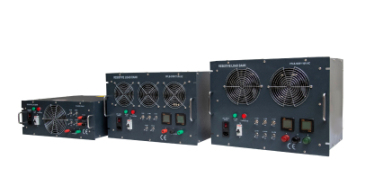
Guide to Load Banks
A load bank is a device that is intended to accurately mimic a load that a power source will see in an actual application. Call now and request a quote today!
Read More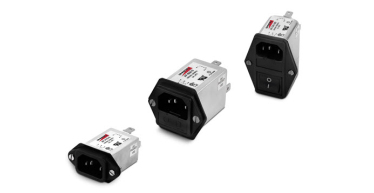
Guide to EMI Filters
To control the effects of EMI, standards are in place internationally, for commercial electronics, aerospace as well as military and space applications. Call now!
Read More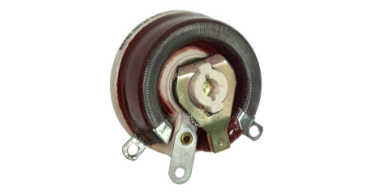
Guide to Rheostats
Rheostats, a fundamental component in electrical engineering, play a crucial role in controlling current flow and adjusting resistance in electrical circuits. Call now!
Read More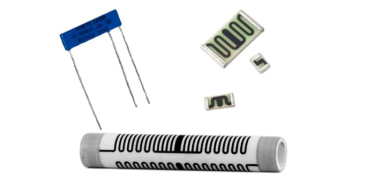
Guide to Thick Film Resistors
Thick film resistors, hailed for their versatility, durability, and wide-ranging applications, are a cornerstone of modern electronics. Call now and request a quote!
Read More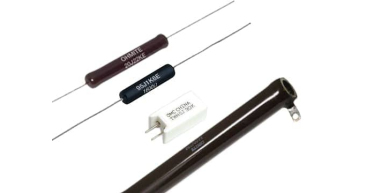
Guide to Wirewound Resistors
Thick film resistors, hailed for their versatility, durability, and wide-ranging applications, are a cornerstone of modern electronics. Call now and request a quote!
Read More
Ohms' Law Calculator
Read More
Ohm's Law 101
Ohm's Law stands as one of the fundamental principles in electrical engineering, providing a cornerstone for understanding and analyzing electrical circuits. Call now!
Read More
Energy Rating Calculator
Read More
Media Library
Read More
Technical Information
Read More
Industrial Resources
As a manufacturer of power resistors, Ohmite often creates products designed for industrial applications.
Read More
Medical Resources
As a manufacturer of power resistors, Ohmite often creates products designed for medical applications.
Read More
Transportation Resources
As a manufacturer of power resistors, Ohmite often creates products designed for transportation applications.
Read More
Military & Aerospace Resources
As a manufacturer of power resistors, Ohmite often creates products designed for military and aerospace applications.
Read More