
Guide to Power Resistors
What is a Power Resistor?
Power resistors are used to dissipate energy by converting it to heat. They are designed to maintain stable performance under heavy loads and to handle thermal conditions safely.
Power resistors are usually physically larger than other resistors, and are designed for higher loads—typically over one watt. Calculating the power rating of these resistors follows the familiar formula P =I²R, C. For resistor longevity in a power circuit application, the rated power should be more than 2x the actual power dissipated in the particular application.
(Power resistors are specifically designed to handle heavy electrical loads by safely converting excess energy into heat. Their larger physical size is essential for effective heat dissipation and reliable performance under demanding conditions.
For any application, first calculate the power the resistor will handle using the formula P = I²R (where P is power, I is the current running through the resistor, and R is the resistor value in ohms). Then, to ensure safety and long-term reliability, choose a resistor with a power rating that is at least double your calculated result. This simple rule is key to designing a durable and robust power circuit.)

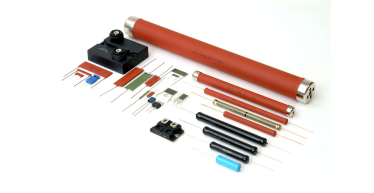
Types of Power Resistors
Power resistors play a crucial role in various electronic circuits, serving as essential components for controlling current flow and voltage levels.Call now!
Read More
Power Resistor Applications
Power resistors are indispensable components in electronic applications, serving as vital elements for controlling current flow and maintaining stability. Call now!
Read More
Selecting a Resistor
With a myriad of options available, engineers are often faced with a maze of specifications and technical jargon. Call now and request a quote today!
Read More
Designing for Safe Shutdown: The Role of Discharge Resistors in Power Electronics
Read MorePower Resistor Applications
Power resistors are used in a wide variety of applications, from power transmission and distribution networks to defibrillators. Some example applications are listed below:
High Current and Braking
High current power resistors can be used in load testing and dynamic braking in the transportation and semiconductor industries. These types of resistors use a modular and scalable design which enables designers to find the proper high current/braking resistor that will perform best in their designs, especially in motor deceleration.
High current resistors can improve applications that range from standard current loads to motor braking, such as trains and elevators.
Transportation and Automotive-Grade Power Resistors
Transportation solutions are typically customized to precise specifications; however, they are flexible in meeting most power needs. This class of resistors is designed to withstand harsh environments. Applications span from dynamic braking, custom controls, and lighting, as well as for military ground equipment, construction equipment, snowmobiles, dump trucks, and a wide variety of off-highway vehicles. Custom solutions also exist for agriculture and construction applications.
(Power resistors are used in a wide variety of applications, from power transmission and distribution networks to defibrillators. Some example applications are listed below:
High Current and Dynamic Braking
Power resistors are essential in a vast range of industrial applications, especially where high current and significant energy must be managed. For electric motors in trains, elevators, and industrial conveyors, dynamic braking resistors are critical for controlled motor deceleration. They safely convert the system's kinetic energy into heat, providing smooth and reliable braking. These high-current resistors are also vital for the load testing of power supplies and generators.
Transportation and Harsh Environments
In the transportation sector, rugged automotive grade resistors are designed to withstand vibration, moisture, and extreme temperatures. Their applications are extensive, found in the vehicle electronics of heavy equipment used in construction, agriculture, and mining. From dump trucks and military vehicles to a wide variety of off-highway vehicles, these resistors are key components in everything from powertrain controls to lighting systems. For these specialized uses, custom solutions are often developed to meet precise performance and environmental demands.)
Types of Power Resistors
Power resistors come in a variety of types, each with distinct ratings, shapes, constructions, and sizes.
Below are some of the most common types available:
Wirewound Power Resistors
This class of resistors is available in many different wattage ratings, depending upon the application, mounting, and resistance range needed.
As the name implies, these resistors are made using an insulated wire wound around a core of non-conductive material like ceramic. The wires are typically poor conductors such as nickel-chromium and are constructed in different lengths and material compositions to control the value of the resistance.
Wirewound resistors are generally used when carbon resistors start to lose their effectiveness. Designers need to be aware that this class of resistors may affect the behavior pattern of the circuit at high frequencies due to their higher inductance characteristics compared to other classes of power resistors.
(Wirewound resistors are a top choice for high-power applications due to their robust construction. They are made by wrapping a specialized resistive wire, often a nichrome alloy, around a durable ceramic core. This design is exceptionally good at heat dissipation, allowing these components to reliably handle high wattage and heavy loads.
However, their construction creates a critical design trade-off: inductance. The coiled wire inherently acts like an inductor, which can alter signals and impede performance in high-frequency circuits. While they are ideal for DC and low-frequency power applications, engineers must account for this inductance when designing circuits where high-frequency performance is essential.)

Ceramic Composition Power Resistors
Ceramic-based power resistors can range from 1/2 watt to 1k watt. Some applications for ceramic power resistors are high power snubber circuits, motor controls, radar, defibrillators, circuit breakers, high voltage power supplies, medical devices, and more.
Non-inductive ceramic composition resistors can provide benefits beyond those of other classes of resistors such as wirewound, and film resistors. This is because they do not have a resistive film or wire that is vulnerable to malfunction. This makes composition resistors superior in high pulse applications where wire and film may fail. Ceramic resistors are also chemically inert and have excellent thermal stability, which leads to better durability and safety.
(Ceramic power resistors are highly versatile components, essential in critical systems ranging from medical defibrillators and high-voltage power supplies to industrial motor controls. Their most significant advantage is their exceptional performance in high-pulse applications.
Unlike wirewound or film resistors, which have a fine element that can be destroyed by a sudden energy surge, a ceramic resistor’s bulk composition allows its entire body to safely absorb the impact. This robust, non-inductive design, combined with excellent thermal stability, provides superior durability and safety, making them the ideal choice where reliability under stress is paramount.

Thick Film Resistors and Thin Film
These two types of resistors look very similar, but thick film and thin film technologies are very different. Let’s look a little deeper.
The thickness of the resistive layer is the obvious difference between thick and thin film resistors. But there are also specification differences and process differences in their creation. The thin film uses sputtering, a physical vapor deposition (PVD) process, while the thick film uses screen printing.
Thanks to their sophisticated manufacturing process, thin film resistors have tightly controlled specifications. They have a thickness of typically 0.1 microns with tight tolerances with good stability along with lower capacitance.
Thick film resistors, in comparison, can be up to 1000 times thicker (100 microns) and will have high resistance values with high voltage capability with lower tolerance. Thick film resistors also have a higher capacitance than thin film resistors.
(Although they may look nearly identical, thin-film and thick-film resistors are made using very different methods, which makes them suitable for very different jobs. The key is in how the resistive layer is applied.
Thin-film resistors are created with a highly precise process that deposits an extremely fine, uniform layer of material onto a ceramic base. This precision results in resistors with very tight tolerances and excellent stability over time, making them ideal for high-accuracy applications like medical instruments, testing equipment, and professional audio circuits.
Thick-film resistors, on the other hand, use a simpler method similar to screen-printing a special resistive paste. This creates a much thicker, more rugged layer. While this process is less exact, it allows thick-film resistors to handle significantly higher voltages and power loads. This makes them the go-to, cost-effective choice for general-purpose electronics, power supplies, and any application where raw durability is more important than pinpoint precision.)

Metal Oxide Film Versus Carbon Film Resistors
As the name implies, a carbon film resistor places a layer of carbon film over a ceramic insulator substrate. It can endure high temperatures but has a negative temperature coefficient. In other words, it has less resistance capability over time with high temperatures.
Metal oxide film resistors instead use a tin oxide film layer over the insulated ceramic rod. This delivers superior voltage and temperature coefficients compared to carbon film resistors.
The thermal noise of a resistor depends on the type of resistor and how it interacts with resistance, bandwidth, and temperature. Wire wound and thin film resistors have low noise. Carbon film and metal oxide film are known for less noise, with metal oxide film having a lower noise design than carbon film.
For this reason, metal oxide film resistors are used in low-noise applications. Metal oxide film resistors have a better tolerance level—as low as 0.1%—while carbon film resistors have a minimum tolerance of 2%.
(When choosing a resistor, two common types are carbon film and metal oxide film. While both are built by applying a film to a ceramic rod, metal oxide film resistors generally offer superior all-around performance. Their key advantage is that they handle higher voltages and are much more stable at high temperatures, meaning their resistance value doesn't drift as much when they heat up. In contrast, a carbon film resistor's performance can be less predictable as its temperature changes.
The differences are also clear when it comes to precision and noise. For sensitive applications like audio or measurement equipment, metal oxide film resistors are the better choice because they generate less unwanted electrical noise. They can also be manufactured with much tighter tolerances, meaning their stated resistance value is more accurate. While carbon film resistors are effective for general use, metal oxide film provides the higher stability and cleaner performance needed for more demanding circuits.)
Resistor Considerations
There are a few key factors that will need to be examined when choosing the right resistor type for an application. A single resistor may account for only a tiny percentage of the cost for a circuit, but a power resistor can become a source of damage for the entire circuit.
Quite frequently, resistors are used in higher-voltage circuit applications. It is important to verify the proper voltage rating of the resistor—especially in these higher-voltage applications—to ensure that it will not fail. Resistors are self-heating components and must be able to handle the power dissipation in their particular circuit.
What’s more, designers should take care to ensure that their resistors will continue to operate as expected as resistance drifts based on temperature. In addition to checking the temperature coefficient of resistance (TCR), also check the voltage coefficient of resistance (VCR). Resistance values are only fixed under stable voltage conditions. Although usually less significant than temperature-driven variation, voltage fluctuations can lead to unacceptable changes in resistance.
The resistor must also meet safety parameters and specifications for the part of the circuit in which it operates. It is good practice to select resistors that have a power rating greater than the power that it will handle. If a power resistor is operated above its specified power rating, its operating life may be reduced and short circuits may occur. A general guideline for power dissipation is to use a resistor that can withstand twice the maximum power it is expected to handle in the circuit.
Many kinds of resistors may look very similar on the outside. Some resistors may also be available with the same specifications—initial tolerance, noise, load life stability, etc. However, each type of resistor may be constructed with different resistive materials and may be produced differently. Designers need to beware because, in some cases, the resistor selected may exhibit a different performance characteristic in the circuit.
(Choosing the right resistor is one of the most critical decisions in circuit design. While it may be one of the least expensive components, the wrong choice can lead to the failure of an entire device. Here are the key factors to consider to ensure you select the right part for the job.
Check the Fundamental Ratings
First, every resistor has a maximum voltage rating and power rating. You must ensure these are high enough for your circuit's demands. The power rating is especially important because resistors are self-heating components; this rating tells you how much heat the resistor can safely handle without overheating and failing.
Account for Real World Changes
A resistor's stated value isn't always fixed it can drift based on its operating conditions. The most significant factor is temperature; as a resistor heats up, its resistance can change. While often less dramatic, fluctuations in voltage can also cause the resistance value to drift. For sensitive circuits, it's important to understand how your resistor will behave when things aren't perfectly stable.
Build in a Safety Margin
The single most important practice for ensuring reliability is to never run a resistor at its absolute maximum limit. A resistor that is constantly pushed to its edge will have a significantly shorter lifespan and can damage other components when it fails. A great rule of thumb is to use resistor with a power rating that is at least double the maximum power you expect it to handle. This practice, know as derating, provides a crucial safety margin that prevents overheating and dramatically improves the long-term durability of your circuit.
Look Beyond the Spec Sheet
Finally, remember that two resistors that look identical and share similar basic specifications (like tolerance or stability) can be made of completely different resistive materials. This means they can perform very differently in the real world, especially under stress. Understanding the underlying construction of a resistor is just as important as its specs on paper.)
Safety Tips
Resistors are not immune to combustion and may emit smoke, gas, and more. Also, resistors tend to lose their characteristics when immersed in a solvent for a long period of time. Designers need to keep these things in mind to avoid any damage to peripheral components and boards.
Some power resistors can be shielded –i.e., housed in metal or ceramic casings—or coated with resin as a part of their construction. This will help ensure that their performance, reliability, and stability are not affected.
If a protective coating is chipped or removed, the properties of the resistor may be impaired. To avoid damaging the coating, it is best not to use hard steel tools to place resistors.
Some applications may subject resistors to irregular current surges and spikes. Designers should also take care that the components selected can withstand an increased load for a brief period.
Even if the level of power applied to the resistor is within rated power, the temperature of the resistor may increase drastically due to such things as the wiring pattern, heat generated by adjacent components, circuit board design, etc.
Designers should also take care that any bending of printed circuit boards does not subject resistors to abnormal stress, which may damage the device or affect its performance.
(To ensure the safety and durability of your design, consider these critical environmental, mechanical, and electrical factors.
Electrical and Thermal
A resistor's performance is heavily influenced by its environment. Even if a component is operating within its specified power rating, its temperature can rise dangerously due to external factors like a dense wiring pattern or heat generated by adjacent components. Designers must account for the total thermal load of the area. Furthermore, in applications subject to irregular current surges and spikes, it is essential to select a resistor specifically rated to withstand those brief, intense loads without failing.
Physical Integrity and Handling
Many power resistors are manufactured with a protective coating or housed in a ceramic or metal casing to ensure their stability and performance. It is critical that this protective layer remains intact. Chipping or scratching the coating, for instance with hard steel tools during assembly, can impair the resistor's properties. Similarly, be mindful of mechanical stress after soldering; bending or flexing the printed circuit board (PCB) can damage the resistor or its connections.
Environmental and Chemical Hazards
Also be aware of chemical exposure and failure modes. Prolonged immersion in cleaning solvents can cause a resistor's characteristics to degrade over time. Under extreme overload conditions, a resistor may fail, potentially emitting smoke or combusting, which can cause damage to peripheral components on the board. Proper selection and derating are crucial to avoid these hazardous situations.)
Power with the Leader in Power
Resistors can be one of the last considerations in a design, but as you can see, they are essential and will improve your design. Discover how Ohmite can provide you the appropriate power resistors for your electrical or electronic system. If you are looking for a resistor that can provide reliable performance, contact our experts to advise you on your application.
(A single resistor can be the difference between a successful product launch and a costly field failure. Ensuring you have the right component for your specific power, thermal, and frequency requirements is a critical step that deserves expert attention. At Ohmite, we specialize in robust, high-performance resistive solutions for the most demanding industries.
Let's solve your power resistor challenge together. Reach out to our engineering team to discuss your application and discover the optimal solution for your design.)

Blog
Read More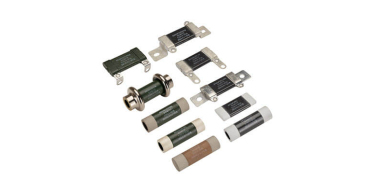
Guide to Ceramic Resistors
Ceramic Composition resistors are composed of a mixture of a finely ground insulator and conductor which is compressed into a cylindrical shape. Call now!
Read More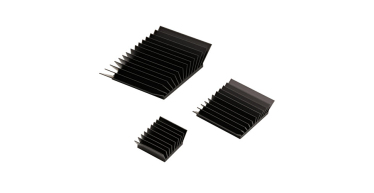
Guide to Heat Sinks
As semiconductor devices scale to smaller sizes and higher power densities, thermal management has become more challenging Call now and request a quote!
Read More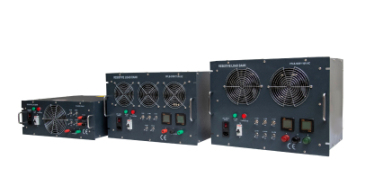
Guide to Load Banks
A load bank is a device that is intended to accurately mimic a load that a power source will see in an actual application. Call now and request a quote today!
Read More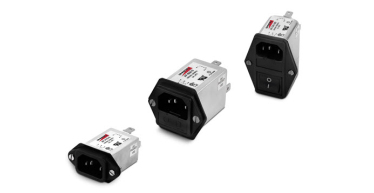
Guide to EMI Filters
To control the effects of EMI, standards are in place internationally, for commercial electronics, aerospace as well as military and space applications. Call now!
Read More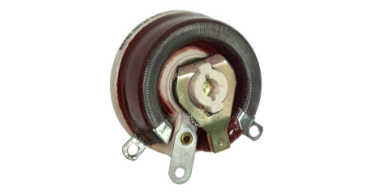
Guide to Rheostats
Rheostats, a fundamental component in electrical engineering, play a crucial role in controlling current flow and adjusting resistance in electrical circuits. Call now!
Read More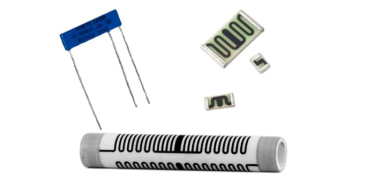
Guide to Thick Film Resistors
Thick film resistors, hailed for their versatility, durability, and wide-ranging applications, are a cornerstone of modern electronics. Call now and request a quote!
Read More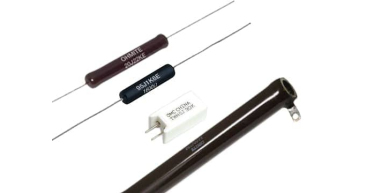
Guide to Wirewound Resistors
Thick film resistors, hailed for their versatility, durability, and wide-ranging applications, are a cornerstone of modern electronics. Call now and request a quote!
Read More
Ohms' Law Calculator
Read More
Ohm's Law 101
Ohm's Law stands as one of the fundamental principles in electrical engineering, providing a cornerstone for understanding and analyzing electrical circuits. Call now!
Read More
Energy Rating Calculator
Read More
Media Library
Read More
Technical Information
Read More
Industrial Resources
As a manufacturer of power resistors, Ohmite often creates products designed for industrial applications.
Read More
Medical Resources
As a manufacturer of power resistors, Ohmite often creates products designed for medical applications.
Read More
Transportation Resources
As a manufacturer of power resistors, Ohmite often creates products designed for transportation applications.
Read More
Military & Aerospace Resources
As a manufacturer of power resistors, Ohmite often creates products designed for military and aerospace applications.
Read More