
Designing for Safe Shutdown: The Role of Discharge Resistors in Power Electronics
Engineers build modern power electronics systems with the strength to manage increasingly high voltages, higher switching frequences, and greater power densities. Industrial motor drives, renewable energy converters, EV charging infrastructure, DC power distribution systems, and so many more depend on stable and controlled energy management throughout every stage of operation. That includes the shutdown stage too.
Often overlooked, the controlled discharge of stored electrical energy after power is removed is a critical aspect of system safety. Capacitors within converters, inverters, and high-voltage DC systems can retain dangerous voltage levels long after shutdown occurs. Without a reliable method of dissipating this stored energy, systems may present risks to operators, service technicians, and connected equipment.
Discharge resistors play an essential part in addressing these challenges. By safely dissipating residual electrical energy, they help reduce shutdown hazards, protect components, and support compliance with electrical safety standards. Let’s explore more about the role of discharge resistors.
Why Stored Energy Creates Safety Challenges
Capacitors are widely used throughout power electronics systems for filtering, smoothing, energy storage, and voltage stabilization. Even after input power is disconnected, these capacitors may continue holding significant electrical charge.
In high-voltage DC systems, this residuals energy can remain present for seconds, or even minutes, depending on the system design. Too much stored energy can lead to electrical shock hazards and damage to downstream components during servicing.
Other risks include arcing during connector removal or repair and unexpected system behavior during restart conditions. All of these are especially risky to maintenance personnel tending to the systems.
As operating voltages continue increasing across industrial and renewable energy systems, the importance of controlled capacitor discharge becomes even greater.
What Are Discharge Resistors?
Discharge resistors are resistive components connected across capacitors or DC bus structures to dissipate stored electrical energy after power removal. Their primary purpose is to reduce voltage levels to safer thresholds within a specified amount of time.
When the system powers down, the resistor provides a controlled discharge path for the stored energy. Electrical energy is converted into heat through the resistor until the capacitor voltage falls below the desired level.
This process may appear simple, but selecting the correct discharge resistor requires careful evaluation of initial voltage, total capacitance, power dissipation requirements, and thermal operating conditions.
Improper resistor selection can result in excessive heat generation, insufficient discharge performance, or reduced long-term reliability.
The Relationship Between Safety and Shutdown Design
Safe shutdown design is essential in power electronics applications. Regulatory standards and industry expectations often require systems to discharge stored voltage within defined time limits after shutdown.
For example, many industrial and energy systems are designed to reduce DC bus voltage to safe levels within a matter of seconds. Achieving this requires balancing discharge speed against resistor power dissipation and thermal constraints.
A resistor with too high a resistance value may discharge too slowly, while a resistor with too low a value may dissipate excessive power or create unnecessary thermal stress during operation.
Engineers must therefore consider discharge resistor selection as part of the overall system safety architecture rather than as an afterthought.
Applications in Modern Power Electronics
Discharge resistors are widely used across systems where large capacitors or DC energy storage are present.
DC Bus Discharge in Converters and Inverters
Power converters and inverters rely heavily on capacitor banks to stabilize voltage and smooth switching behavior. These DC bus capacitors can retain dangerous voltage after shutdown.
Discharge resistors help maintain:
-
Safer maintenance procedures
-
Reduced risk of accidental contact
-
Controlled system shutdown behavior
As renewable energy systems and industrial drives continue moving toward higher voltage architectures, DC bus discharge becomes even more critical.
Renewable Energy Systems
Solar inverters, battery storage systems, and wind power converters all use high-voltage capacitor networks. During maintenance or emergency shutdown conditions, stored energy must be dissipated safely and predictably.
In these systems, resistors support:
-
Protection during fault conditions
-
Minimum residual voltage exposure
-
Controlled discharge behavior
In battery energy storage systems, discharge circuitry may also support controlled isolation procedures before service access is allowed.
Electric Vehicle Charging Infrastructure
Fast-charging systems for electric vehicles often operate at several hundred volts DC. Internal capacitors within power conversion stages may store significant energy even after the charger is disconnected.
Resistors contribute to:
-
Faster and safer restart conditions
-
Lower stress on capacitor banks
-
Extended service life of connected components
As EV charging systems continue scaling upward in power capability, safe discharge design becomes increasingly important.
Industrial Motor Drives
Variable frequency drives and motor control systems frequently contain large DC-link capacitors. Discharge resistors help remove stored energy after shutdown while also supporting safer troubleshooting and repair procedures.
In these systems, resistors provide benefits like:
-
Stable deceleration control
-
Improved energy management during rapid stops
-
Enhanced drive reset performance
In some systems, braking resistors and discharge resistors may work together as part of the broader energy management architecture.
Key Design Considerations
Selecting the correct discharge resistor requires balancing electrical, thermal, and mechanical requirements.
Resistance Value and Time Constant
The discharge rate is determined by the system’s RC time constant. Lower resistance values discharge capacitors more quickly but increase instantaneous power dissipation.
Engineers need to consider the required discharge time, allowable voltage thresholds, system operating cycles, and thermal limits.
Power Dissipation
During discharge, resistors convert stored electrical energy into heat. In high-voltage systems, this energy can be substantial.
Proper resistor selection must account for peak pulse energy, repetitive cycling, continuous power ratings, and ambient operating temperature. Failure to properly manage thermal loads may shorten resistor lifespan or compromise reliability.
Reliability and Environmental Conditions
Power electronic systems often operate in demanding environments involving elevated temperatures, vibrations, humidity, dust, or contamination.
Resistor technologies used for discharge applications must maintain stable performance over long operational lifespans despite repeated thermal cycling and electrical stress.
Product Technologies for Discharge Applications
Several resistor technologies are commonly used in discharge and high-energy applications depending on system requirements. Ohmite carries a wide range of these technologies that deliver optimized performance for a wide range of industrial and consumer applications.
TGH Series
The TGH Series is designed for high-frequency and pulse-load applications where thermal stability and pulse handling are important. These resistors are suited for DC bus discharge circuits, power conversion systems, industrial drives, and renewable energy equipment.
Their construction supports reliable operation under demanding electrical and thermal conditions commonly found in modern power electronics systems.
TEH140 Series
The TEH140 Series is a high-wattage multiple construction TO-247 power resistor that provides aluminum-housed resistor technology optimized for efficient heat dissipation and durability. These resistors are frequently used in converter systems and inverter assemblies.
The aluminum housing supports effective thermal transfer while providing mechanical robustness for industrial environments.
Thermal Management Remains Critical
Discharge resistors are fundamentally thermal devices. Their role is to convert stored electrical energy into heat safely and predictably. As system voltages and capacitor sizes increase, thermal management becomes increasingly important.
Proper thermal design helps maintain resistor stability, improve long-term reliability, and reduce the likelihood of failure during repeated discharge events. This leads to enhanced safety considerations without sacrificing performance quality.
By carefully considering resistor selection, thermal performance, and discharge timing requirements early in the design process, engineers can build systems that are not only efficient, but safer and more resilient as well.
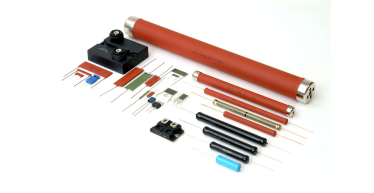
Guide to Power Resistors
Power resistors are used to dissipate energy by converting it to heat. and are designed to maintain stable performance. Call now and request a quote today!
Read More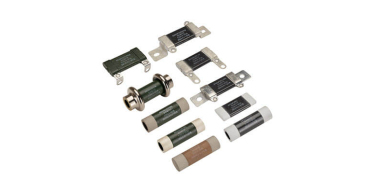
Guide to Ceramic Resistors
Ceramic Composition resistors are composed of a mixture of a finely ground insulator and conductor which is compressed into a cylindrical shape. Call now!
Read More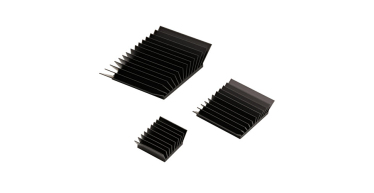
Guide to Heat Sinks
As semiconductor devices scale to smaller sizes and higher power densities, thermal management has become more challenging Call now and request a quote!
Read More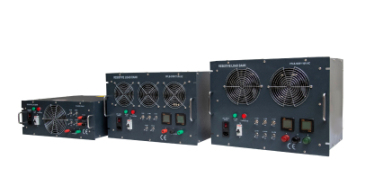
Guide to Load Banks
A load bank is a device that is intended to accurately mimic a load that a power source will see in an actual application. Call now and request a quote today!
Read More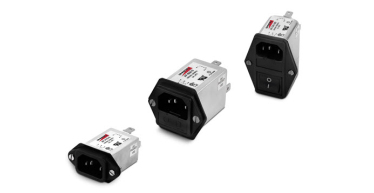
Guide to EMI Filters
To control the effects of EMI, standards are in place internationally, for commercial electronics, aerospace as well as military and space applications. Call now!
Read More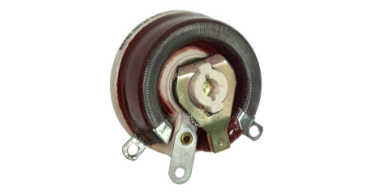
Guide to Rheostats
Rheostats, a fundamental component in electrical engineering, play a crucial role in controlling current flow and adjusting resistance in electrical circuits. Call now!
Read More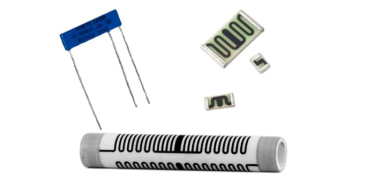
Guide to Thick Film Resistors
Thick film resistors, hailed for their versatility, durability, and wide-ranging applications, are a cornerstone of modern electronics. Call now and request a quote!
Read More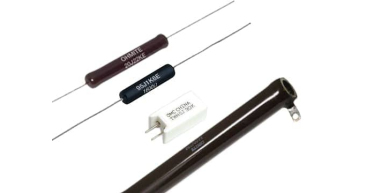
Guide to Wirewound Resistors
Thick film resistors, hailed for their versatility, durability, and wide-ranging applications, are a cornerstone of modern electronics. Call now and request a quote!
Read More
Inventory Search
The Ohmite product inventory is spread across our distribution channel around the world and can be located here. Finding Ohmite stock has never been easier. Call now!
Read More
Ohms' Law Calculator
Read More
Ohm's Law 101
Ohm's Law stands as one of the fundamental principles in electrical engineering, providing a cornerstone for understanding and analyzing electrical circuits. Call now!
Read More
Energy Rating Calculator
Read More
Media Library
Read More
Technical Information
Read More
Industrial Resources
As a manufacturer of power resistors, Ohmite often creates products designed for industrial applications.
Read More
Medical Resources
As a manufacturer of power resistors, Ohmite often creates products designed for medical applications.
Read More
Transportation Resources
As a manufacturer of power resistors, Ohmite often creates products designed for transportation applications.
Read More
Military & Aerospace Resources
As a manufacturer of power resistors, Ohmite often creates products designed for military and aerospace applications.
Read More