
How to Select the Right Resistor for Your Application
Selecting the right power resistor for your application can be a daunting task. With a myriad of options available, engineers are often faced with a maze of specifications and technical jargon. However, understanding key factors and considerations can streamline the selection process and ensure optimal performance of your electronic systems.
(Choosing the right power resistor can be a complex task. With countless options available, navigating the technical specifications to find the perfect component is a significant challenge. However, by focusing on a few key factors, you can simplify the selection process and ensure your design achieves optimal performance and reliability.)
Here’s What Engineers Need to Know When Choosing a Power Resistor
Power Rating
One of the most critical factors to consider is the power rating of the resistor. This refers to the maximum amount of power the resistor can dissipate without overheating or failing. Ensure that the power rating of the resistor exceeds the maximum power dissipation expected in your application to prevent thermal issues and ensure reliability.
(A resistor's power rating is its most critical specification, defining the maximum power it can safely dissipate as heat. To prevent overheating and ensure reliability, always choose a resistor with a power rating well above the maximum power expected in your application.)
Resistance Value
The resistance value of the resistor determines its ability to control current flow in the circuit. Select a resistor with the appropriate resistance value to achieve the desired voltage drop or current limitation in your application.
(The resistance value directly controls the amount of current flow in a circuit. You must select the precise value needed to achieve the desired voltage drop or current limitation for your specific application.)
Tolerance
Resistor tolerance indicates the deviation of the actual resistance value from the specified nominal value. Choose a resistor with a tolerance that meets the accuracy requirements of your application to ensure precise circuit operation.
(A resistor's tolerance, expressed as a percentage, indicates how much its actual resistance value may vary from its stated value. A lower percentage means a more precise resistor. To ensure accurate circuit operation, you must select a tolerance that meets the specific accuracy requirements of your application.)
Temperature Coefficient
The temperature coefficient of resistance (TCR) indicates how the resistance of the resistor changes with temperature. For applications where temperature stability is crucial, such as precision instrumentation or temperature control circuits, select resistors with low TCR values to minimize drift over temperature.
(The temperature coefficient of resistance (TCR) measures how much a resistor's value will drift as its temperature changes. A resistor with a low TCR is highly stable, making it essential for applications where temperature stability is critical. For precision instrumentation or sensor circuits, always select a resistor with a low TCR to ensure consistent performance.)
Construction Type
Different construction types, such as ceramic, thick film, and wirewound offer varying performance characteristics. Consider factors like stability, accuracy, power handling capability, and cost when choosing the appropriate construction type for your application.
(A resistor's internal construction type defines its strengths and weaknesses. The choice between technologies like ceramic, thick film, and wirewound always involves a trade-off. To make the right decision, you must balance your application's specific needs for accuracy, long term stability, power handling capability, and overall cost.)
Environmental Conditions
Evaluate the operating environment of your application, including factors such as temperature, humidity, vibration, and shock. Choose resistors with suitable environmental ratings and robust construction to withstand the specified conditions and ensure long-term reliability.
(For a resistor to perform reliably, it must be tough enough to survive its operating environment. Factors like extreme temperature, humidity, and exposure to physical vibration and shock can all lead to failure. Always choose a resistor with a durable design and the proper environmental ratings to guarantee long-term reliability, especially in harsh conditions.)
Mounting and Packaging
Consider the mounting method and package size of the resistor to ensure compatibility with your circuit layout and mechanical constraints. Surface mount resistors (SMD) are ideal for compact and automated assembly, while through-hole resistors are suitable for prototyping and applications requiring high-power handling.
(A resistor's physical package size and mounting style are critical factors that impact both board layout and the manufacturing process. Surface Mount (SMD) resistors are ideal for compact designs and high volume automated assembly. In contrast, through-hole resisotrs are often preferred for manual prototyping and are typically better suited for high power applications.)
Special Features
Some applications may require specialized features such as high pulse power handling, non-inductive construction, or flame-resistant coatings. Select resistors with additional features that align with the specific requirements and performance criteria of your application.
(For advanced designs, you may need a resistor with specialized with specialized features. This could mean superior high pulse handling for surge protection, a non-inductive construction for clean high frequency signals, or flame resistant coatings for enhanced safety. It is crucial to identify these specific requirements and choose a component designed to meet them.)
Built to last, Built to lead
By carefully evaluating these factors and understanding the requirements of your application, you can confidently select the most suitable power resistor to meet your needs. Consult with experienced suppliers or engineers if you encounter any challenges or uncertainties during the selection process. Remember, choosing the right resistor is essential for achieving optimal performance, reliability, and longevity of your electronic systems.
(Choosing the right power resistor is critical decision that impacts the performance and longevity of your entire system. You don't have to make that decision alone. The Ohmite team of application engineers is ready to partner with you, helping you navigate the complexities and find the perfect component.
Build with certainty. Explore our solutions online or connect with an Ohmite specialist to finalize your component selection.)
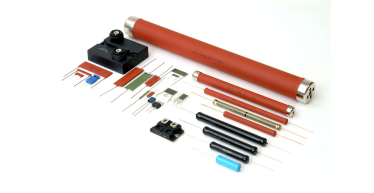
Types of Power Resistors
Power resistors play a crucial role in various electronic circuits, serving as essential components for controlling current flow and voltage levels.Call now!
Read More
Power Resistor Applications
Power resistors are indispensable components in electronic applications, serving as vital elements for controlling current flow and maintaining stability. Call now!
Read More