
Ohm's Law Calculator
Ohm's Law is the foundation of every circuit — it defines the relationship between voltage, current, and resistance, and it's the first formula every engineer, electrician, and hobbyist learns. Use the Ohm's Law calculator below to instantly solve for voltage, current, resistance, or power by entering any two known values. Whether you're sizing a resistor, troubleshooting a circuit, or double-checking a power budget, this tool gives you accurate results in seconds — no manual math required.
Enter any two known values and press "Calculate" to solve for the others.
What Is Ohm's Law?
Ohm's Law states that the current flowing through a conductor between two points is directly proportional to the voltage across the two points, and inversely proportional to the resistance. It was first described by German physicist Georg Ohm, who published his findings in 1827 in Die galvanische Kette, mathematisch bearbeitet ("The Galvanic Circuit Investigated Mathematically") — work that remains the backbone of circuit design nearly 200 years later.
The core formula is simple:
Voltage (V) = Current (I) × Resistance (R)
From this single equation, you can derive every other relationship needed to solve a basic circuit, including power.
Ohm's Law Formula Chart
|
To Find |
Formula |
|
Voltage (V) |
V = I × R |
|
Current (I) |
I = V ÷ R |
|
Resistance (R) |
R = V ÷ I |
|
Power (P) |
P = V × I |
|
Power (P) |
P = I² × R |
|
Power (P) |
P = V² ÷ R |
Where:
V = Voltage, measured in volts
I = Current, measured in amps
R = Resistance, measured in ohms (Ω)
P = Power, measured in watts
How to Use the Ohm's Law Calculator
Getting a result takes just three steps:
-
Identify the two values you already know: for example, voltage and resistance.
-
Enter those values into the calculator fields above.
-
Read your result: the calculator automatically solves for the remaining variable(s), including current and power.
This makes it easy to reverse-engineer a circuit, verify a resistor's power rating, or plan a design before you ever pick up a multimeter.
Why Ohm's Law Matters When Selecting a Resistor
Ohm's Law isn't just a classroom formula — it's a practical tool for choosing the right resistor for your application. Getting the math right up front helps you avoid underrated components, excess heat, and premature failure.
-
Confirm power dissipation before you specify a part. Use P = I² × R to calculate how much heat a resistor will need to dissipate under load, then choose a resistor rated with adequate headroom above that figure.
-
Size resistors for current-limiting applications. If you know your supply voltage and target current, R = V ÷ I tells you exactly what resistance value you need.
-
Validate load calculations for high-power circuits. For applications like motor drives, power supplies, and braking systems, Ohm's Law helps confirm that a resistor can handle sustained current without exceeding its thermal limits.
-
Troubleshoot unexpected circuit behavior. If measured voltage or current doesn't match your expected values, Ohm's Law is the fastest way to identify whether a component is out of spec.
Ohmite manufactures precision resistors engineered for exactly these scenarios — from current-sense and power resistors to specialty components built for demanding electrical loads. Once you've calculated the resistance and power values your application requires, our team can help you match those specs to the right part.
Need Help Applying These Numbers to a Real Design?
Running the numbers is the easy part — choosing a resistor that can reliably handle them is where experience matters. Explore Ohmite's full line of power, current-sense, and specialty resistors, or contact our engineering team to get expert guidance on the right component for your application.
Frequently Asked Questions About Ohm’s Law
Have more questions about Ohm's Law and how it applies to your project? Here are answers to some of the most common questions we hear:
What is Ohm's Law and who discovered it?
Ohm's Law describes the relationship between voltage, current, and resistance in an electrical circuit: V = I × R. It's named after German physicist Georg Simon Ohm, who published his research on the topic in 1827.
How do I calculate resistance using Ohm's Law?
Divide voltage by current: R = V ÷ I. For example, if a circuit has 12 volts and 2 amps of current, the resistance is 6 ohms.
How is power related to Ohm's Law?
Power can be calculated three ways depending on which values you know: P = V × I, P = I² × R, or P = V² ÷ R. All three formulas will return the same result — choose whichever matches the values you already have.
Does Ohm's Law apply to AC circuits as well as DC?
Ohm's Law applies directly to purely resistive AC circuits. For AC circuits with inductive or capacitive components, impedance (Z) replaces simple resistance in the calculation, but the same underlying relationship holds.
How does Ohm's Law help me choose the right resistor?
Once you know the voltage and current your circuit will see, Ohm's Law lets you calculate the required resistance and the power the resistor must dissipate. Matching a resistor's power rating to that calculated value — with appropriate safety margin — helps prevent overheating and premature failure.

Blog
Read More
Guide to Power Resistors
Power resistors are used to dissipate energy by converting it to heat. and are designed to maintain stable performance. Call now and request a quote today!
Read More
Guide to Ceramic Resistors
Ceramic Composition resistors are composed of a mixture of a finely ground insulator and conductor which is compressed into a cylindrical shape. Call now!
Read More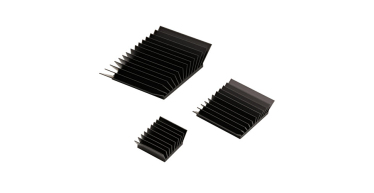
Guide to Heat Sinks
As semiconductor devices scale to smaller sizes and higher power densities, thermal management has become more challenging Call now and request a quote!
Read More
Guide to Load Banks
A load bank is a device that is intended to accurately mimic a load that a power source will see in an actual application. Call now and request a quote today!
Read More
Guide to EMI Filters
To control the effects of EMI, standards are in place internationally, for commercial electronics, aerospace as well as military and space applications. Call now!
Read More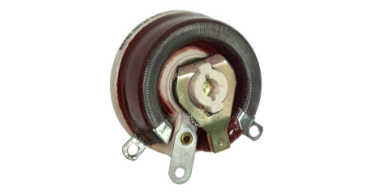
Guide to Rheostats
Rheostats, a fundamental component in electrical engineering, play a crucial role in controlling current flow and adjusting resistance in electrical circuits. Call now!
Read More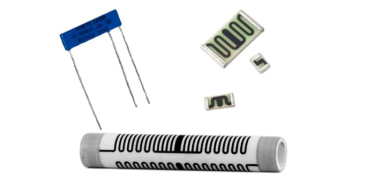
Guide to Thick Film Resistors
Thick film resistors, hailed for their versatility, durability, and wide-ranging applications, are a cornerstone of modern electronics. Call now and request a quote!
Read More
Guide to Wirewound Resistors
Thick film resistors, hailed for their versatility, durability, and wide-ranging applications, are a cornerstone of modern electronics. Call now and request a quote!
Read More
Ohm's Law 101
Ohm's Law stands as one of the fundamental principles in electrical engineering, providing a cornerstone for understanding and analyzing electrical circuits. Call now!
Read More
Energy Rating Calculator
Read More
Media Library
Read More
Technical Information
Read More
Industrial Resources
As a manufacturer of power resistors, Ohmite often creates products designed for industrial applications.
Read More
Medical Resources
As a manufacturer of power resistors, Ohmite often creates products designed for medical applications.
Read More
Transportation Resources
As a manufacturer of power resistors, Ohmite often creates products designed for transportation applications.
Read More
Military & Aerospace Resources
As a manufacturer of power resistors, Ohmite often creates products designed for military and aerospace applications.
Read More